
Internet Bill Template Copy Assistance
Need help getting a copy of your internet bill?
Our service is designed for users who need support with obtaining a current or replacement internet billing document linked to their own account information. We help simplify the process, organize the required details, and guide customers through the steps needed to request a usable billing copy in a clear and efficient way.
Choose Your Region
Many users need an internet bill for account records, administrative paperwork, address-related documentation, service confirmation, or general document organization. Instead of wasting time searching through provider dashboards, old emails, or incomplete account records, users often want a more structured way to move through the process. Our support is built to make that process easier, faster, and more organized.
What This Service Helps With
Our internet bill assistance service is focused on helping users navigate the process of obtaining a billing copy connected to their own information. This may include support with duplicate bill requests, account detail preparation, understanding standard billing sections, and identifying the key information normally required when requesting a current or past statement from an internet provider.
We also help users better understand how internet billing documents are typically structured. A standard internet bill may include account holder details, service address, statement date, billing period, plan information, fees, taxes, payment summary, and provider contact details. Knowing how these sections are organized can make the retrieval process easier and reduce confusion when a user needs a replacement copy.
Why Users Choose This Service
Users often turn to this type of support because they want a simpler and more organized experience. Utility account portals can be frustrating, old statements may be difficult to locate, and provider-specific billing systems are not always user-friendly. Our goal is to reduce that friction by helping users prepare the right details and move through the process more confidently.
Another reason users choose this service is convenience. Instead of trying to figure everything out alone, they can use a structured support process designed around common internet billing document needs. This helps save time, reduce mistakes, and improve clarity from the beginning.
Internet Bill Support for Common Use Cases
Internet billing document support may be useful for users who need help with account record management, document organization, billing history review, service verification paperwork, or general administrative needs. Some users need a recent statement, while others may need guidance related to an older billing period. In either case, having a clear support process matters.
Our service is intended for users who need assistance connected to their own account information and want a more efficient way to handle internet bill copy requests and related billing document questions.
Internet Bill Examples
AT&T
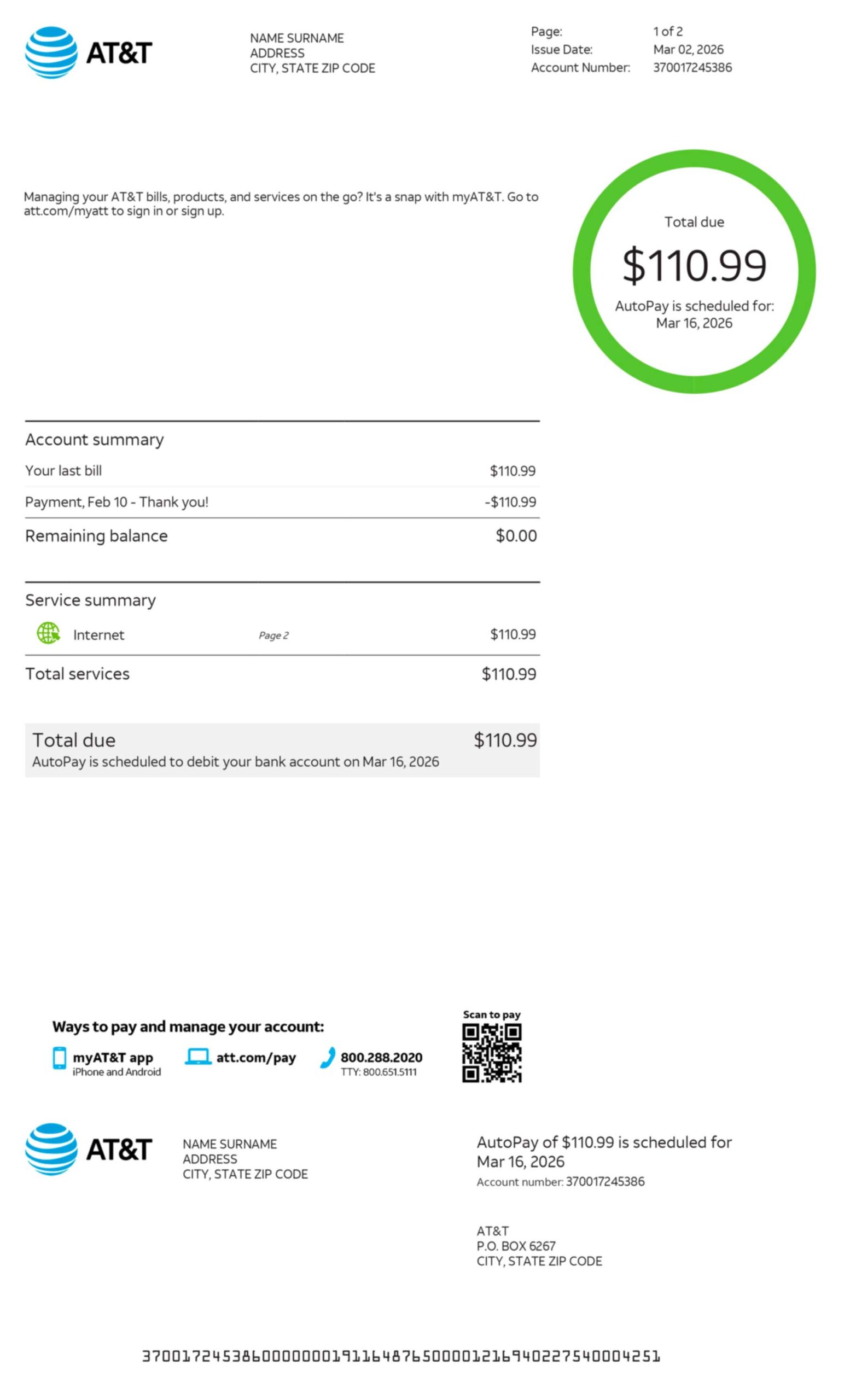
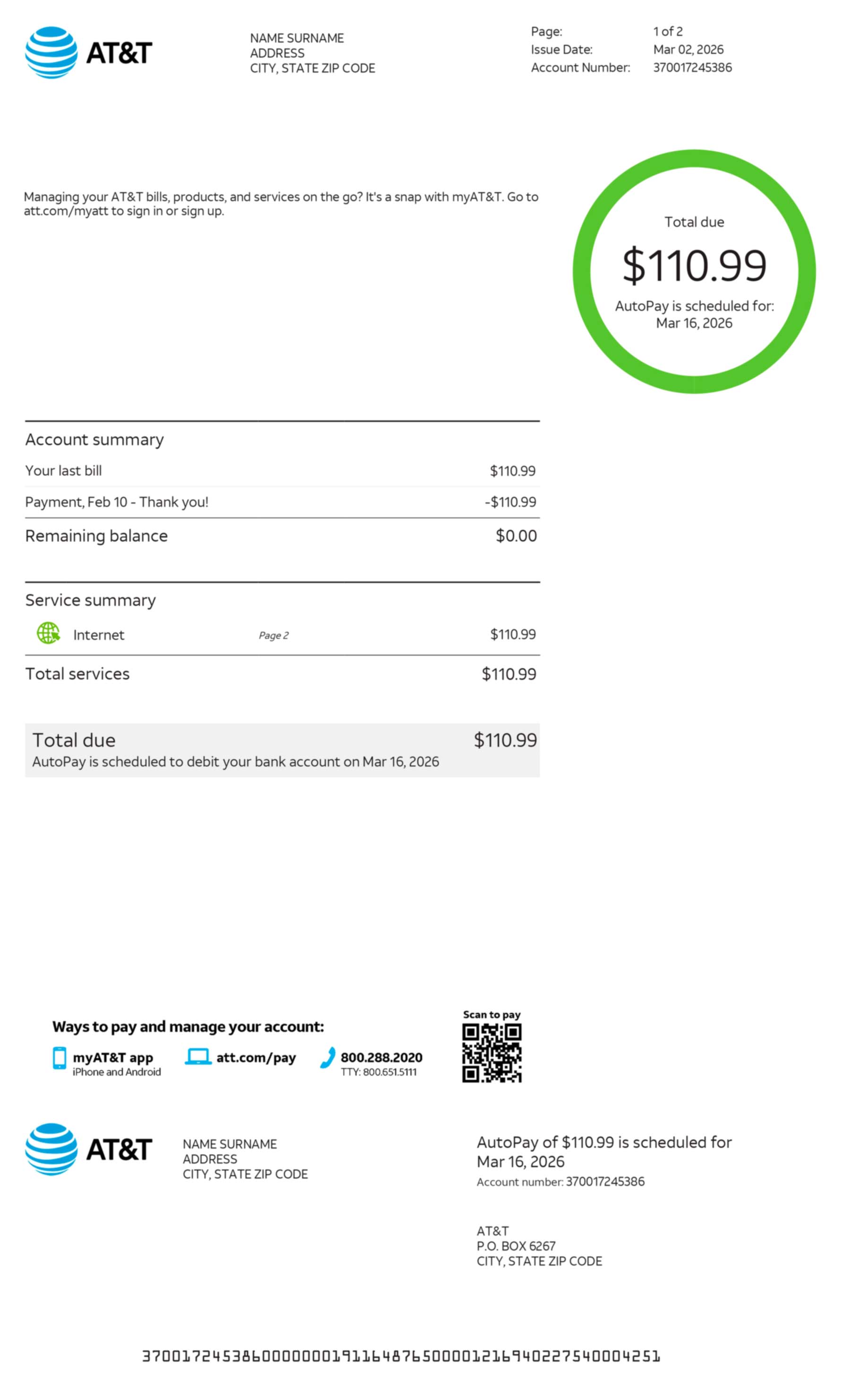
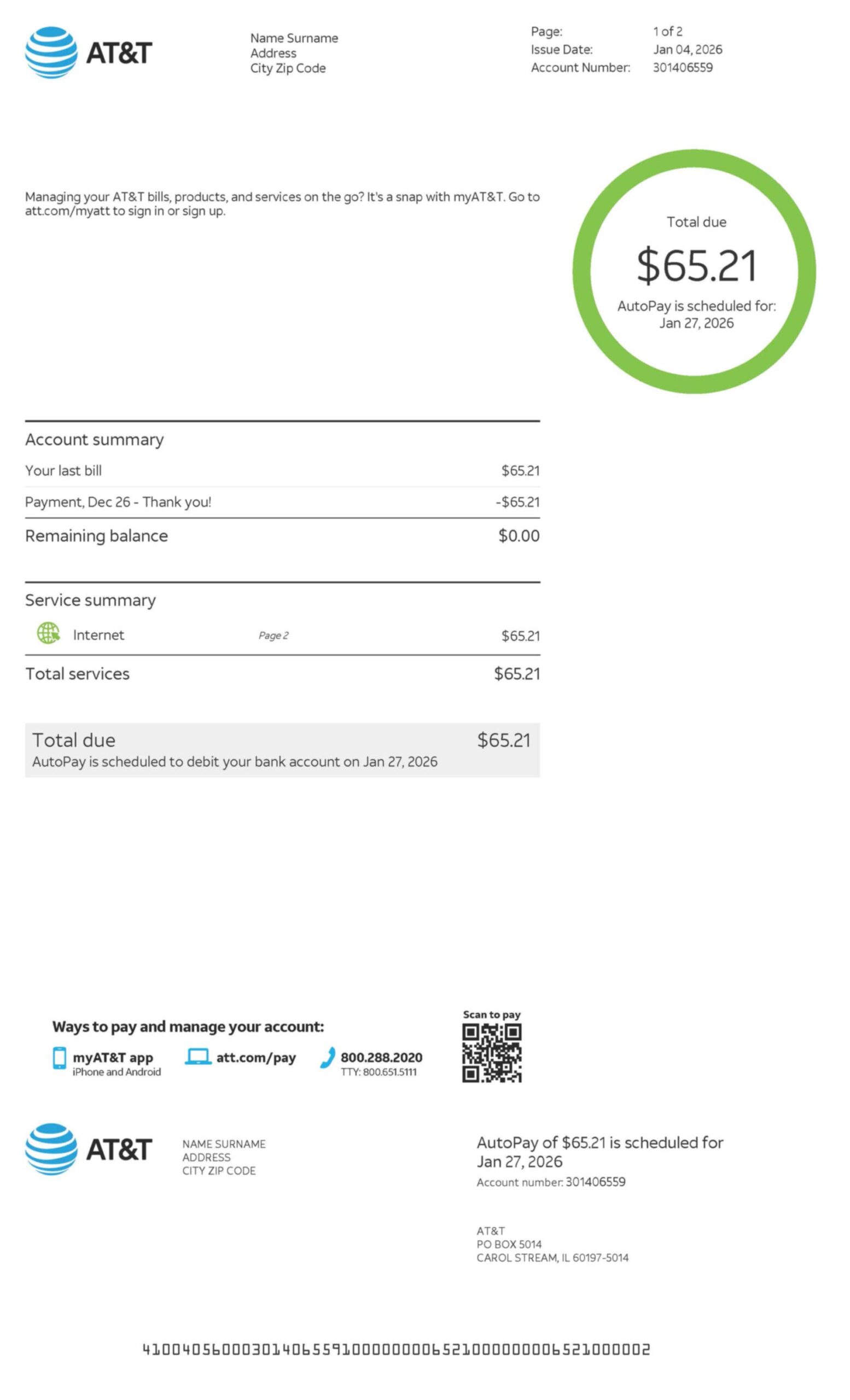
AT&T bill sample, widely accepted for all US states.
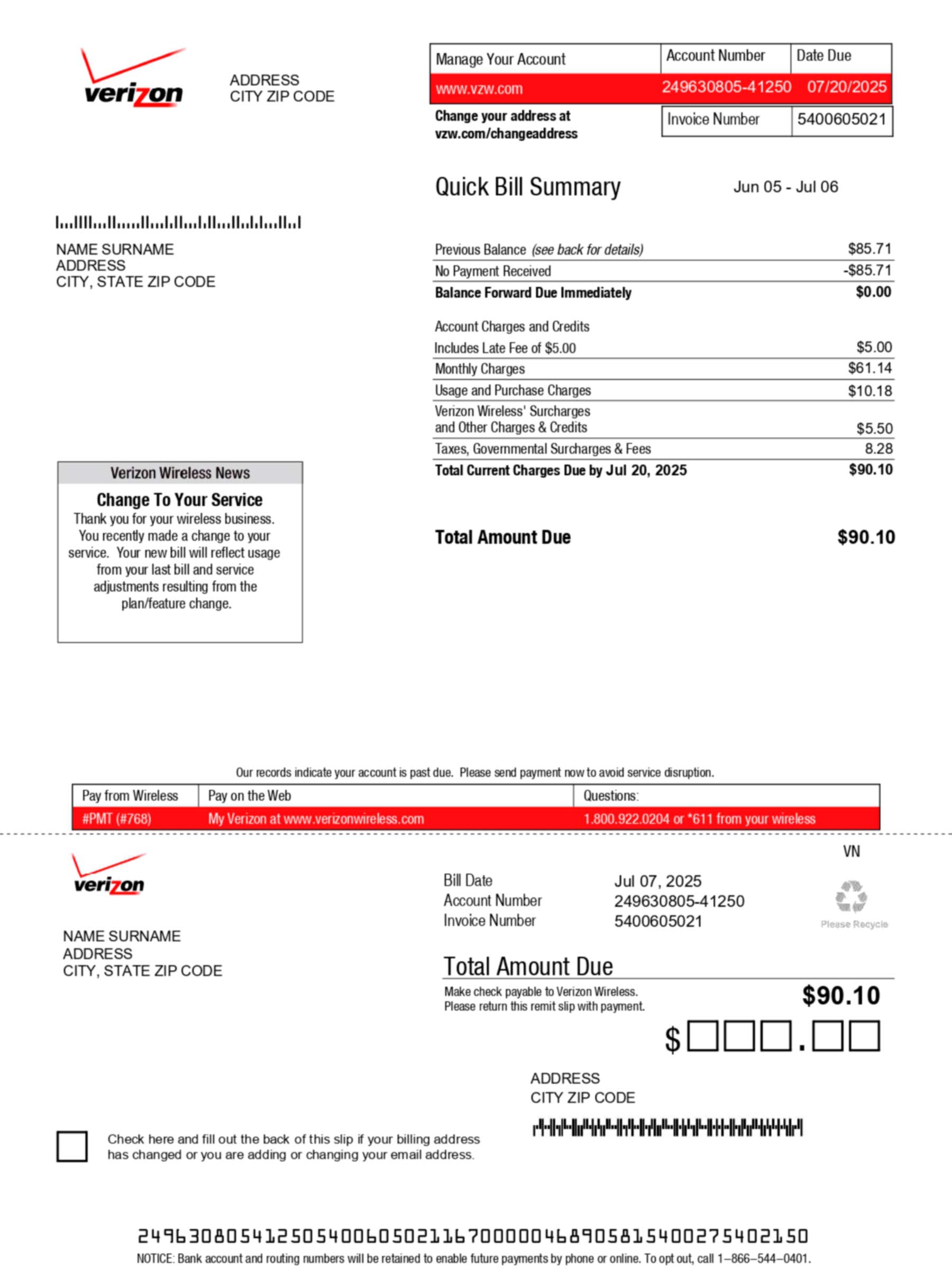
Verizon
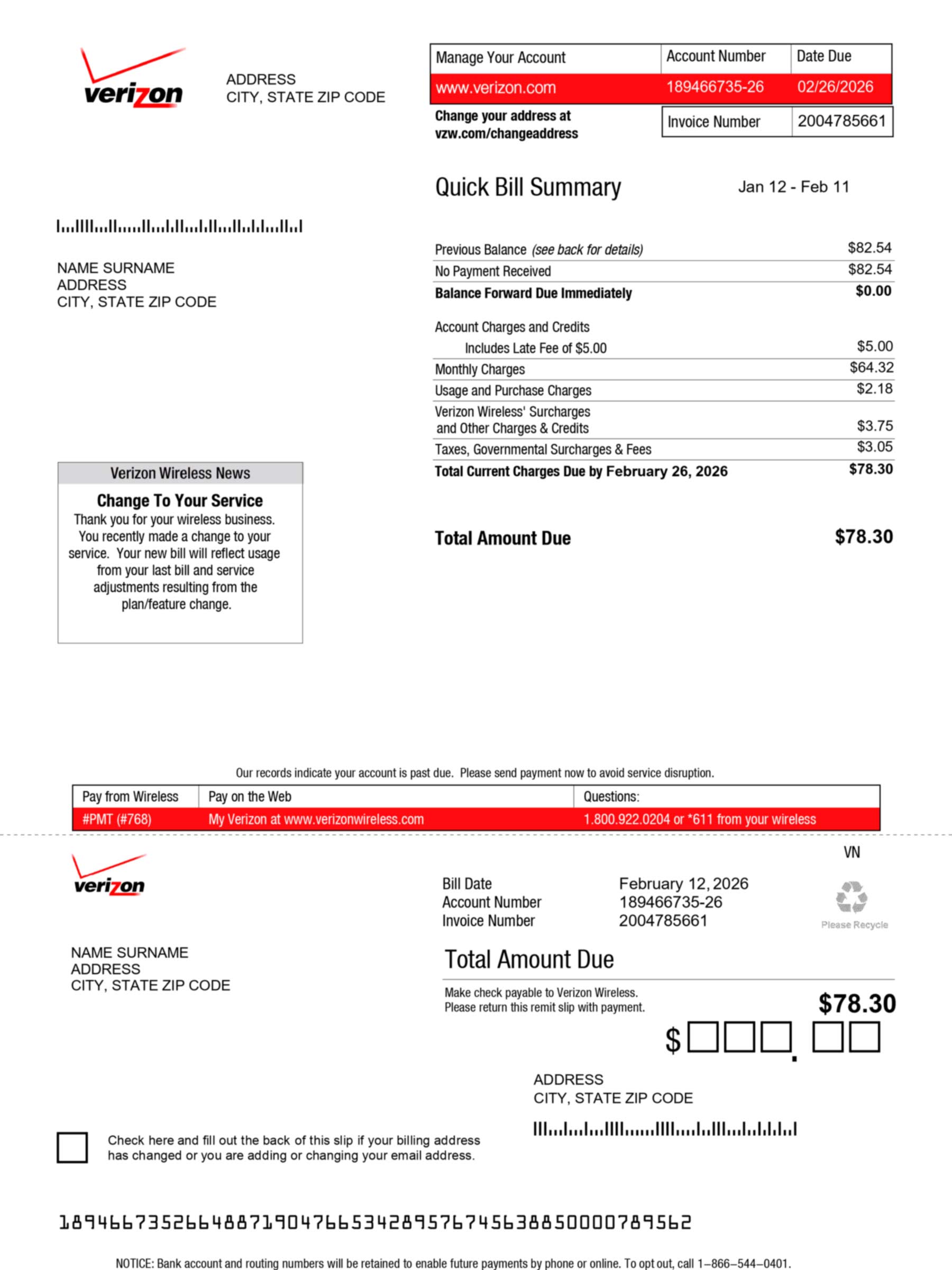
Verizon invoice, perfect for nationwide residency validation.
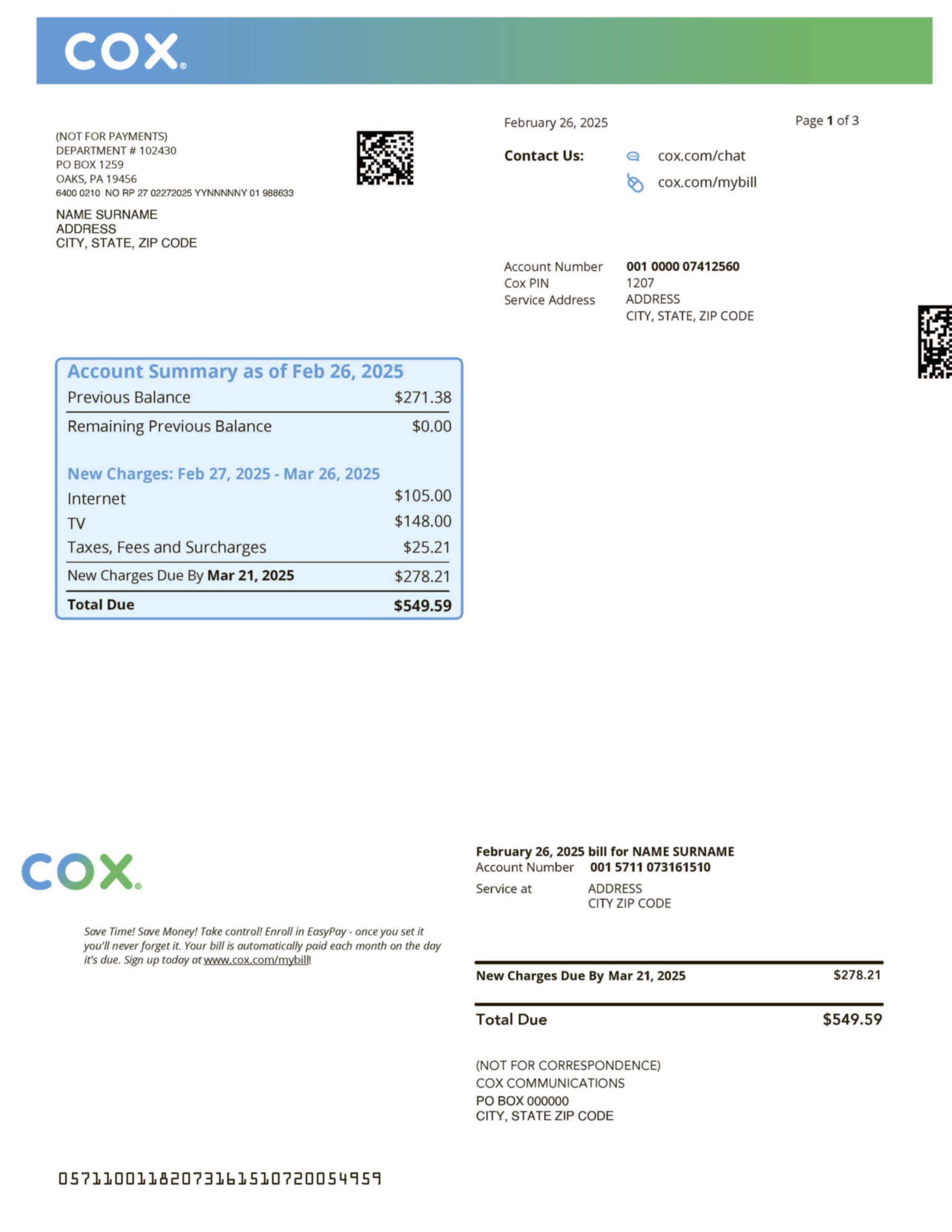
COX
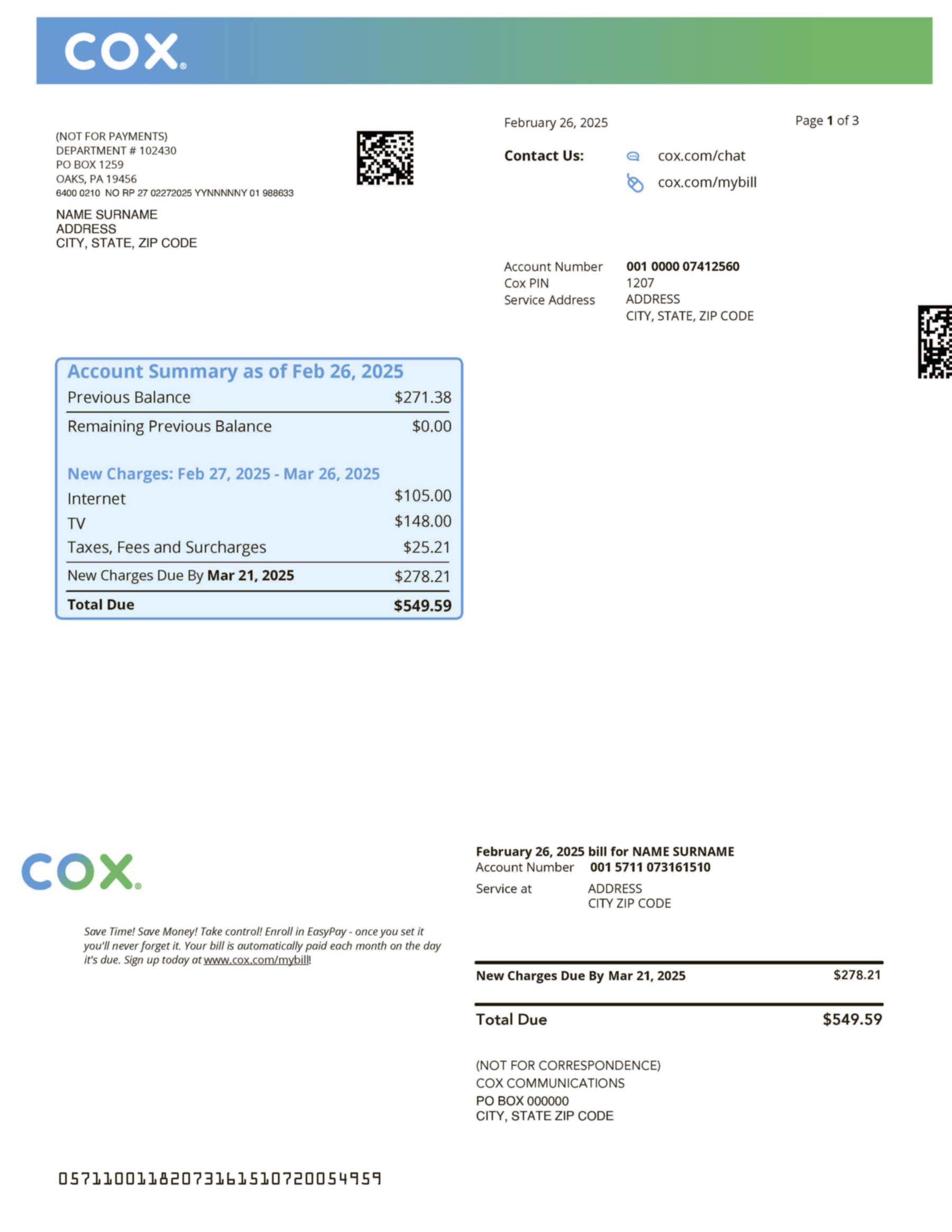
Cox Communications invoice, highly accepted in AZ, NV, VA, and other states.
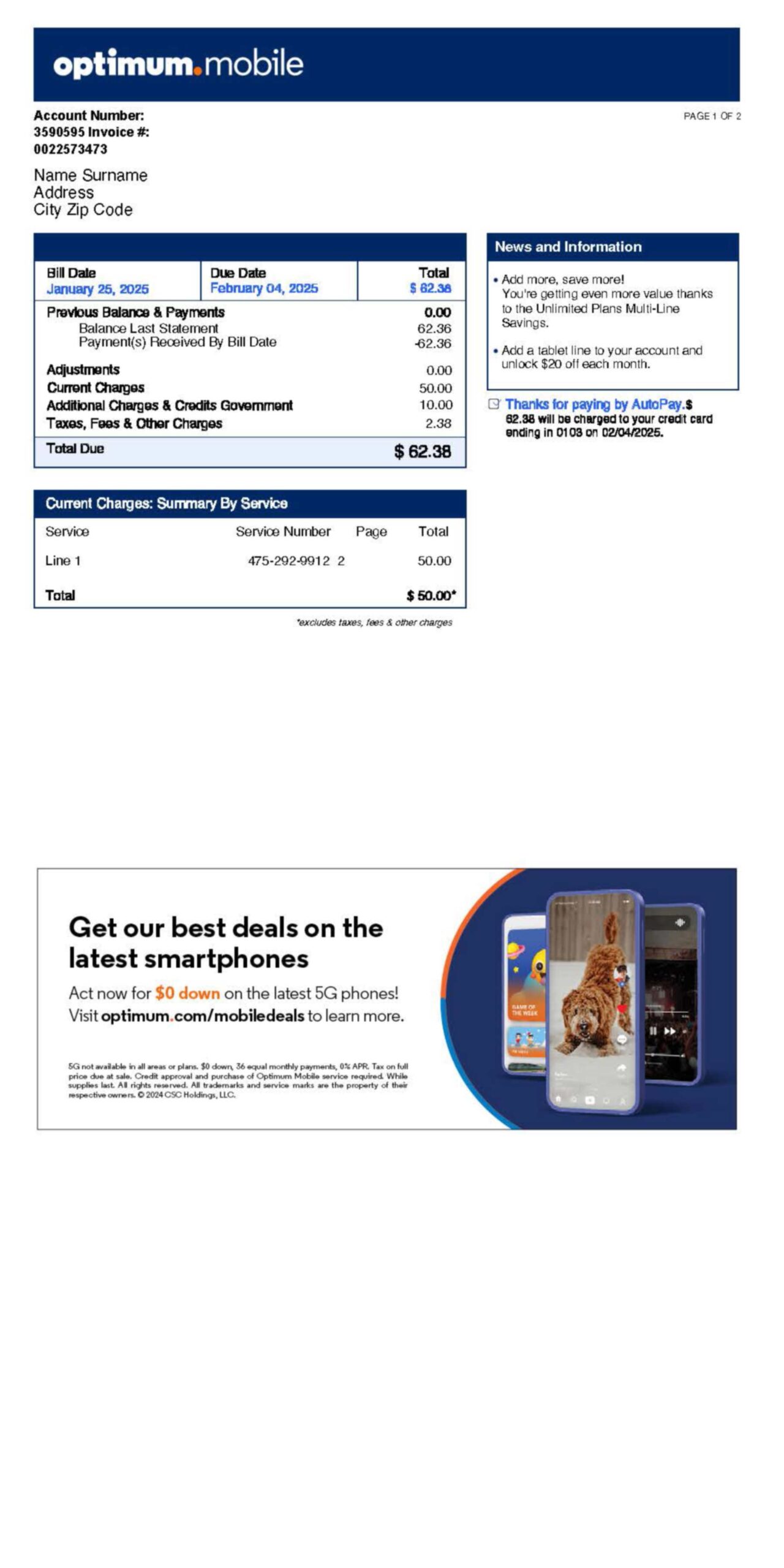
Optimum
Optimum Altice invoice, popular in NY, NJ, and CT regions.
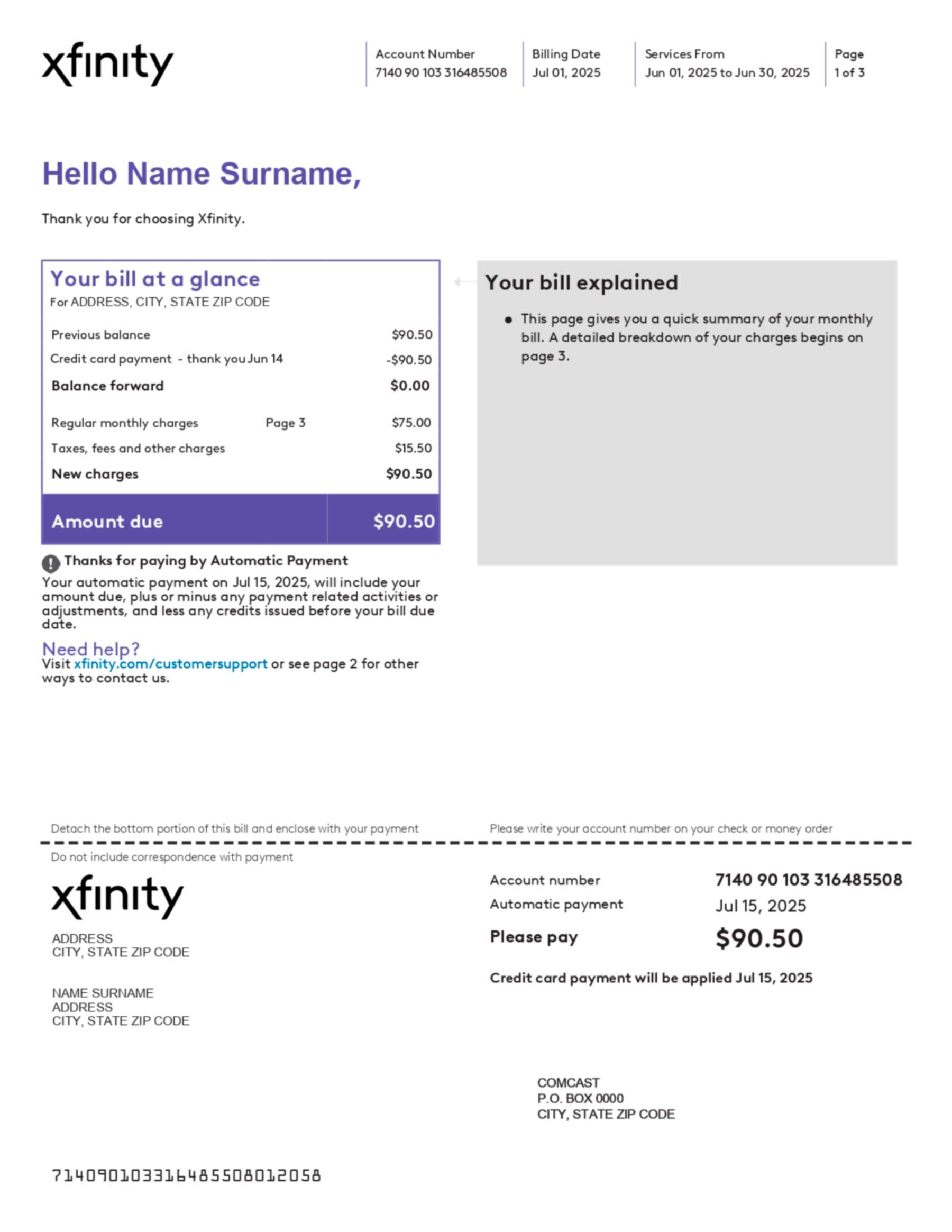
Xfinity
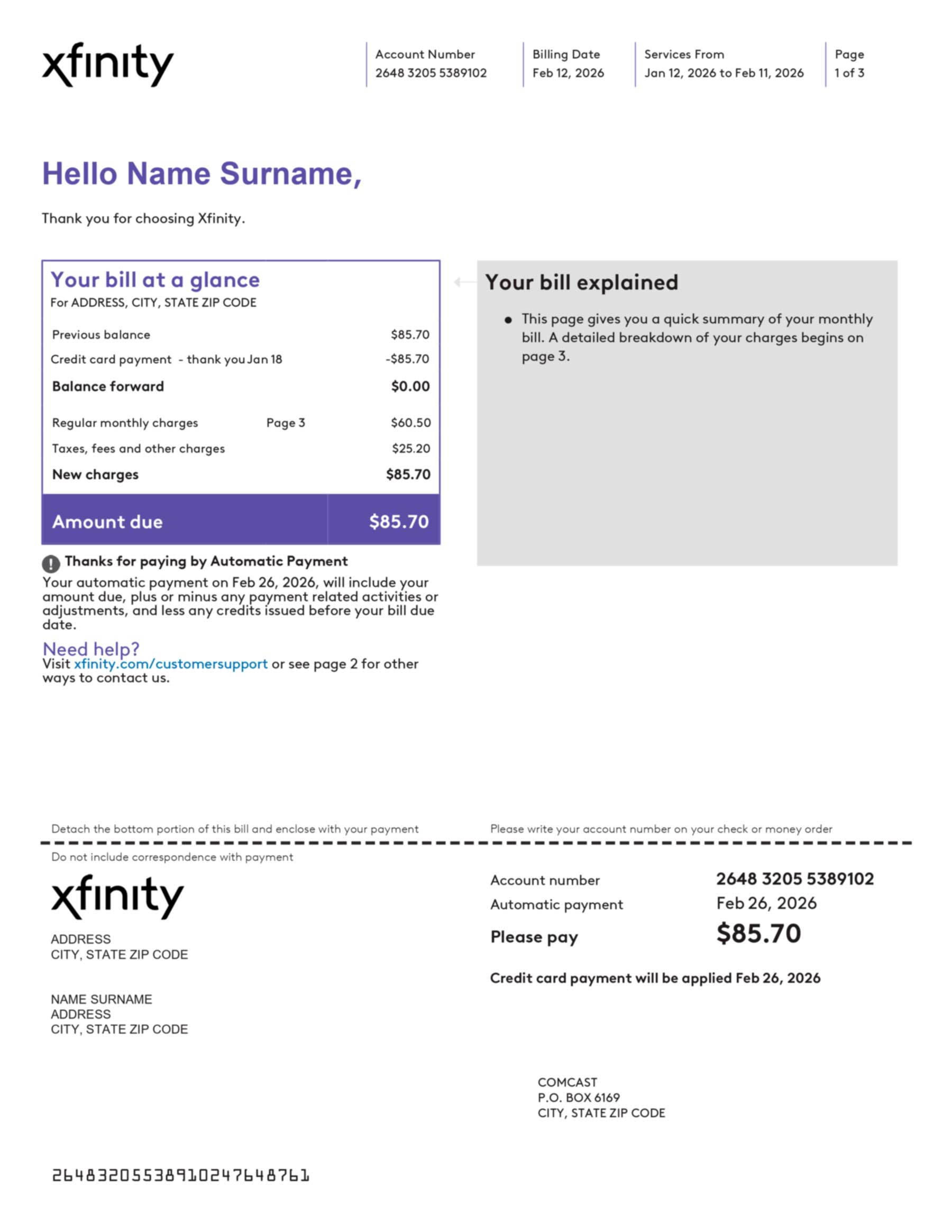
Xfinity statement commonly used for proof of internet address.
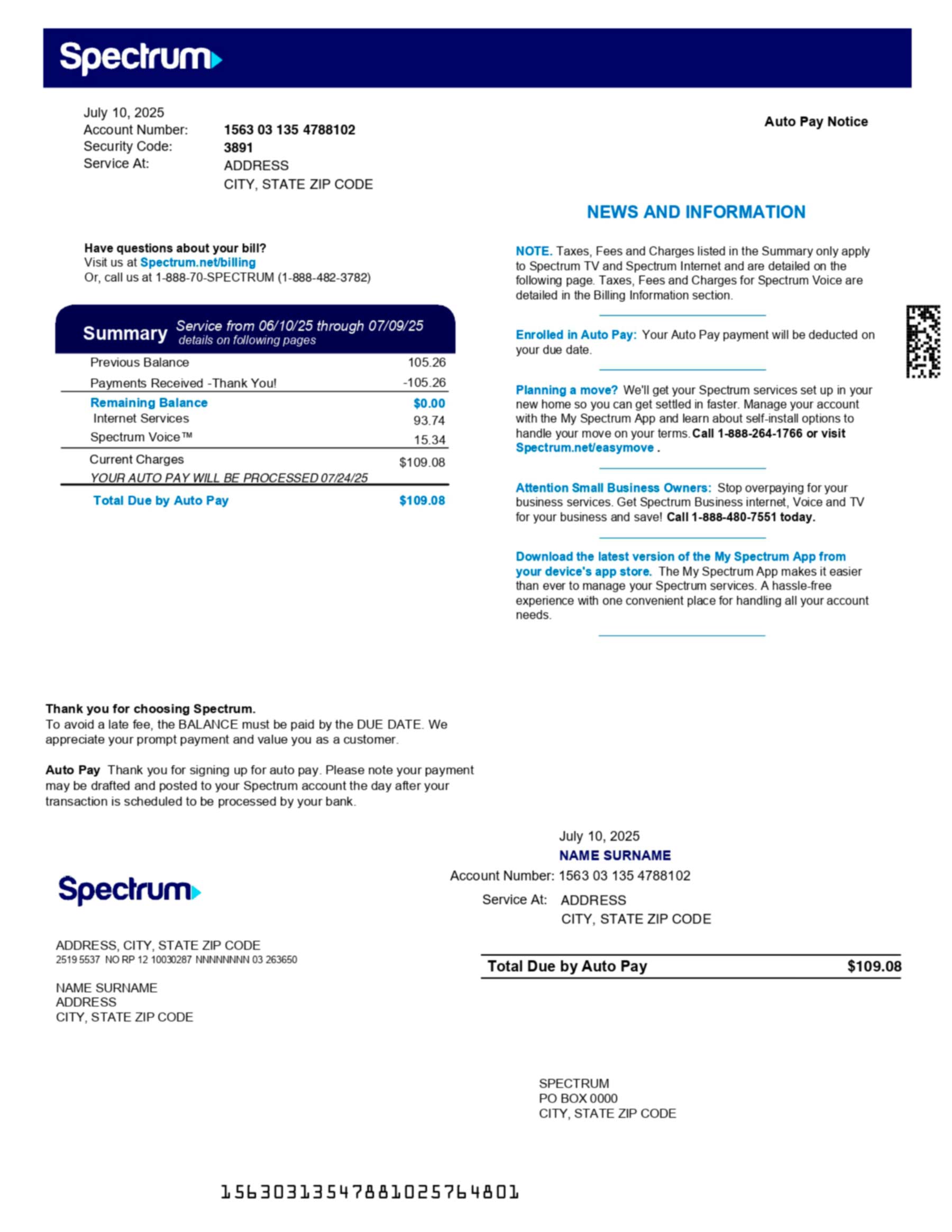
Spectrum
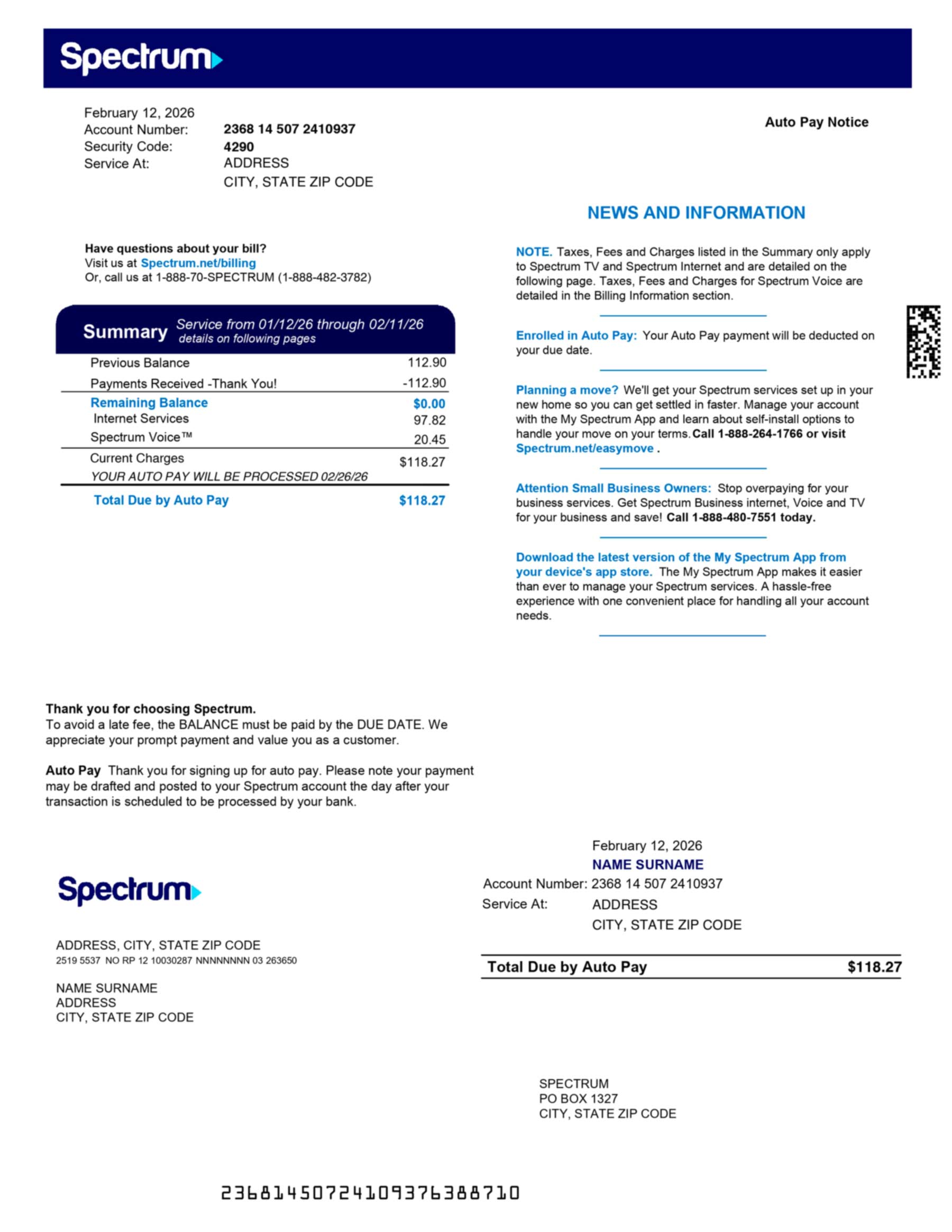
Spectrum bill, popular for verifying US residential addresses.