Secure & Confidential

Water Bill Layout Formats and Utility Statement Structure References

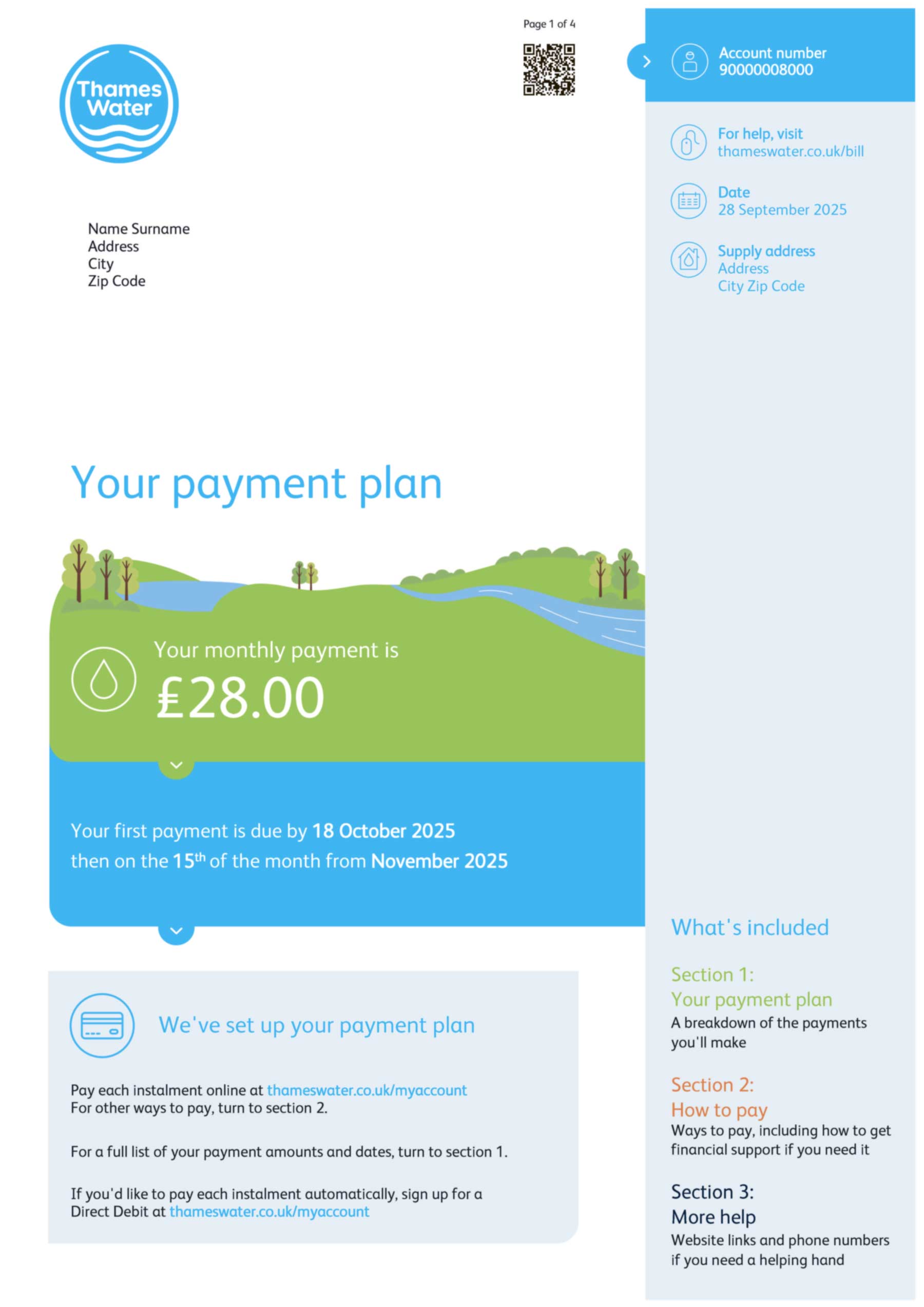
Water bills are regular service statements that outline household or commercial water usage, service charges, and payment information over a defined billing period. Unlike some other utilities, water billing layouts often combine consumption data with multiple service components such as supply, wastewater treatment, and infrastructure fees.

This reference hub explains how water bill formats are commonly structured from a layout and presentation perspective across different regions. It focuses on how information is grouped, displayed, and prioritised within water statements rather than on official billing standards or provider-specific designs.

All content on this platform is provided for educational, training, and layout reference purposes only. It does not represent official water billing documents and is not affiliated with water utilities, regulators, or public agencies.

How Water Bills Are Commonly Organised

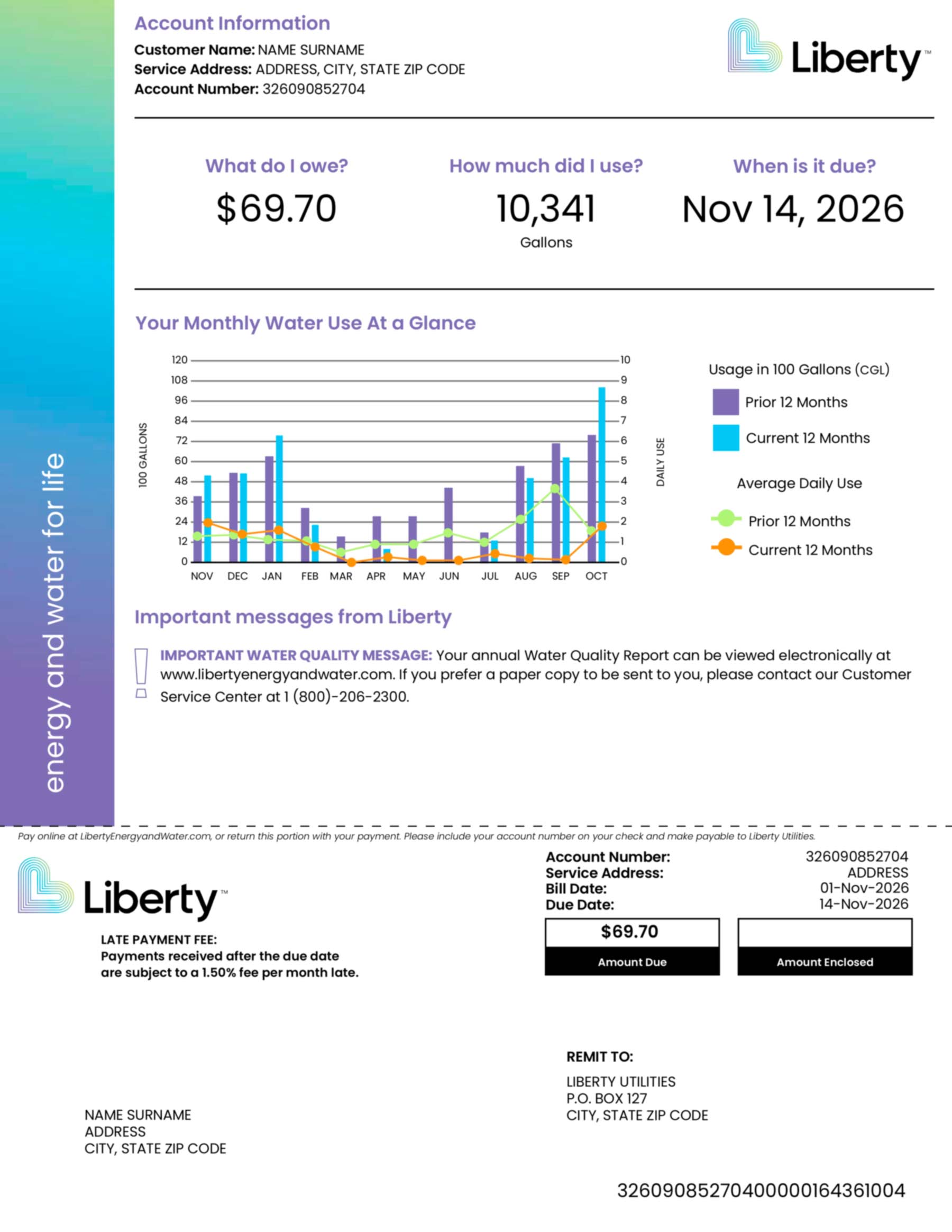
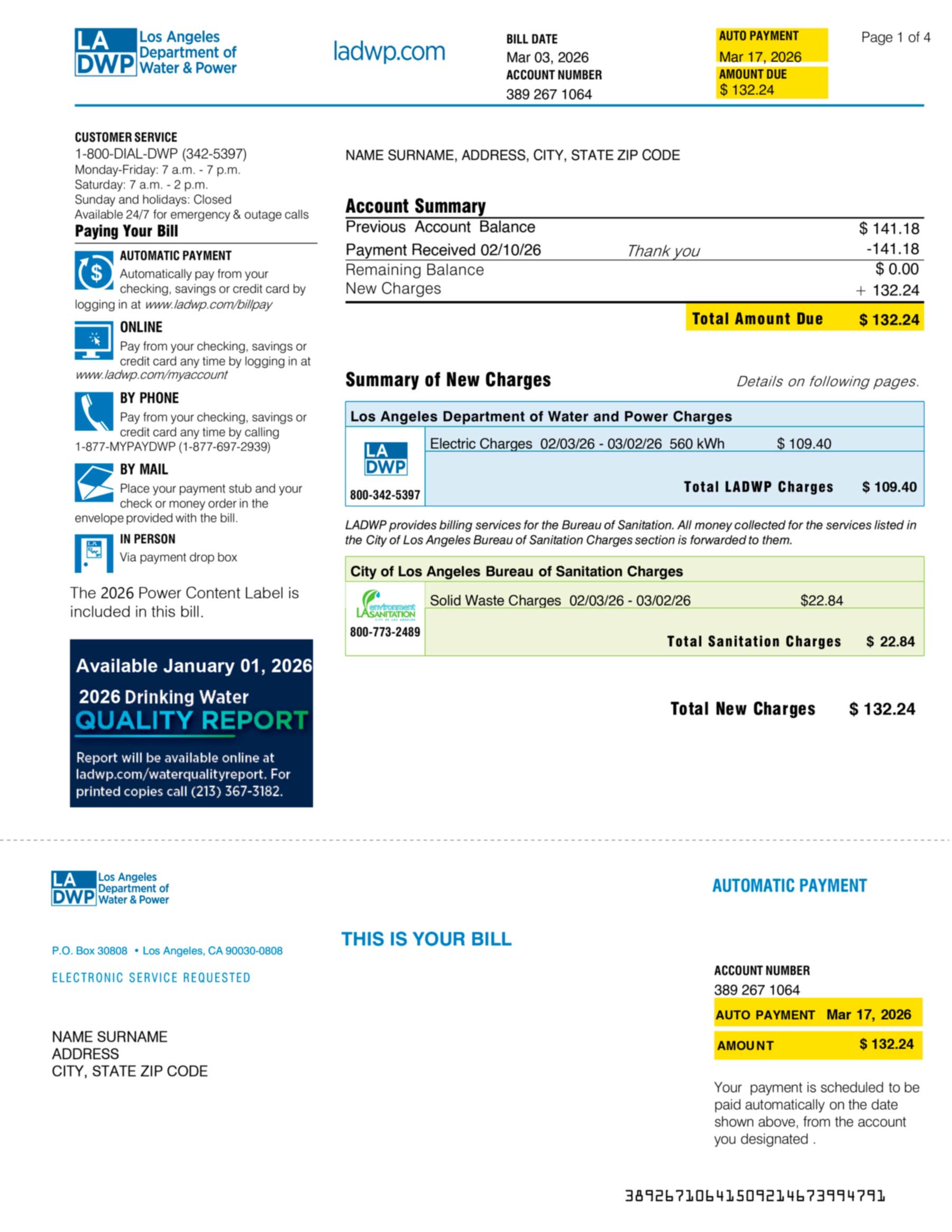
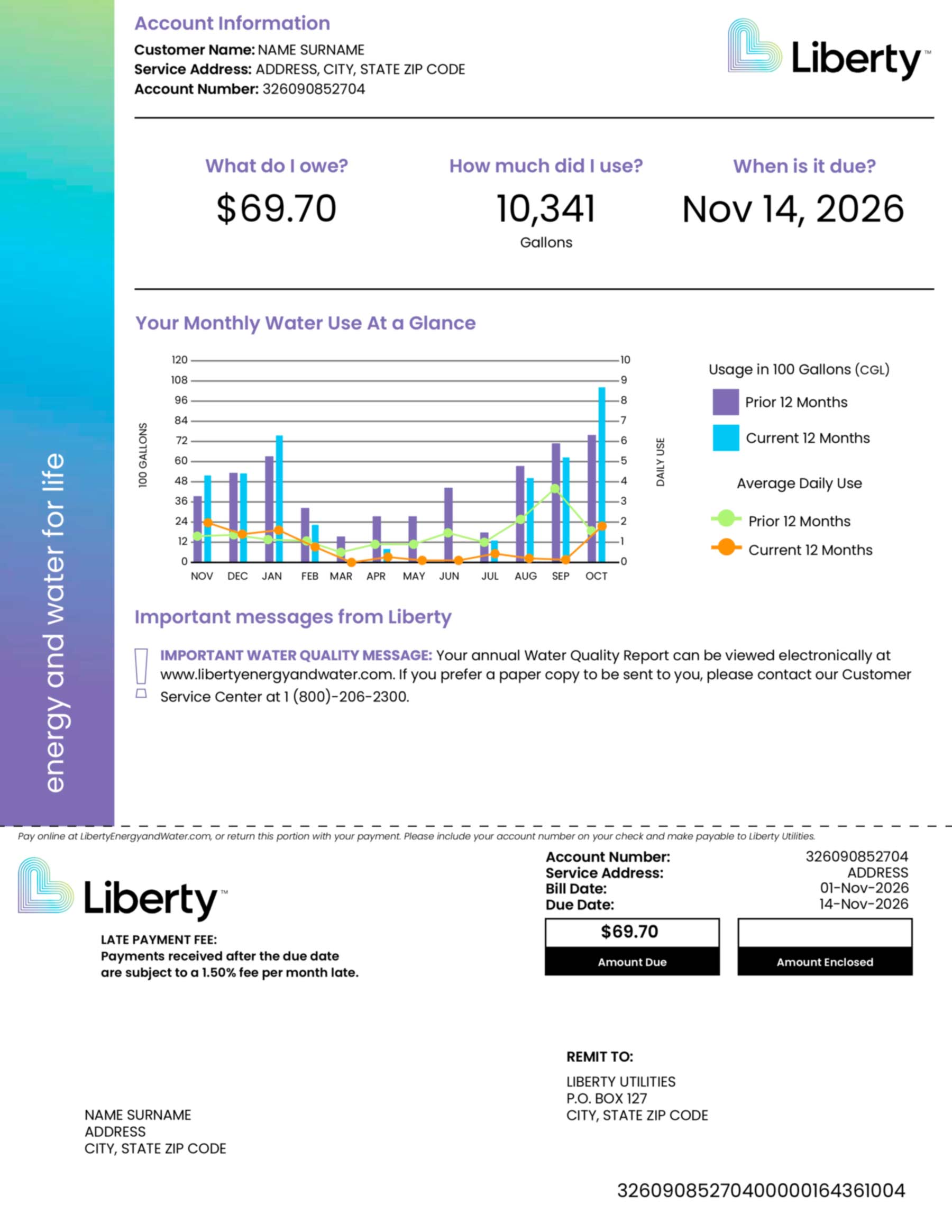
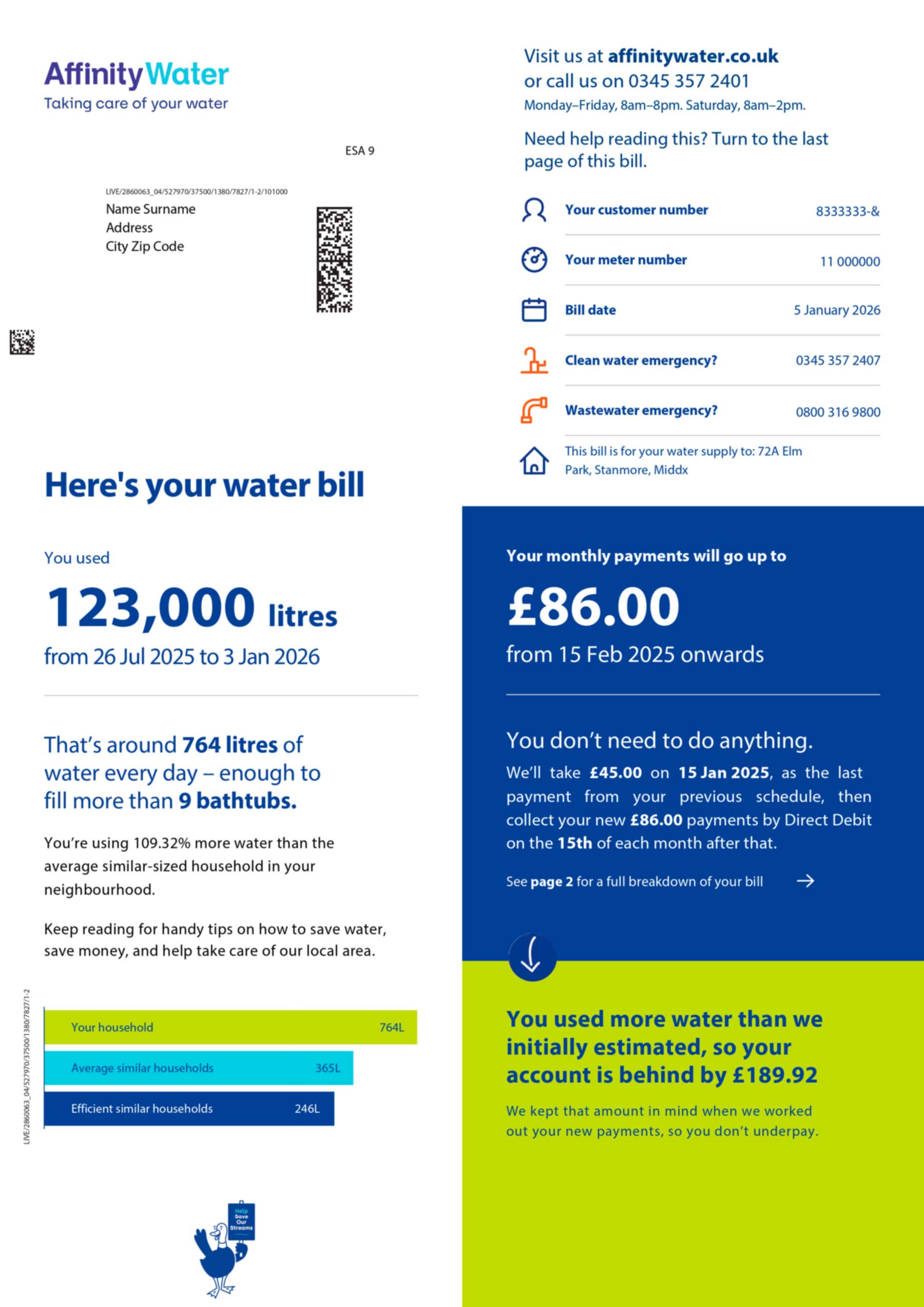
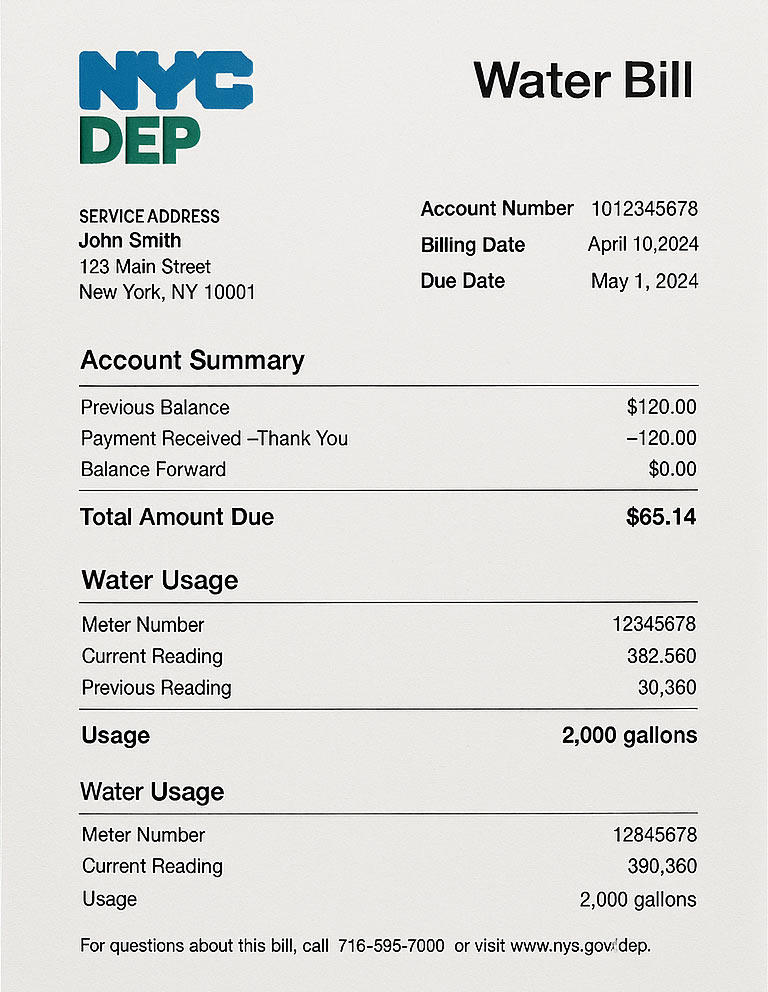
Most water bills follow a clear flow that connects usage measurements with financial charges. Typical layout sections include:

  • Statement header — branding, account summary, and reference numbers
  • Customer and service address details
  • Billing cycle block — coverage dates for the statement period
  • Meter reading section — previous and current readings with calculated usage
  • Water usage summary — total volume consumed
  • Service charge breakdown — supply fees, wastewater charges, and adjustments
  • Taxes and local fees
  • Total amount due and payment instructions

Common Fields Found on Water Statements

Across different regions, water bills typically present a similar group of core data fields:

  • Account number and statement date
  • Service location
  • Billing period start and end dates
  • Meter readings and consumption units
  • Itemised service charges
  • Tax or regulatory fee lines
  • Final balance due

These fields are often arranged to make consumption data easy to identify before showing financial totals.

Layout Patterns and Visual Design Approach

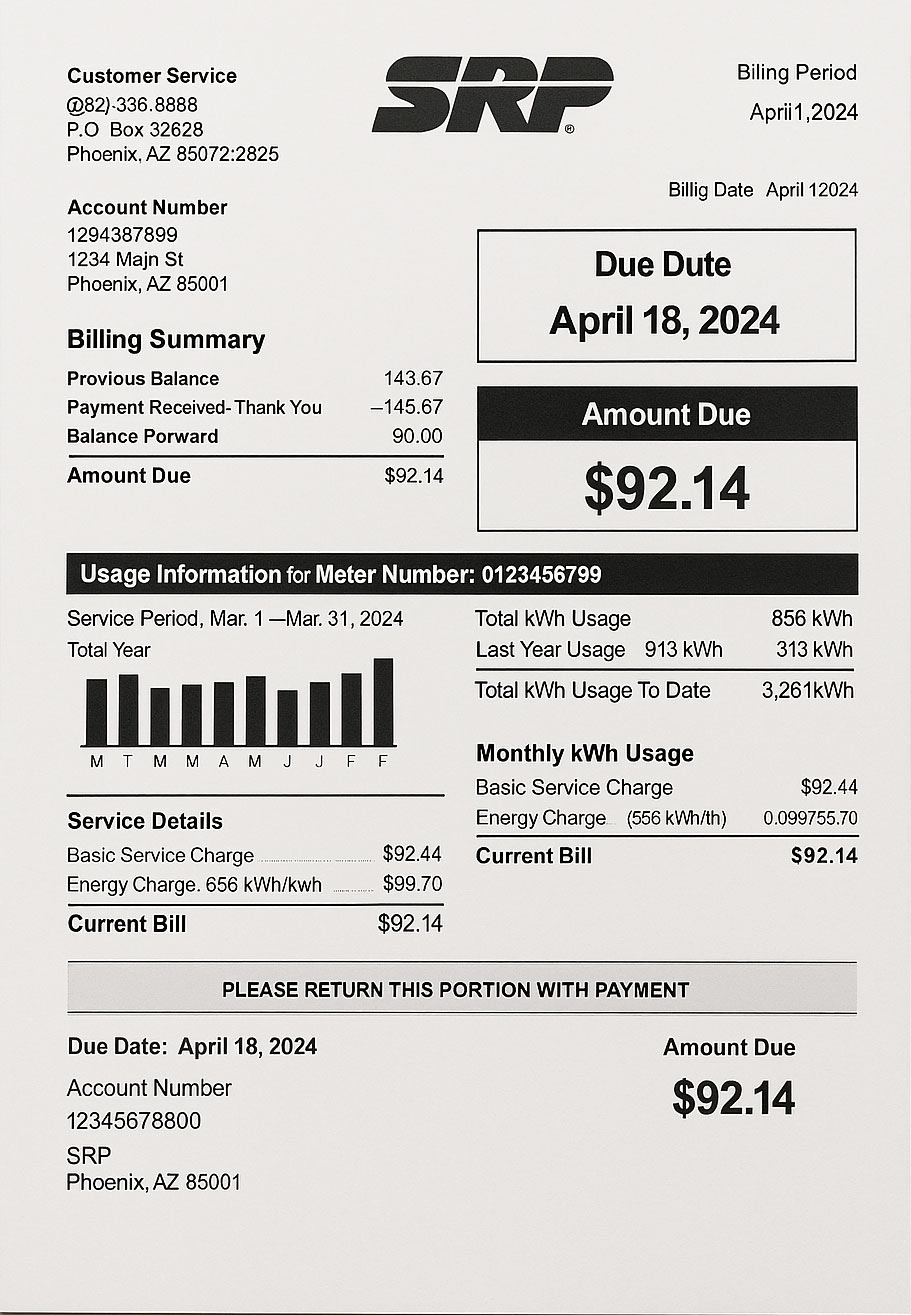
Water bill layouts generally prioritise clarity and separation between informational blocks. Common design patterns include:

  • Clearly boxed usage or meter sections
  • Tables for service charges and fees
  • Highlighted balance due areas
  • Subsections for wastewater or infrastructure charges

Designers frequently use spacing and subtle dividing lines to keep dense information readable.

Regional Differences in Water Bill Formatting

Geographic practices influence how water bills are presented in several ways:

  • Combined water and wastewater charges in many municipal systems
  • Separate tax blocks in regions with VAT or service levies
  • Usage units displayed in cubic meters or gallons depending on location
  • Local regulatory notices included in footer sections

These variations reflect local billing regulations and infrastructure models.

Printed Statements and Digital Water Bills

Water bills are commonly delivered as printable PDF statements and through digital account portals. Each format affects layout presentation:

  • PDF statements often follow traditional invoice-style layouts with fixed tables
  • Digital bills may summarise key figures first with expandable details
  • Responsive layouts adjust usage tables for mobile screens

The same core information typically appears regardless of delivery format.

Design and Analysis Considerations

Effective water bill layouts commonly focus on:

  • Clear visibility of water consumption figures
  • Logical grouping of multiple service charges
  • Consistent alignment of numerical data
  • Readable typography for tables and summaries
  • Easy identification of the total balance due

These principles improve user understanding and reduce confusion.

Related Water Bill Format References

Frequently Asked Questions

Do water bills always include meter readings?

Most water statements include meter data, although some flat-rate systems may summarise charges without detailed readings.

Why do some water bills list multiple service charges?

Many layouts separate water supply, wastewater treatment, and infrastructure fees for transparency.

Are digital water bills structured differently from PDFs?

Digital versions usually present the same information but organise it for easier on-screen viewing.

Do water bill layouts vary by region?

Yes. Usage units, tax treatment, and service components differ depending on local regulations.

Is there a universal format for water billing statements?

No single global standard exists. Layouts evolve based on municipal and regional practices.

Can these references be used for design projects?

Yes. They are intended as educational layout examples for learning and formatting practice.

Optional Design Resources

For those seeking structured layout examples for training materials, interface mockups, or formatting exercises, curated water bill layout template packs are available as optional design resources. These collections highlight common statement structures used across different regions.

Reviewing region-specific layout packs can complement the educational content presented throughout this hub.

Scroll to Top
Brand-utilitybill logo for custom utility bills company
Privacy Overview

This website uses cookies so that we can provide you with the best user experience possible. Cookie information is stored in your browser and performs functions such as recognising you when you return to our website and helping our team to understand which sections of the website you find most interesting and useful.