Secure & Confidential

Utility Bill Formats and Statement Layout Structures Across Canada

Utility bills across Canada follow structured presentation patterns designed to clearly communicate service usage, charges, and payment information. While each utility category — such as electricity, gas, water, phone, and internet — uses its own layout approach, most Canadian statements share a common organizational flow built around transparency, readability, and regulatory clarity.

Canadian billing layouts often reflect regional standards, bilingual labeling in certain provinces, detailed tax breakdowns, and clearly separated usage summaries. These documents are typically designed to work both as digital PDF statements and printable formats, maintaining consistency across online portals and mailed versions.

This page serves as an educational layout reference hub focused on how Canadian utility statements are structured and formatted. It is intended for design study, document structure understanding, training, and formatting practice purposes only.

How utility statements across Canada are commonly organized

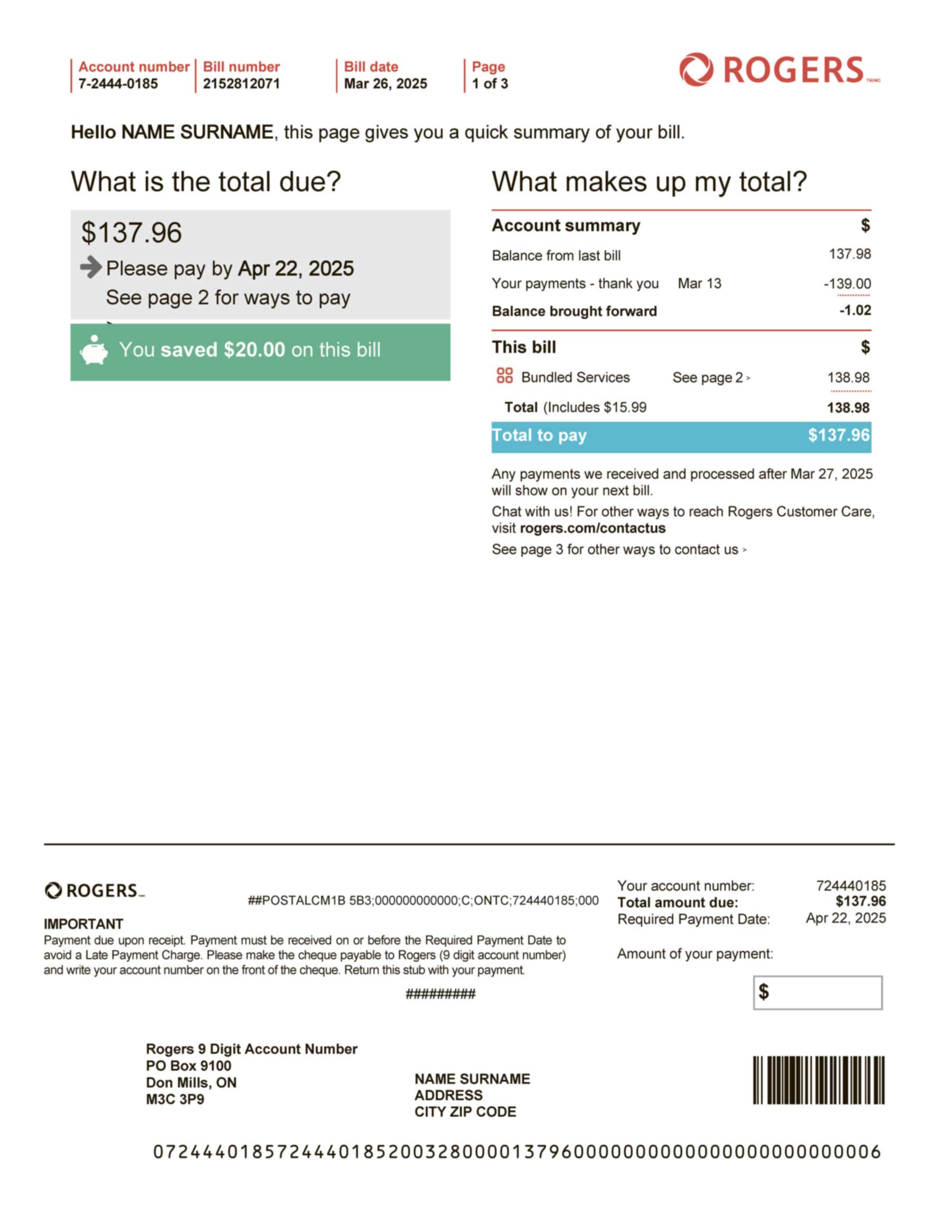
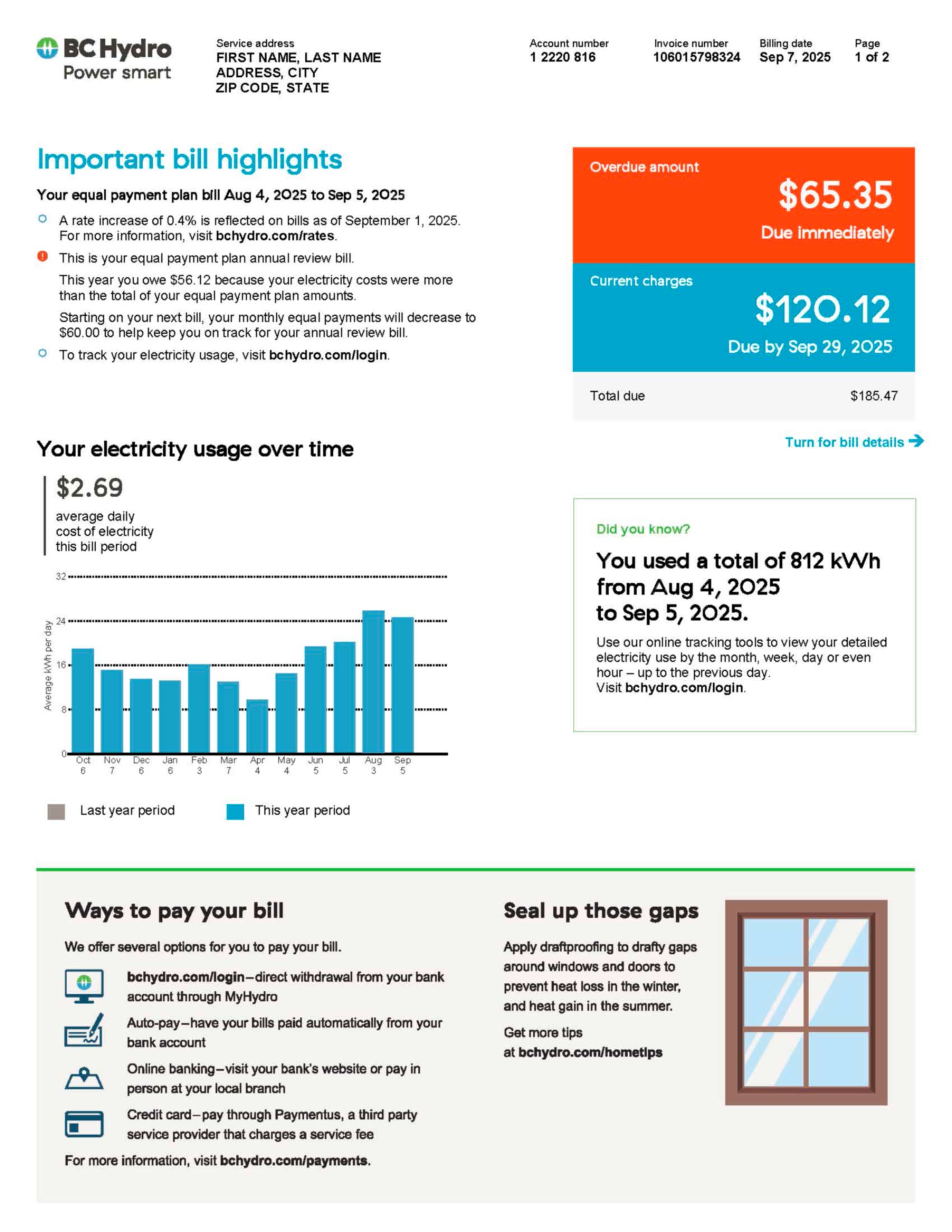
Most Canadian utility statements follow a top-to-bottom flow that guides readers through essential information in a logical sequence. The layout usually begins with customer identification and service location, followed by billing period details, then usage summaries, charge breakdowns, and payment information.

A typical structural progression often includes:

  • Account and service address information at the top
  • Statement date and billing cycle period
  • Usage or consumption summary section
  • Itemized charges and service fees
  • Tax and regulatory fee lines
  • Total amount due and payment instructions

This standardized flow helps customers quickly understand what period is being billed, how much service was used, and how the total amount was calculated.

Key information blocks found on most Canadian utility layouts

Although visual styling varies by utility category and provider, most Canadian statements consistently include the following information blocks.

Service address and account holder section

This block typically lists the customer name, service location, and account number. In some regions, bilingual labels appear beneath headings for accessibility.

Billing cycle and statement period

The billing period shows the start and end dates of service usage. Many layouts also include the statement issue date and payment due date clearly highlighted.

Consumption or usage summary

Usage is often displayed in a summary table or chart-style section showing:

  • Current period usage
  • Previous period comparisons
  • Measurement units such as kWh, cubic meters, litres, or data usage

Detailed charge breakdown

This section itemizes service charges such as base service fees, usage-based costs, delivery or infrastructure fees, and any adjustments or credits.

Taxes and regulatory fees

Canadian statements frequently separate federal and provincial taxes, along with specific regulatory charges. These are often listed clearly below service charges.

Statement total and balance information

The total amount due is typically emphasized using bold formatting or shaded boxes. Previous balances, payments received, and new totals may also appear.

Payment and remittance block

Printed layouts usually include a detachable payment section, while digital PDFs often replicate this area visually for consistency.

Digital billing formats and downloadable PDF statements in Canada

Most Canadian utilities provide online billing portals where customers can view and download PDF versions of their statements. These PDFs closely match the printed layouts in structure and formatting.

Common characteristics of Canadian digital statement layouts include:

  • Single-page or multi-page PDFs depending on charge complexity
  • Consistent placement of totals and due dates across formats
  • Clickable navigation elements in online portals
  • Print-friendly formatting with clear margins and readable fonts

While interactive online dashboards may display charts or expandable sections, the downloadable statement typically preserves a traditional document-style layout for record keeping and printing.

Structural variations by utility category in Canadian billing layouts

Each utility service type emphasizes different information blocks while still following the overall structural flow.

Electricity statements

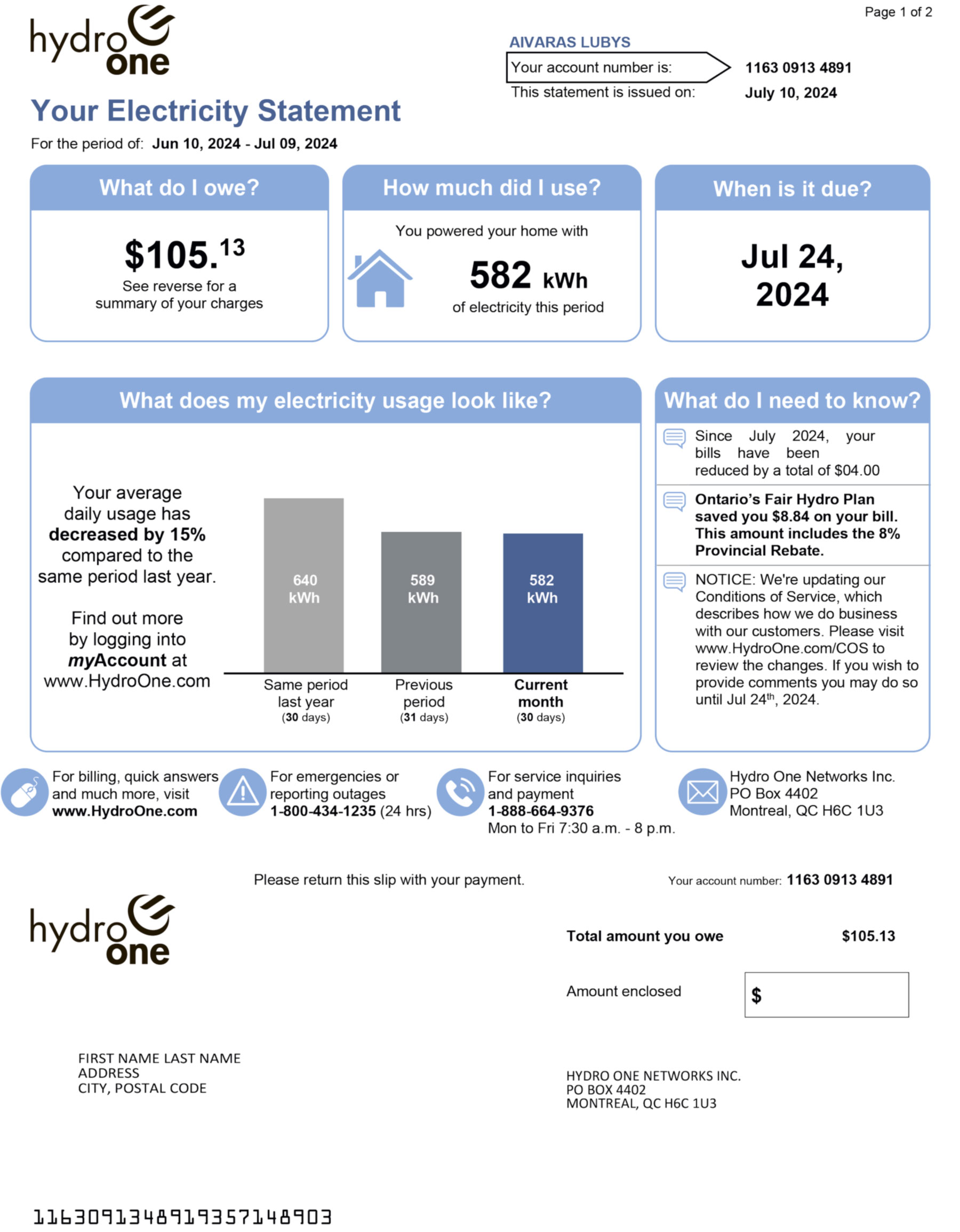
Electricity layouts commonly highlight energy consumption in kilowatt-hours, often including comparison graphs or previous period usage summaries. Delivery charges and infrastructure fees are usually separated from usage costs.

Gas service layouts

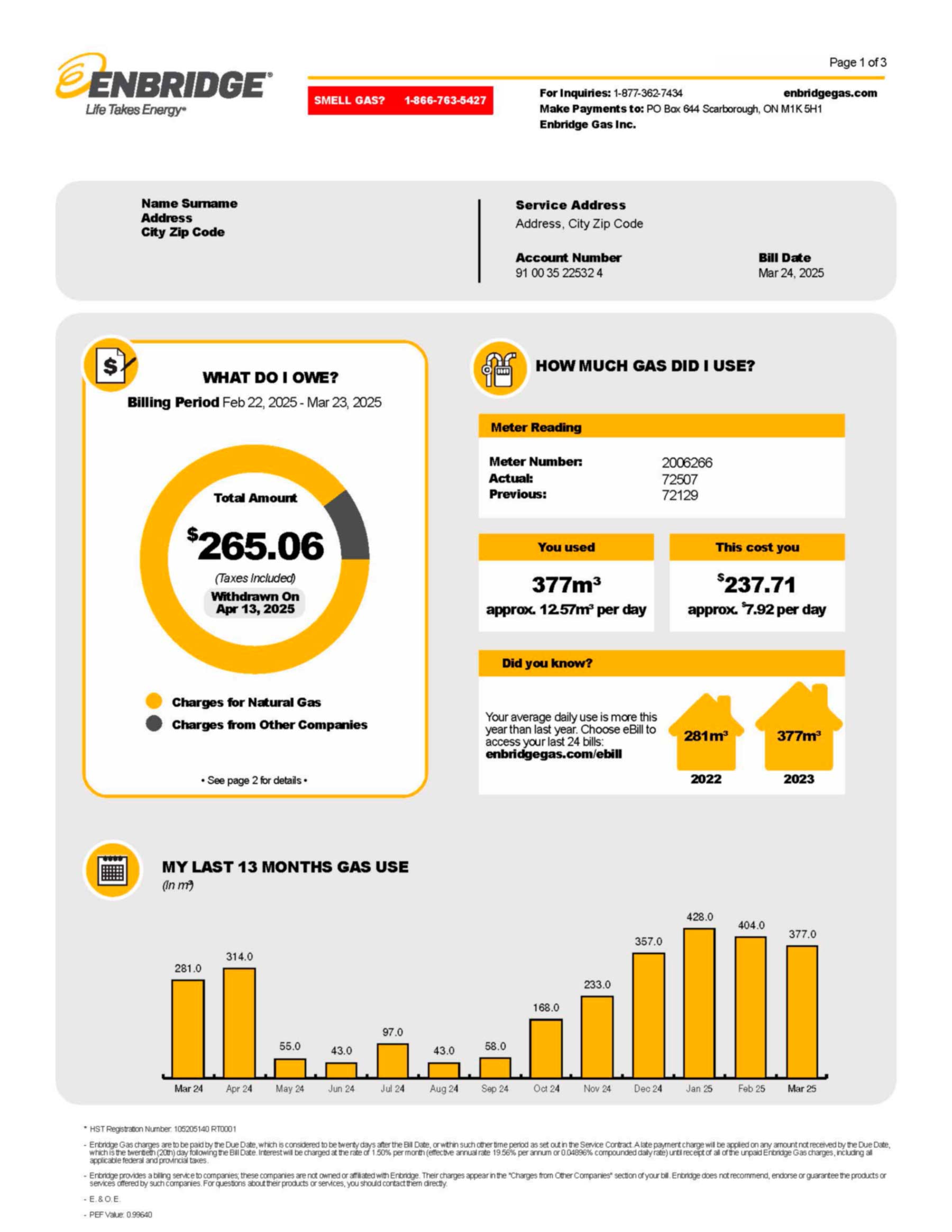
Gas bills typically present consumption in cubic meters or gigajoules, with sections showing rate calculations, delivery charges, and adjustment factors.

Water billing formats

Water statements often focus on volumetric usage and may include wastewater or stormwater charges listed as separate line items.

Phone service statements

Phone layouts frequently include plan charges, usage summaries for calls or messaging, and additional service fees displayed in itemized tables.

Internet billing summaries

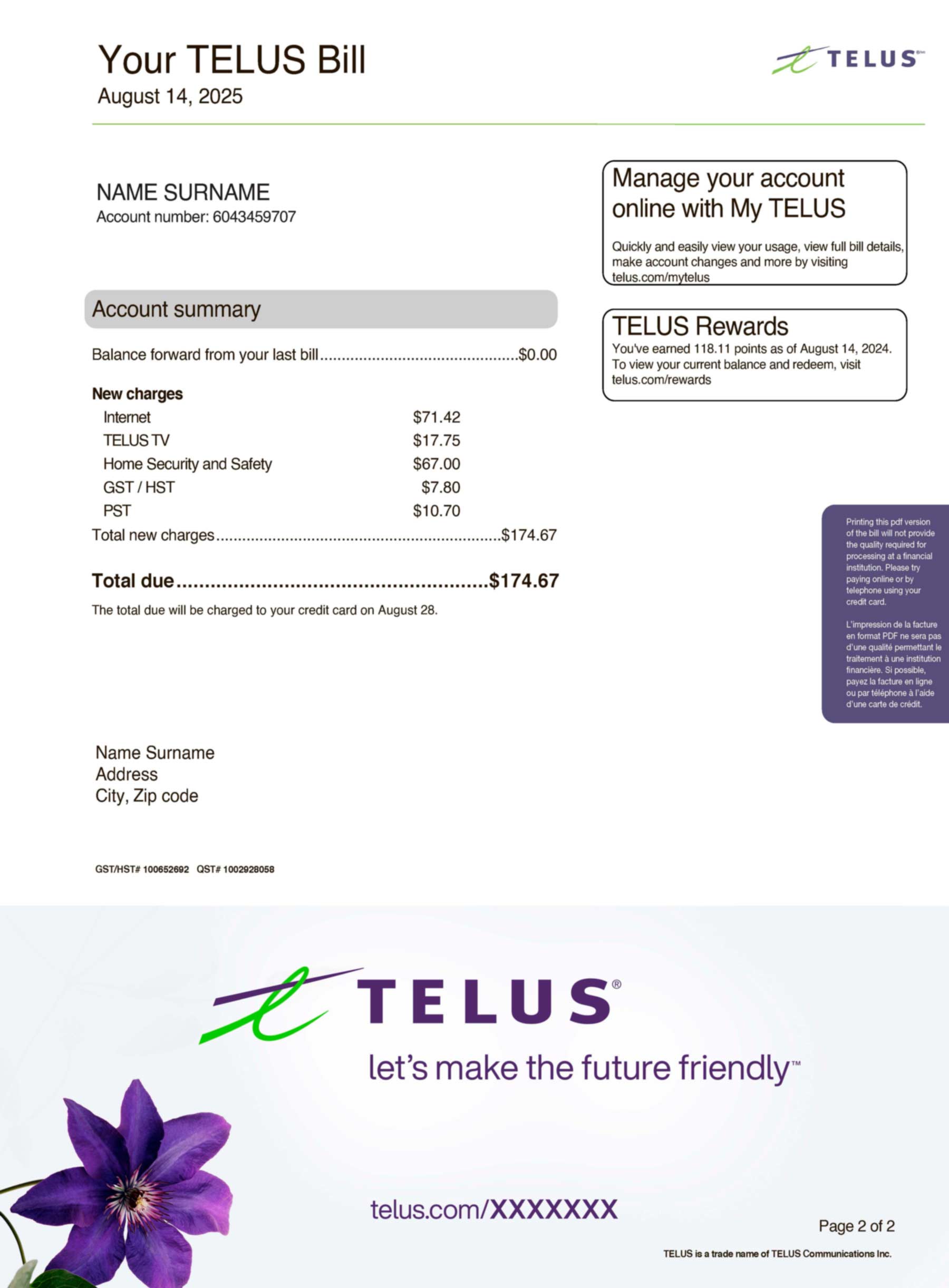
Internet statements usually emphasize monthly service plans, data usage summaries, and equipment rental charges when applicable.

Design, readability, and formatting conventions seen in Canadian statements

Canadian utility layouts are designed with clarity and accessibility in mind.

Common formatting conventions include:

  • Clear typography hierarchy separating headings, totals, and line items
  • Use of tables for itemized charges
  • Shaded or boxed sections for important totals and due dates
  • Consistent spacing for easy scanning
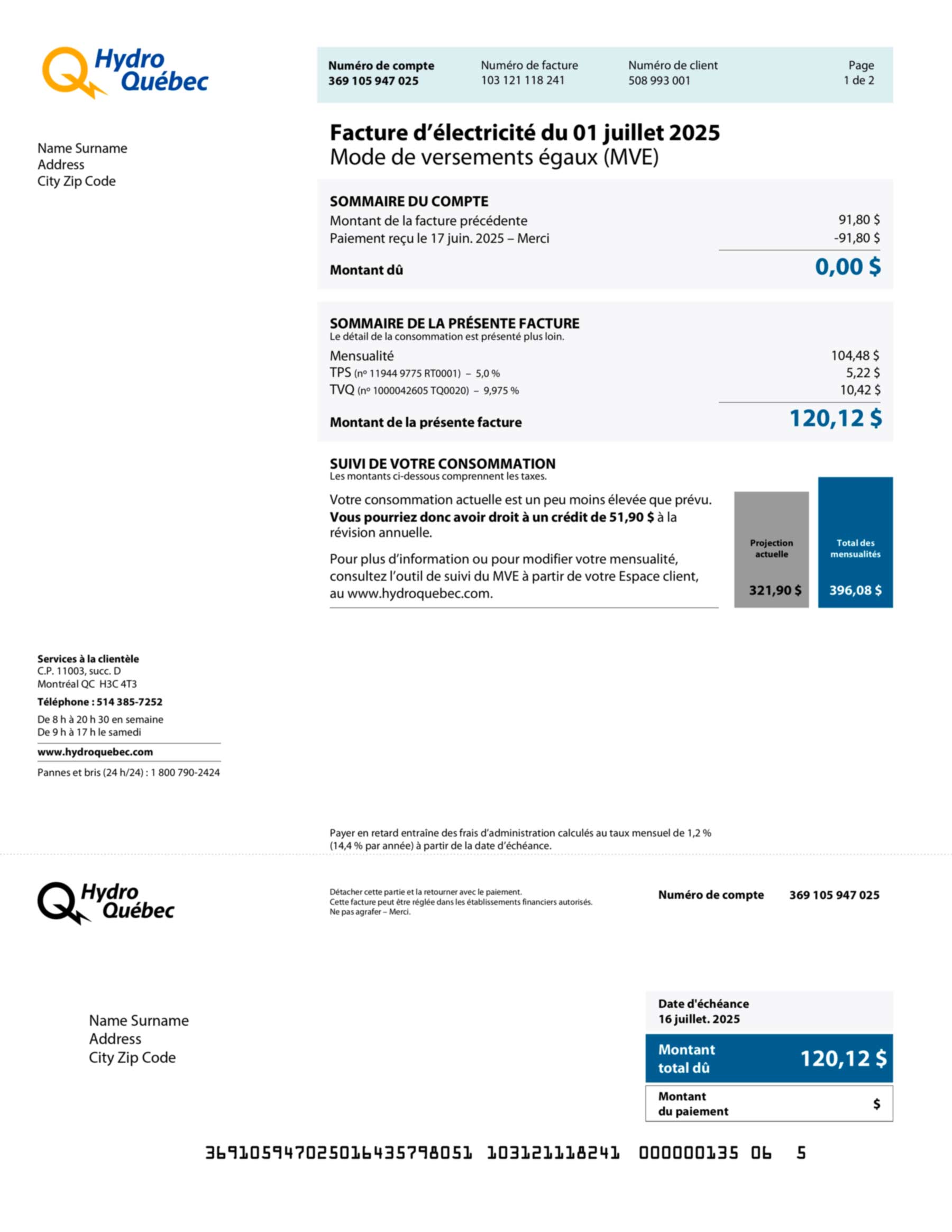
  • Bilingual headings in certain regions

Designs typically prioritize legibility over heavy branding, ensuring customers can quickly interpret key information regardless of format.

Related format references

FAQ

Why do Canadian utility bill layouts differ by service type?

Each service tracks different types of usage and charges, so layouts emphasize the most relevant information for electricity, gas, water, phone, or internet services.

What information appears on most Canadian statements?

Most include service address, billing period, usage summary, itemized charges, taxes, total amount due, and payment information.

Are digital layouts the same as printed formats?

Downloaded PDFs usually mirror printed layouts closely, while online portals may offer interactive views alongside the traditional statement format.

How are usage charges typically displayed?

Usage is often shown in summary tables or charts, followed by detailed calculations in the charge breakdown section.

Why are taxes and fees separated in many Canadian layouts?

Separating taxes and regulatory charges improves transparency and aligns with Canadian billing regulations.

Do layouts vary by province or regulation?

Yes, certain provinces require specific disclosures, bilingual labeling, or regulatory information blocks.

Why are totals often highlighted visually?

Emphasized totals help customers quickly locate the amount due and important payment deadlines.

Optional design resources

For those studying document presentation or practicing formatting, layout reference templates and sample statement structures can be helpful for visual understanding and UI design training. These resources focus purely on layout patterns and information organization for educational purposes.

Educational note: This platform provides layout references and format structure examples only. It does not issue real statements or represent any utility providers.

Scroll to Top
Brand-utilitybill logo for custom utility bills company
Privacy Overview

This website uses cookies so that we can provide you with the best user experience possible. Cookie information is stored in your browser and performs functions such as recognising you when you return to our website and helping our team to understand which sections of the website you find most interesting and useful.