Phone bills (mobile or landline) are periodic service statements that summarise plan charges, billing cycles, and any activity-based usage details. Compared with metered utilities like electricity or water, phone statements are often built around subscription plans, add-ons, and itemised service activity rather than physical meter readings.
This hub provides an educational, layout-focused overview of how phone bill formats are commonly organised across different regions. The goal is to help readers understand typical document structure, field groupings, and presentation patterns — not to describe official standards or reproduce provider-specific documents.
All content on this platform is intended strictly for informational, training, and layout reference purposes. It does not represent official billing statements and is not affiliated with telecom providers, regulators, or public institutions.
What a Phone Bill Usually Includes
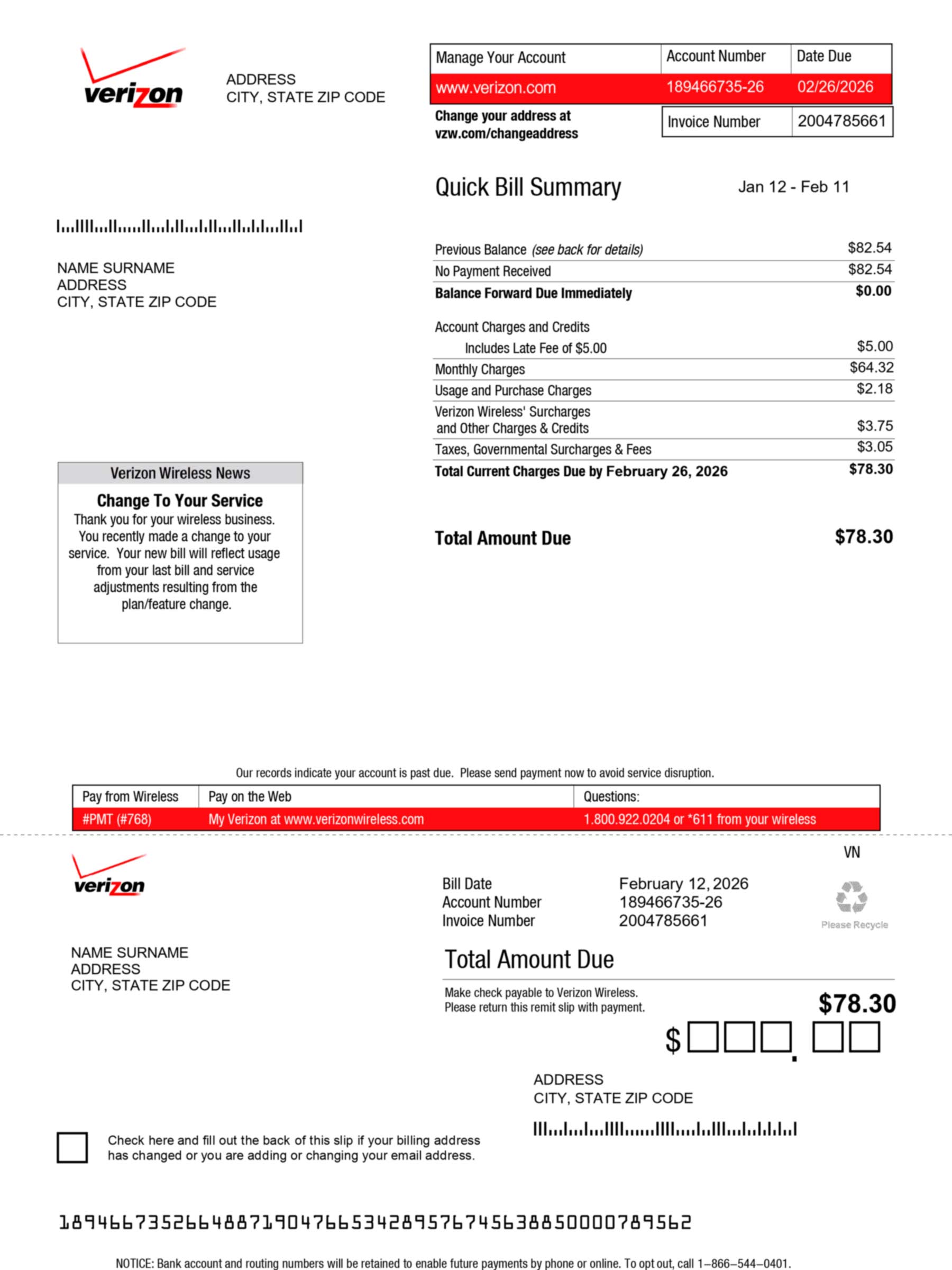
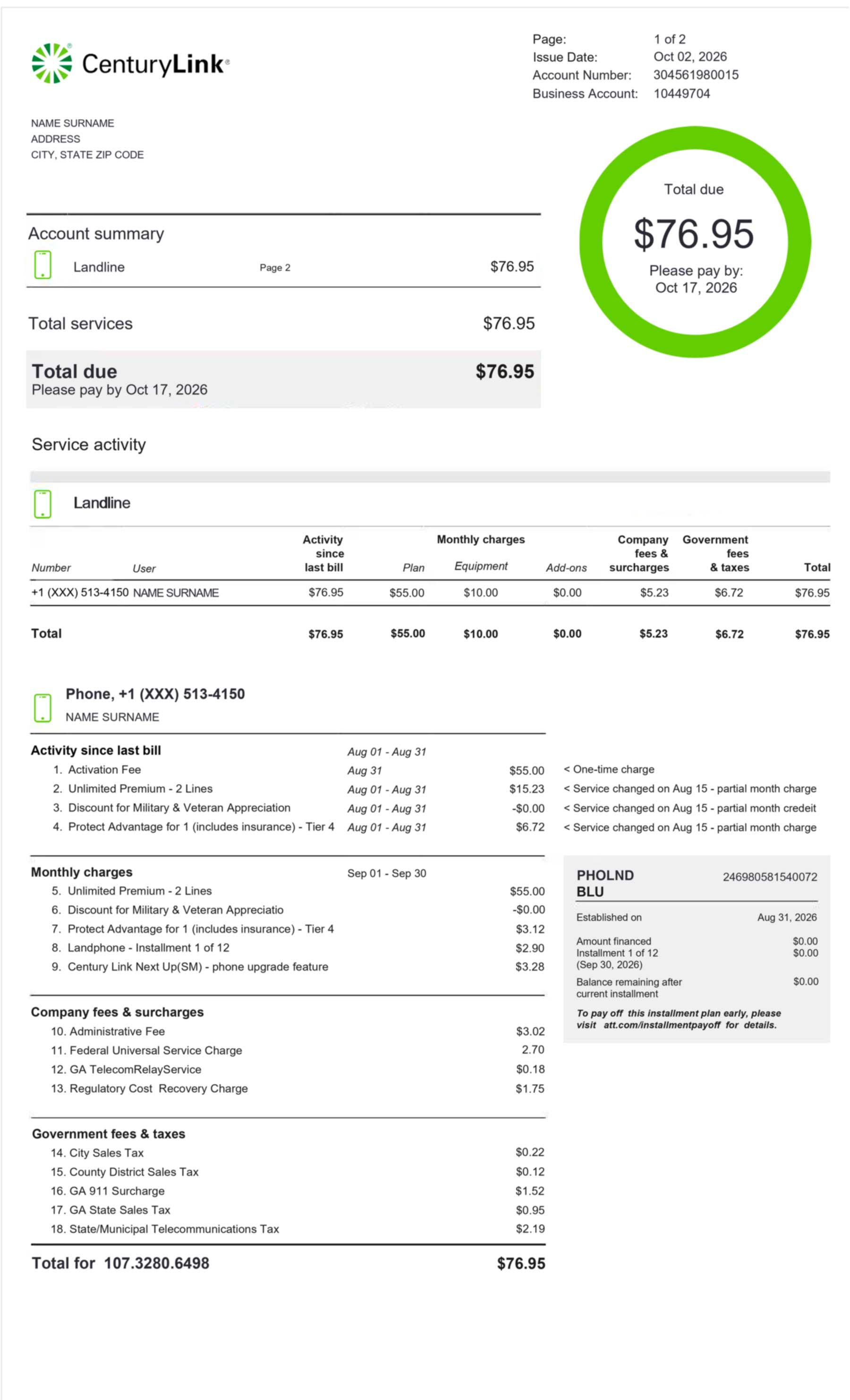
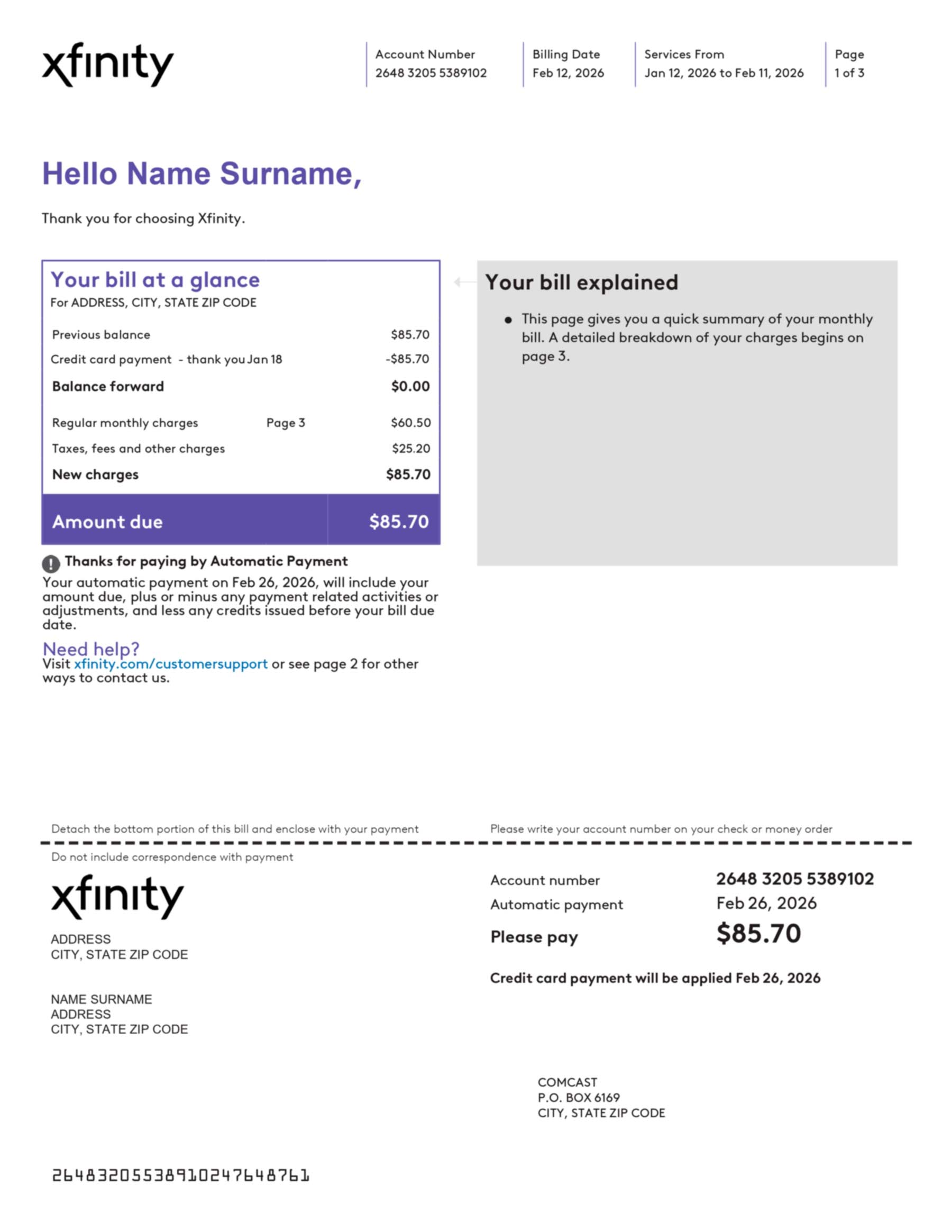
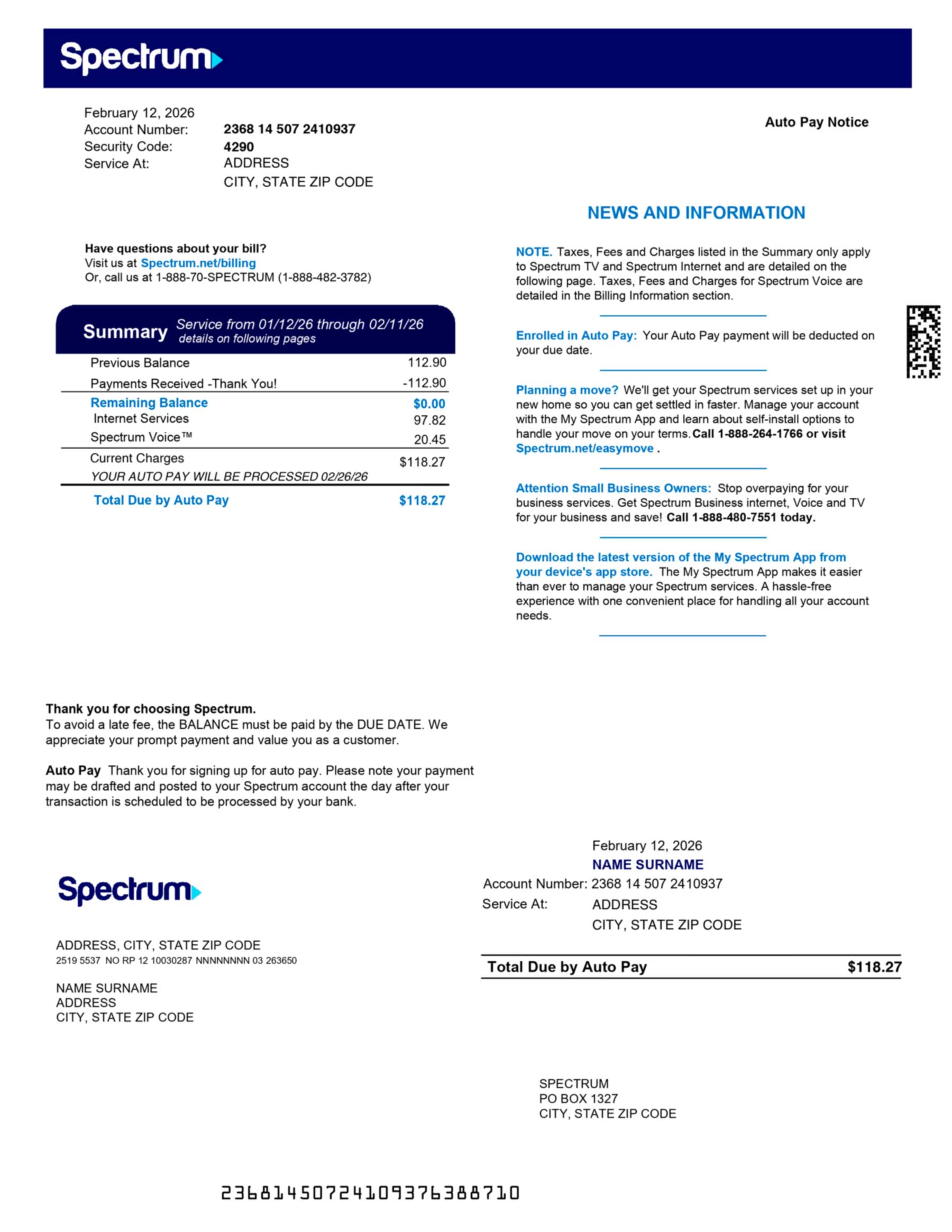
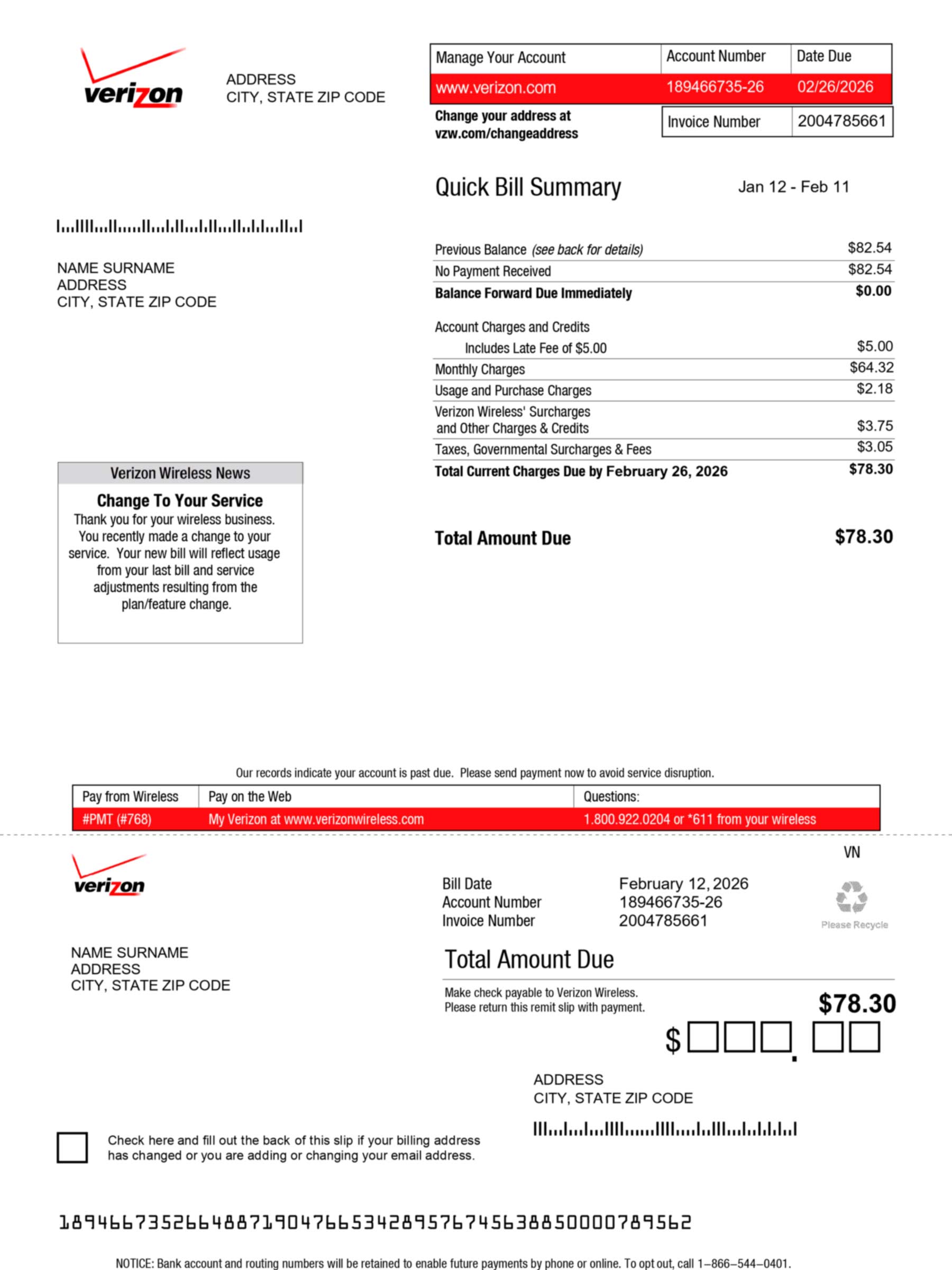
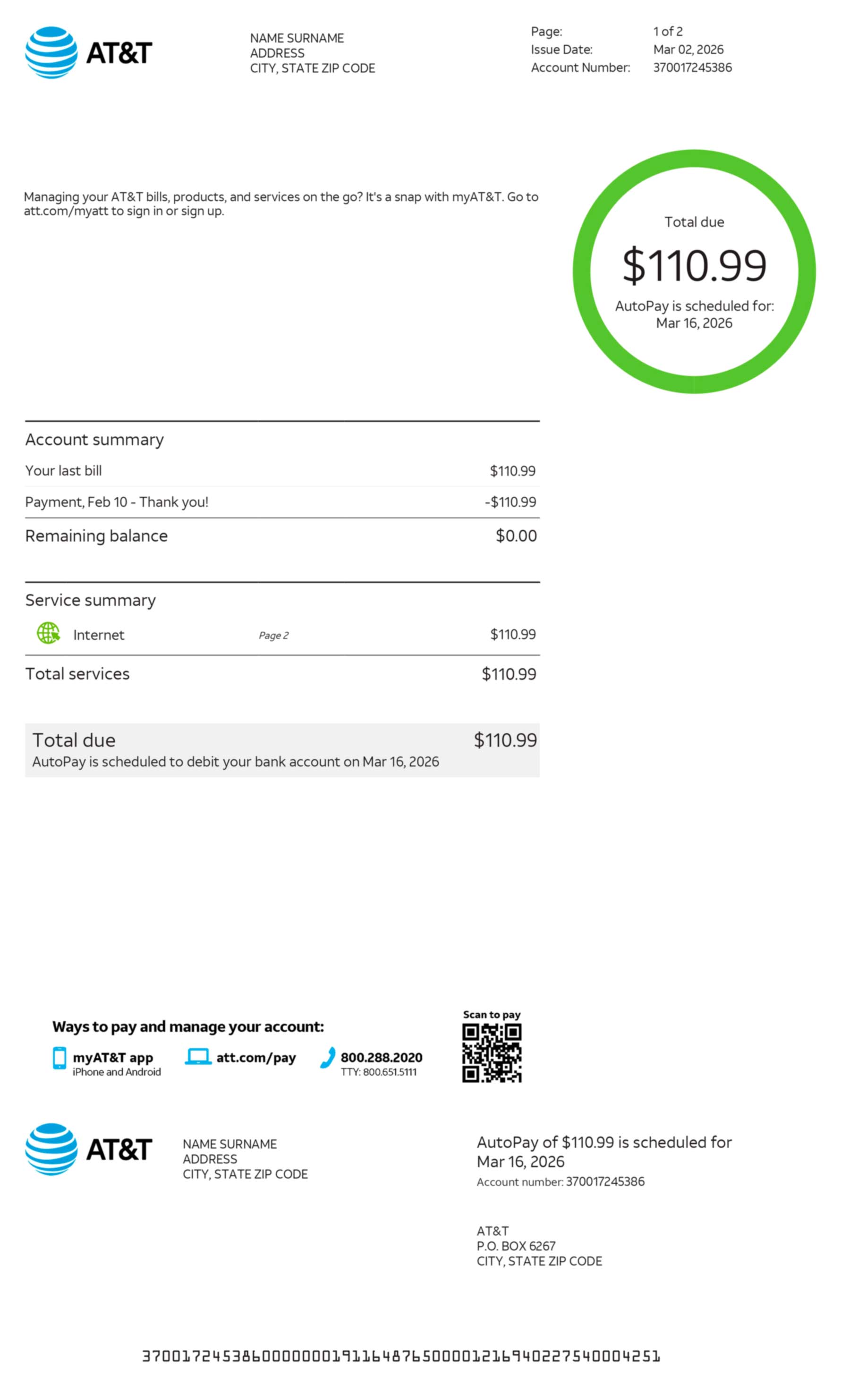
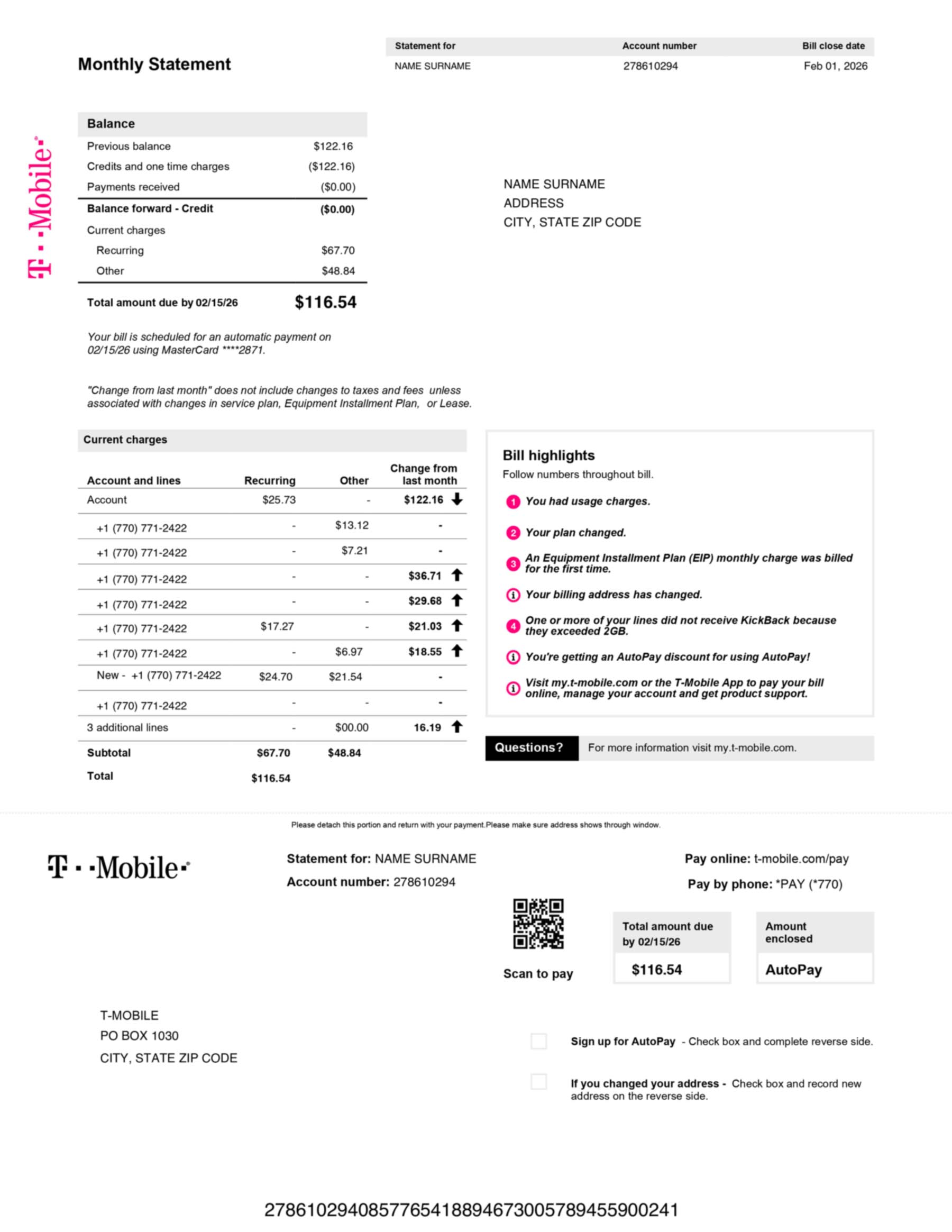
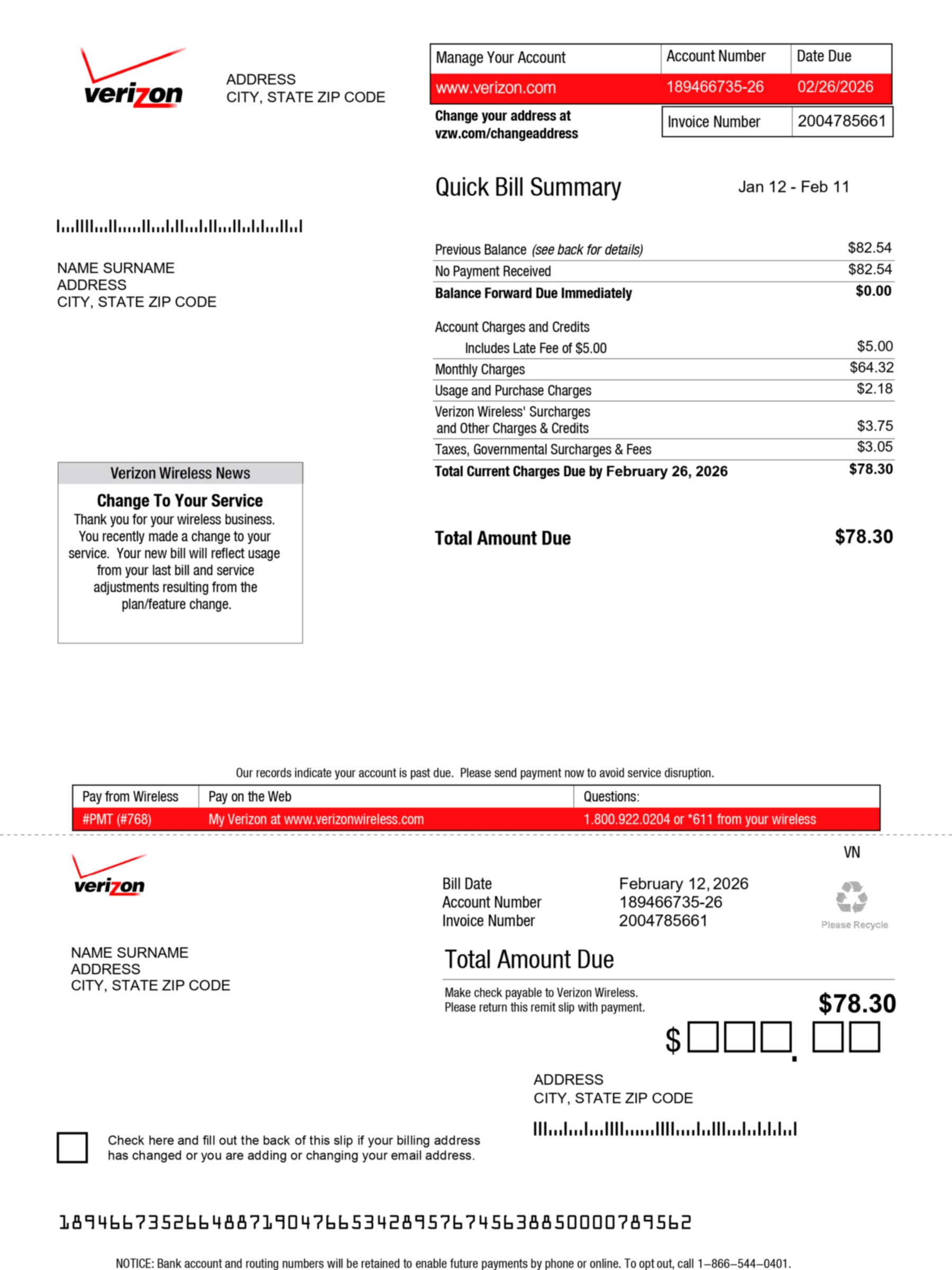
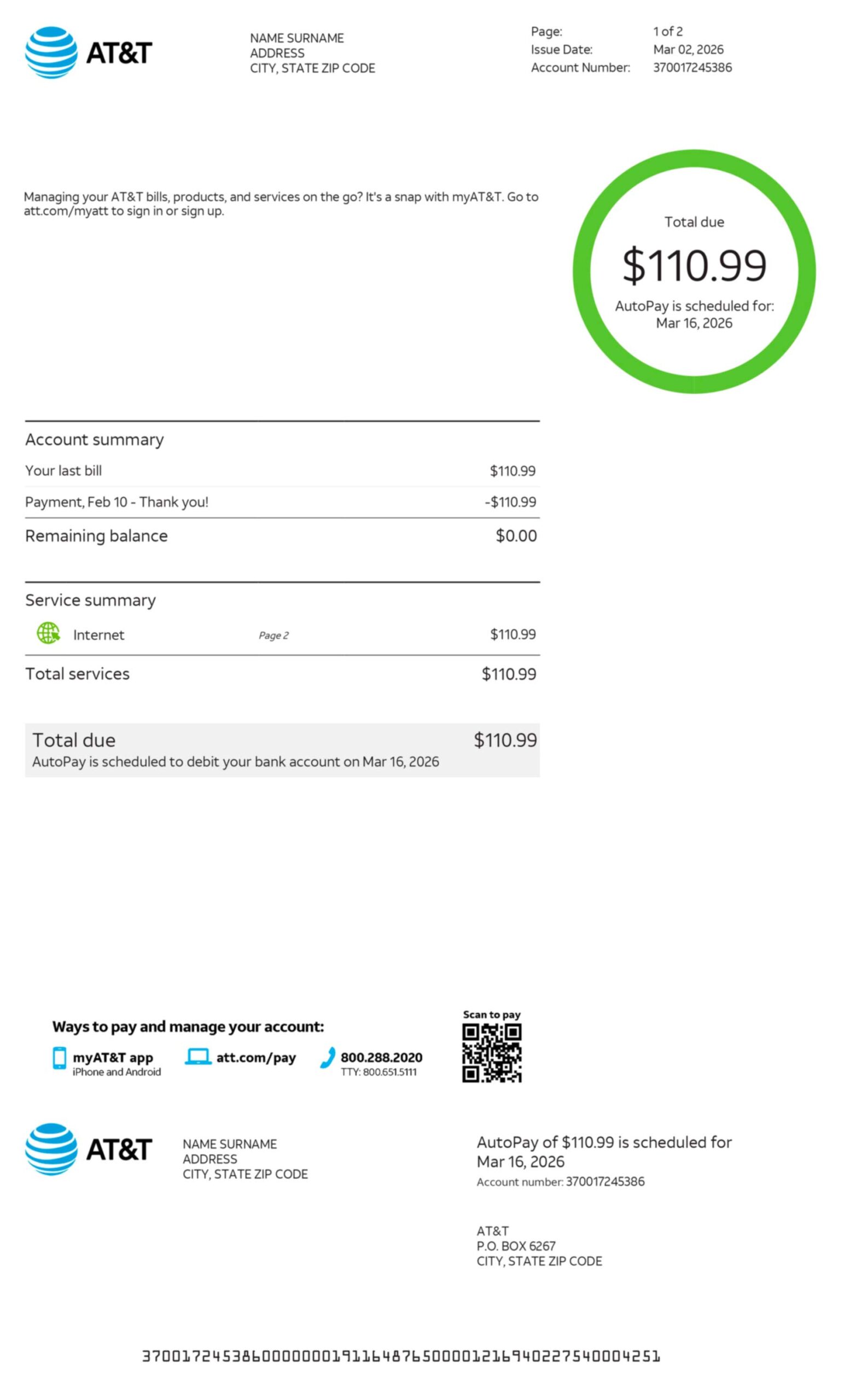
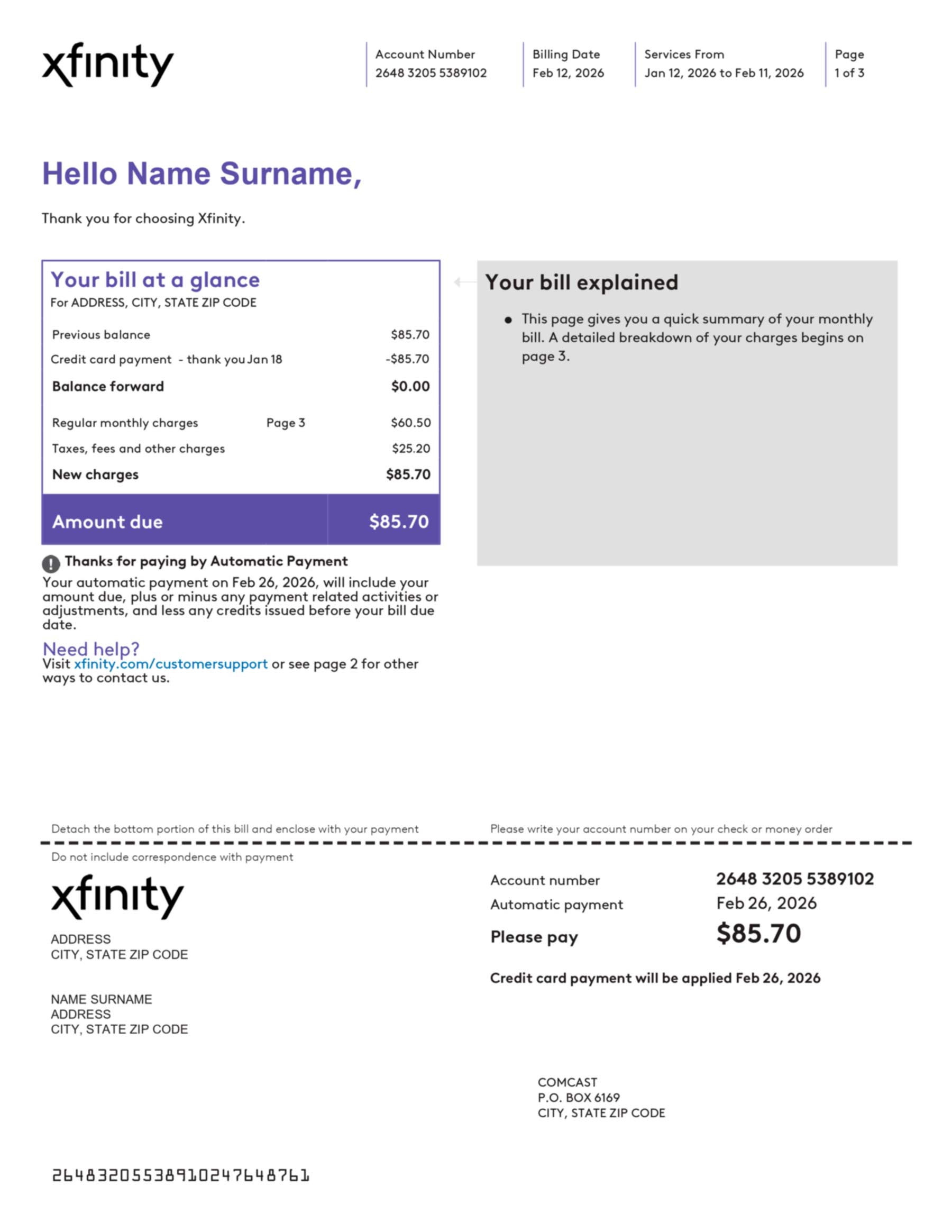
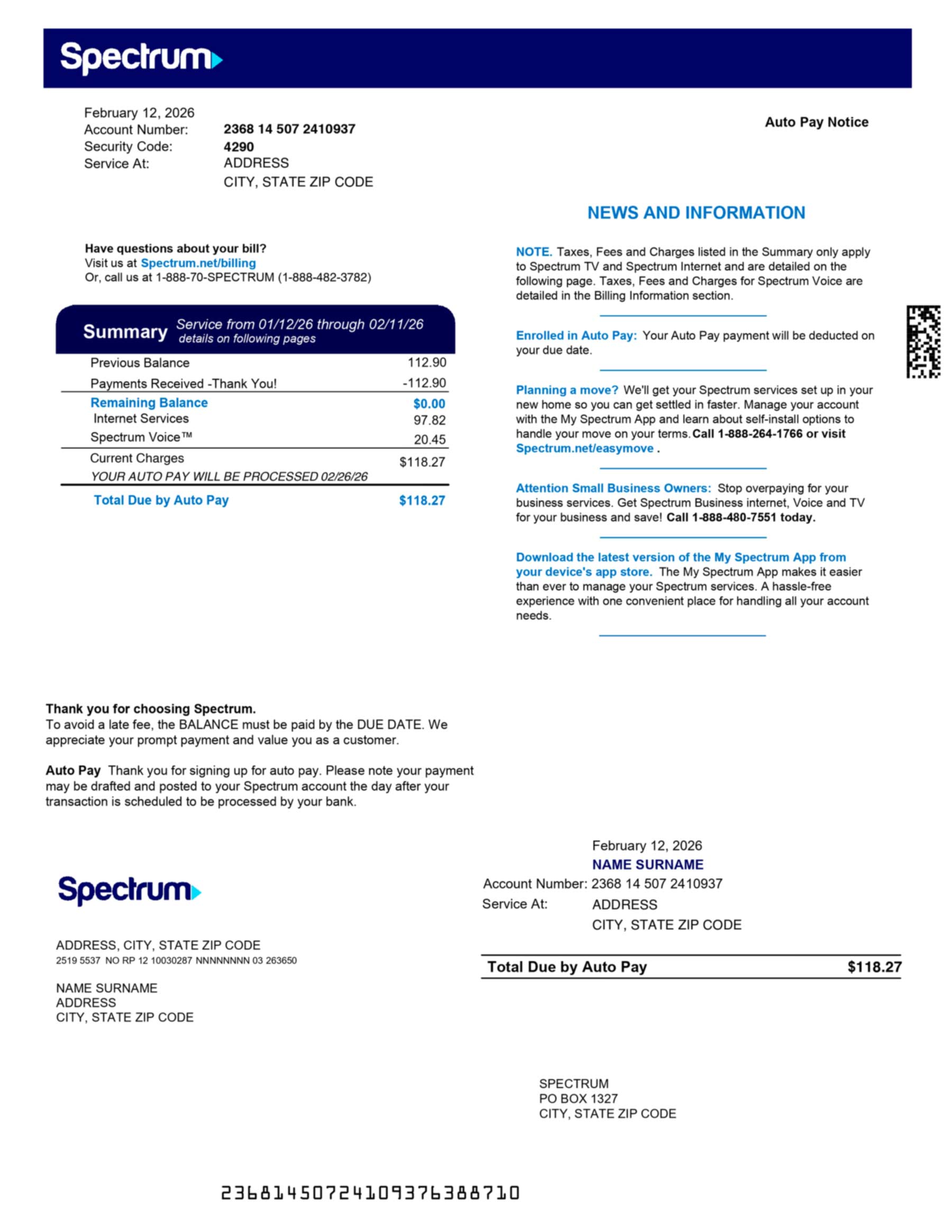
While designs vary, most phone statements share a consistent set of information blocks that appear in a predictable order:
- Account summary — statement date, account reference, and key totals
- Customer and service details — account holder name and service identifiers
- Billing cycle block — coverage dates and due date
- Plan and subscription section — base plan name and recurring charges
- Add-ons and extras — device-related items, additional lines, or optional services
- Usage overview — minutes, messages, or data summaries (when provided)
- Itemised activity — call/message entries or service events (when included)
- Taxes and fees — local charges, regulatory fees, or VAT
- Total amount due — final balance and payment instructions
How Phone Statements Are Commonly Laid Out
Phone bill layouts often prioritise quick scanning of totals and plan charges. A common visual approach is to place the most important figures early, then provide supporting detail below:
- A prominent summary area near the top showing total due and due date
- A plan/recurring charges block that reads like an invoice section
- Optional usage and itemisation sections that appear as tables
- A separate fees/taxes block with smaller line items
This structure helps readers understand the monthly baseline cost first, then explore details only if needed.
Key Fields and Presentation Patterns
Phone bills frequently use a mix of summary “cards” and table-like sections. Common presentation patterns include:
- Recurring vs one-time separation — monthly plan fees shown apart from one-off charges
- Line-item grouping — charges grouped by category (plan, extras, device, adjustments)
- Usage summaries — totals displayed in a compact block rather than a large table
- Itemised activity tables — rows of dates/times with associated service entries (when included)
- Footers for notices — regulatory notes and policy text often placed at the bottom
Even when the statement contains a lot of detail, layouts usually try to keep the “what you owe” message visually dominant.
Subscription Plans, Add-Ons, and Activity Sections
One reason phone bill designs differ from other utility bills is the number of potential service components. Layouts often include:
- Plan tier details (what the subscription includes)
- Additional lines or shared-plan allocations
- Add-on services (international options, roaming features, premium services)
- Adjustments (credits, prorations, plan changes mid-cycle)
These items are commonly presented in grouped blocks so readers can separate predictable monthly charges from variable changes.
Regional Formatting Conventions
Regional practices influence terminology, tax presentation, and where legal notices appear. Examples of differences that commonly show up in layouts include:
- VAT-inclusive or itemised VAT blocks in many European statements
- Detailed fee disclosures and surcharges in some North American formats
- Different labels for billing cycles, plan allowances, and service identifiers
- Local regulatory notices placed in side panels or footer sections
These conventions reflect local rules and established telecom billing practices rather than a single universal design standard.
PDF Statements vs Digital Account Bills
Phone bills are often delivered both as downloadable PDFs and inside online account portals. The same content may be presented differently:
- PDF statements typically use fixed-width tables and clearly segmented blocks
- Digital bills often show a top-level summary first, with expandable details underneath
- Mobile-first views may convert long tables into stacked rows or grouped cards
In most cases, the layout changes, but the underlying information groups remain consistent.
Practical Layout Notes for Designers and Analysts
If you’re analysing or designing a phone statement layout, these choices tend to matter most:
- Make totals and due dates easy to spot without scrolling
- Separate recurring plan charges from one-time items and adjustments
- Use consistent column alignment for currency and totals
- Keep itemised activity readable (dates, times, references) without clutter
- Place legal notices where they don’t interrupt the financial story
Good phone bill layouts reduce confusion by clearly communicating the baseline monthly cost and showing changes in a structured way.
Related Phone Bill Format References
- Phone bill layouts in the United States
- Phone statement formats in the United Kingdom
- European phone bill layout overview
- Phone bill structures in Canada
- Australian phone bill format references
- Common utility bill fields explained
- Billing period layout blocks
- PDF vs digital bill layout patterns
- Utility billing terminology glossary
Frequently Asked Questions
Do phone bills always include itemised calls and messages?
Not always. Many statements provide a usage summary only, while itemised activity may be optional, limited, or available separately in digital account views.
Why do phone bills separate plan charges from other items?
Phone billing often includes recurring monthly charges plus variable items like add-ons, adjustments, or one-time fees. Separating them improves clarity.
Are mobile and landline statements formatted the same way?
They share similar structure, but mobile bills more commonly include data allowances and plan-related sections, while landline statements may emphasise call activity.
Do digital phone bills show the same information as PDFs?
Usually yes, but digital versions often reorganise content into summaries and expandable sections for easier navigation.
Do phone statement layouts differ by country?
Yes. Taxes, fee disclosures, terminology, and regulatory notices vary by region, which influences how statements are organised.
Is there a universal standard phone bill format?
No single global standard exists. Layouts evolve based on local regulations and billing practices.
Optional Design Resources
For those looking for structured layout examples for training materials, interface mockups, or formatting practice, curated phone bill layout template packs are available as optional design resources. These collections highlight common statement structures and presentation patterns across multiple regions.
Exploring region-specific layout packs can complement the educational references provided throughout this hub.