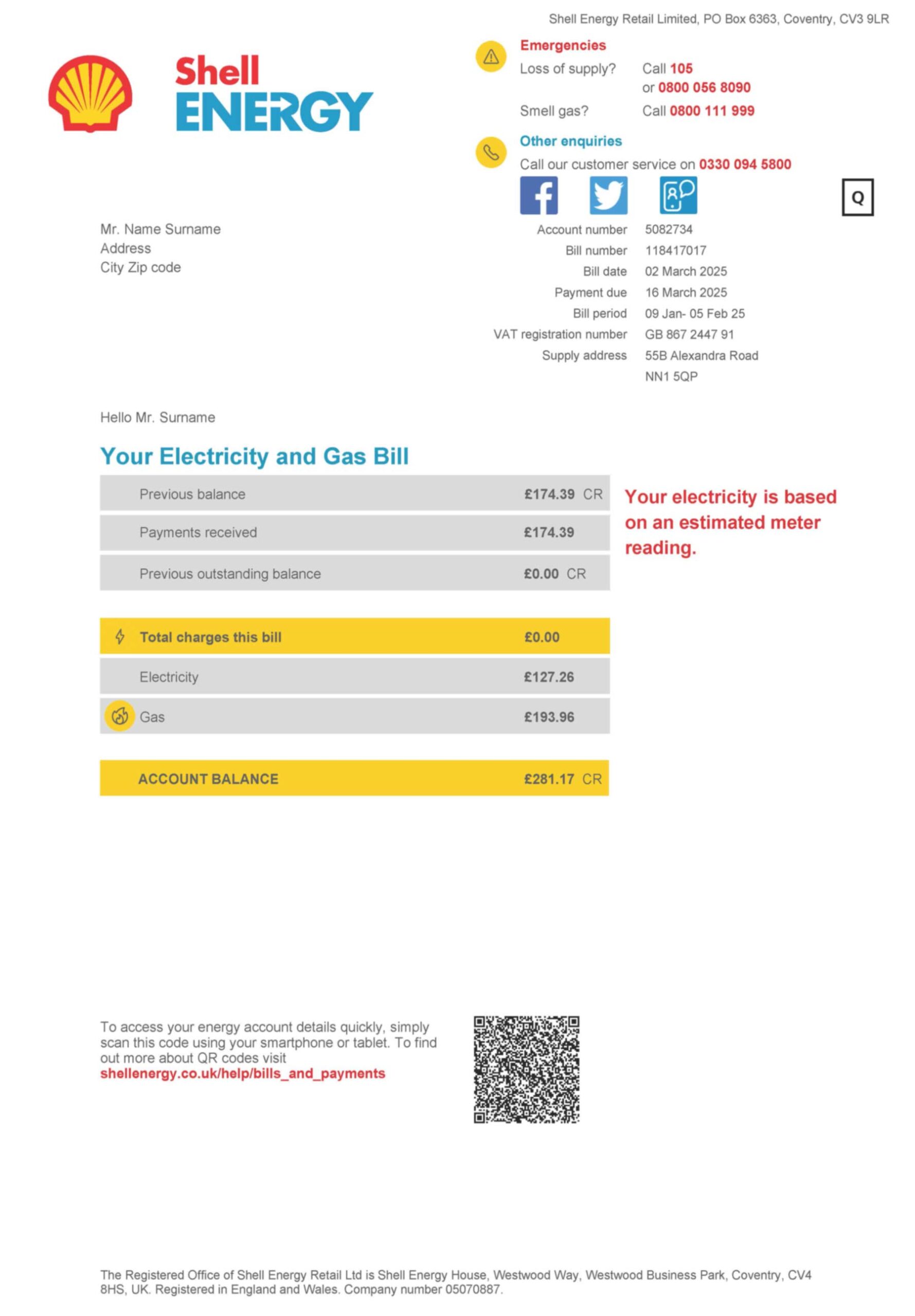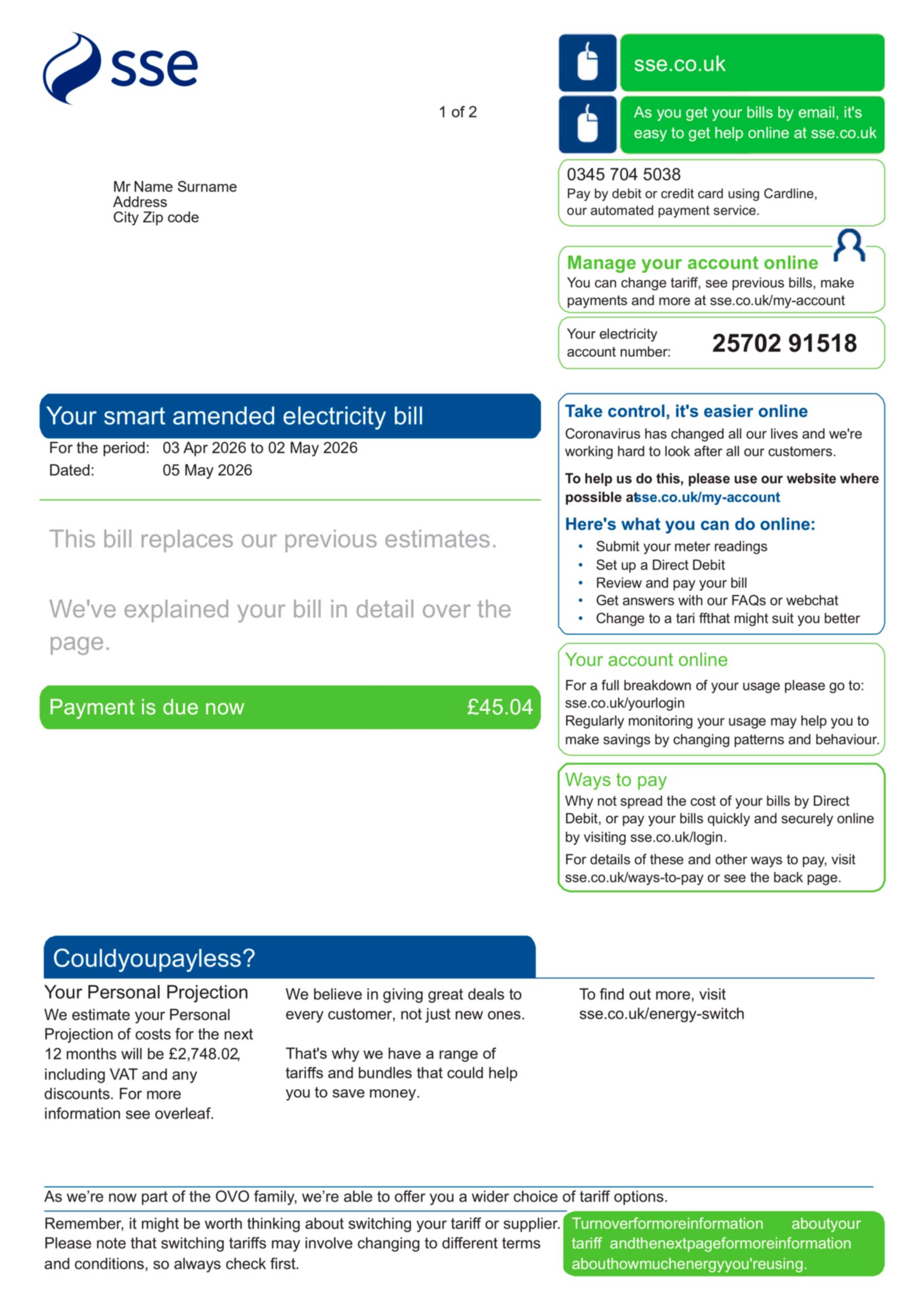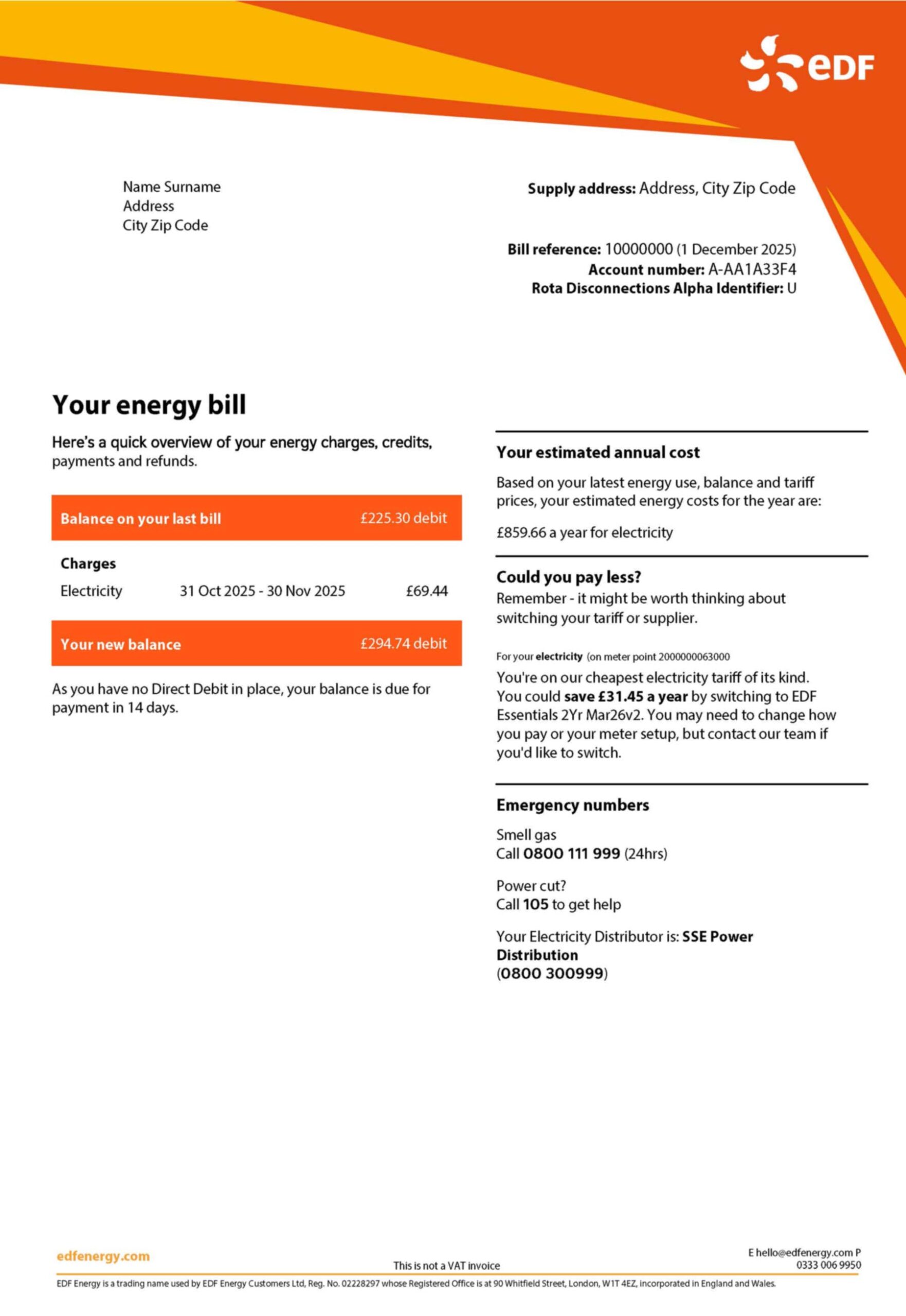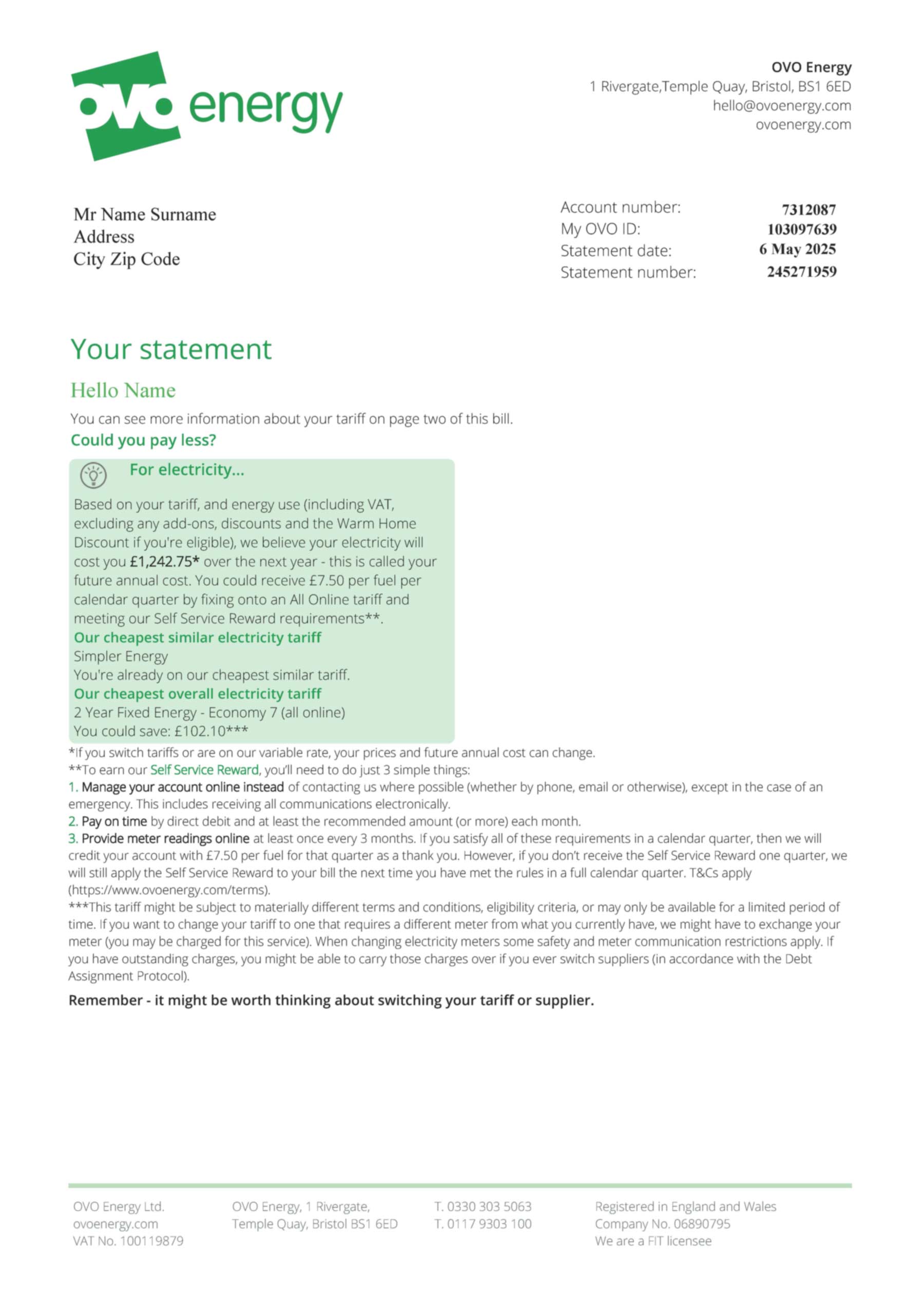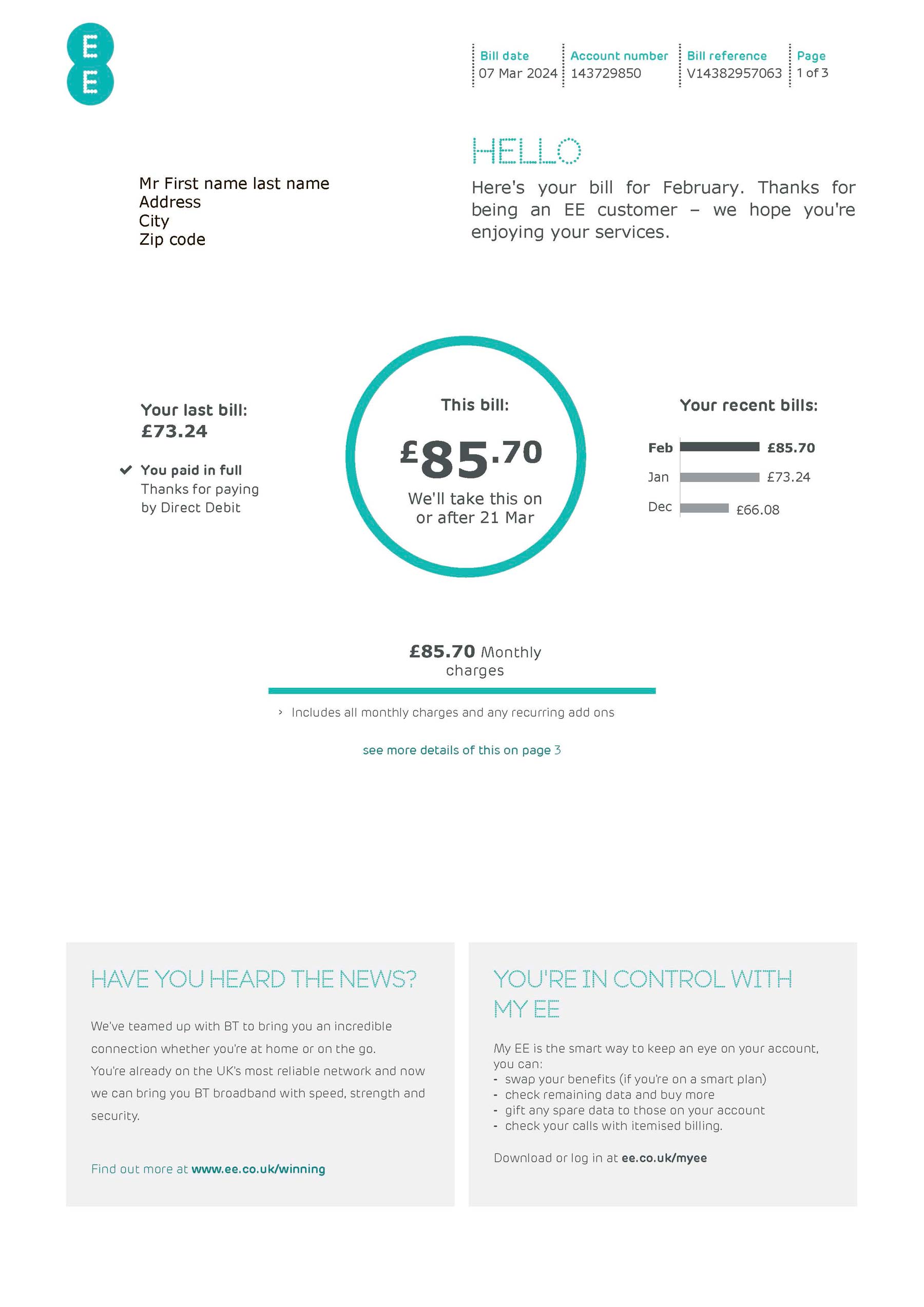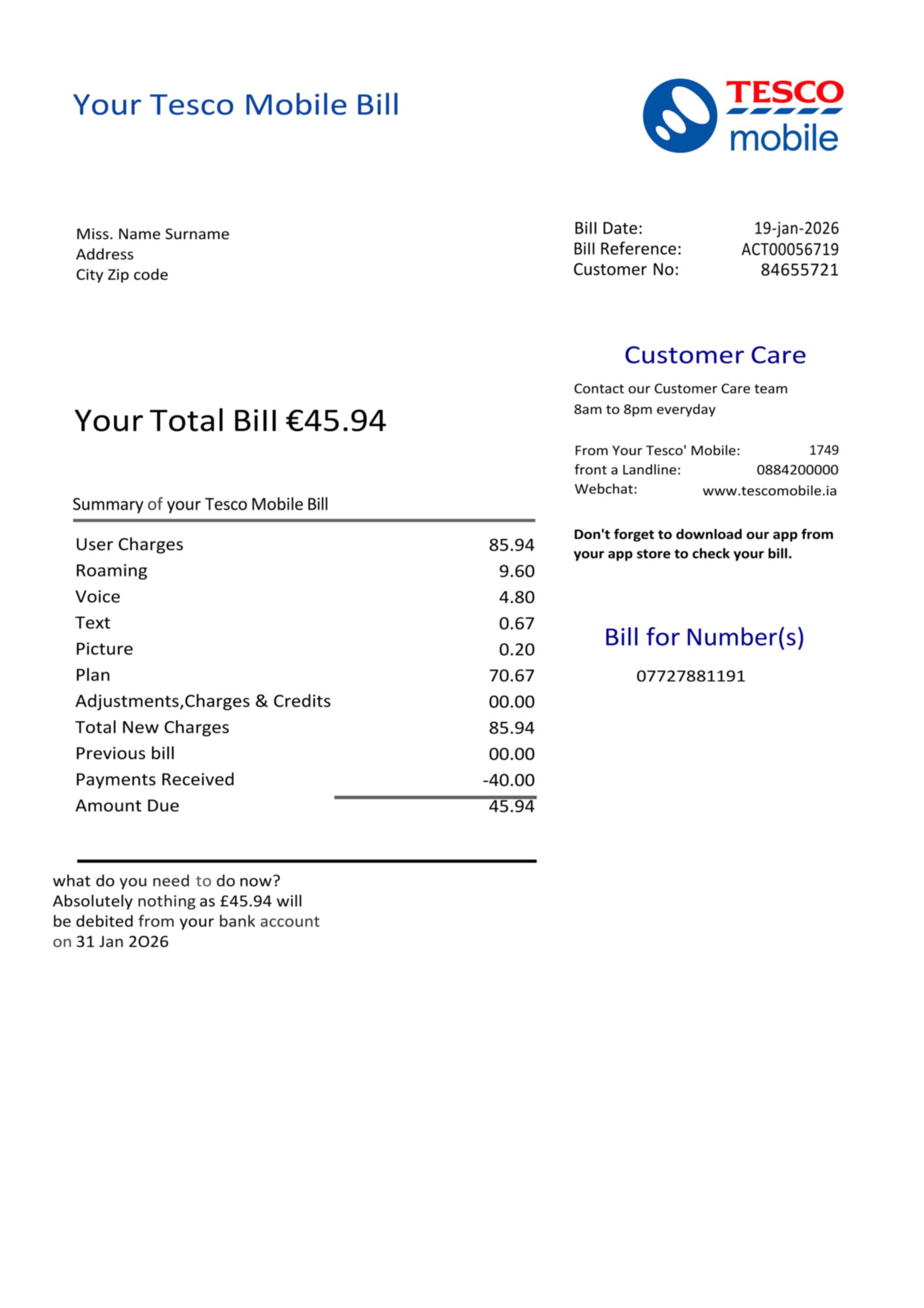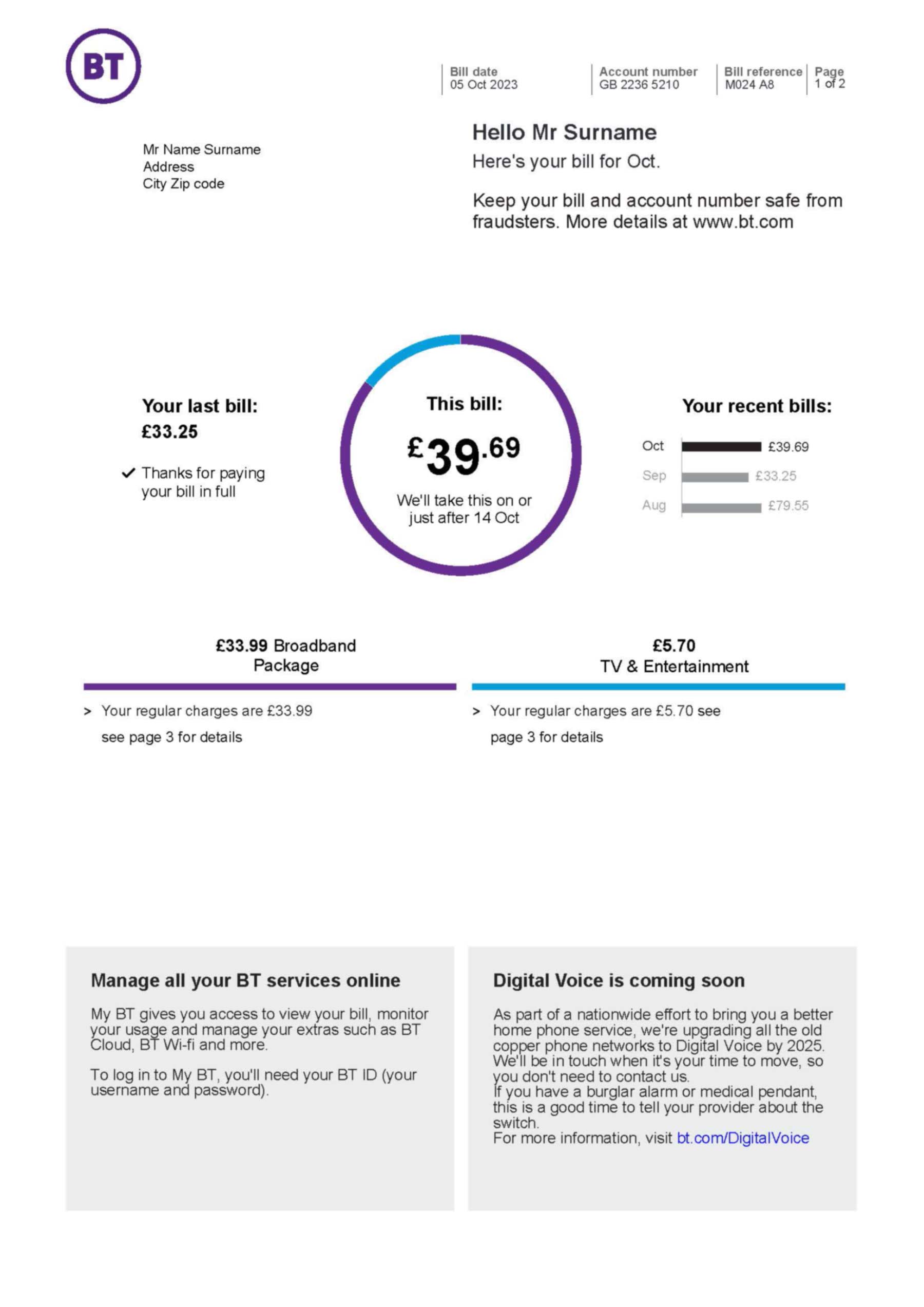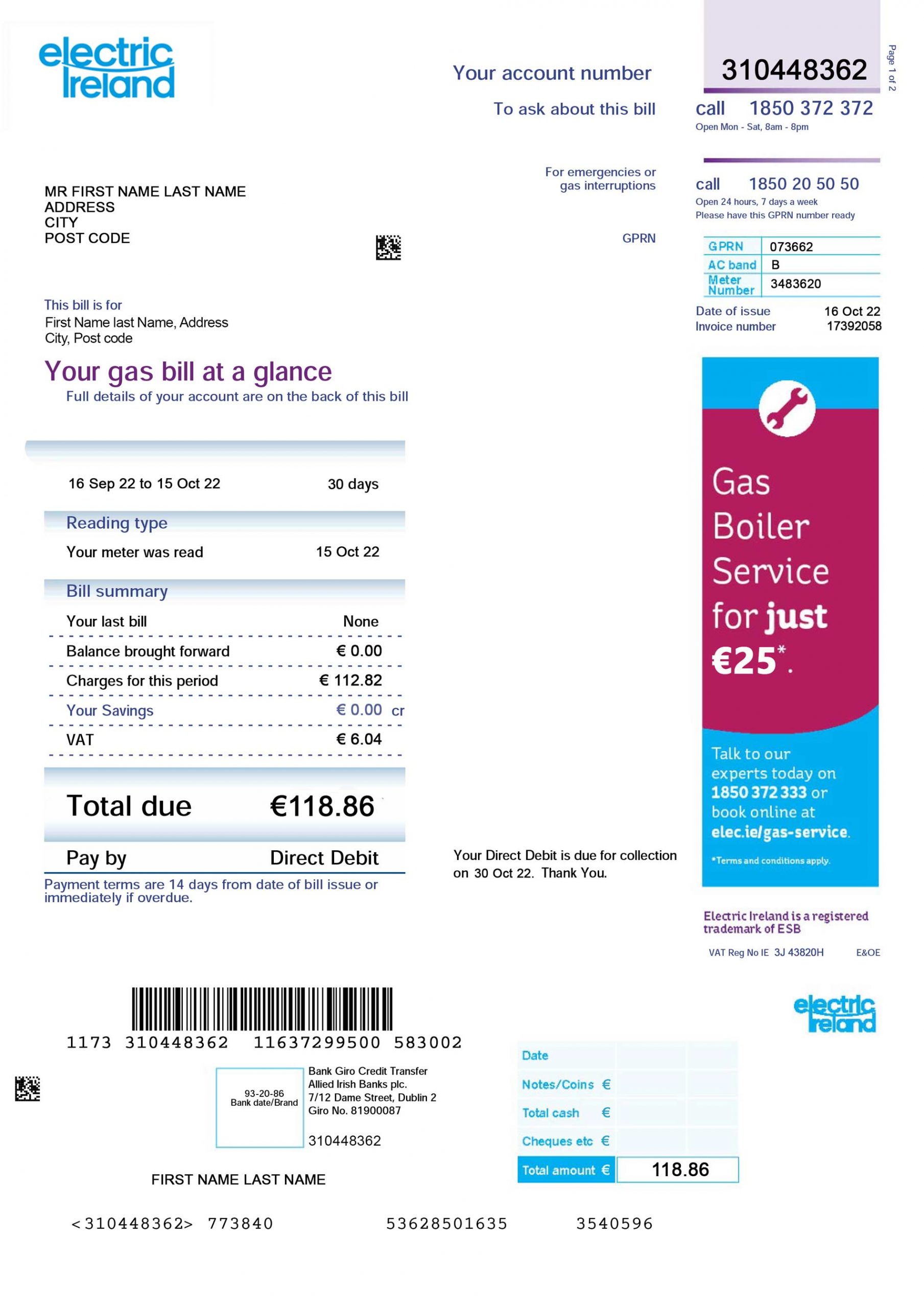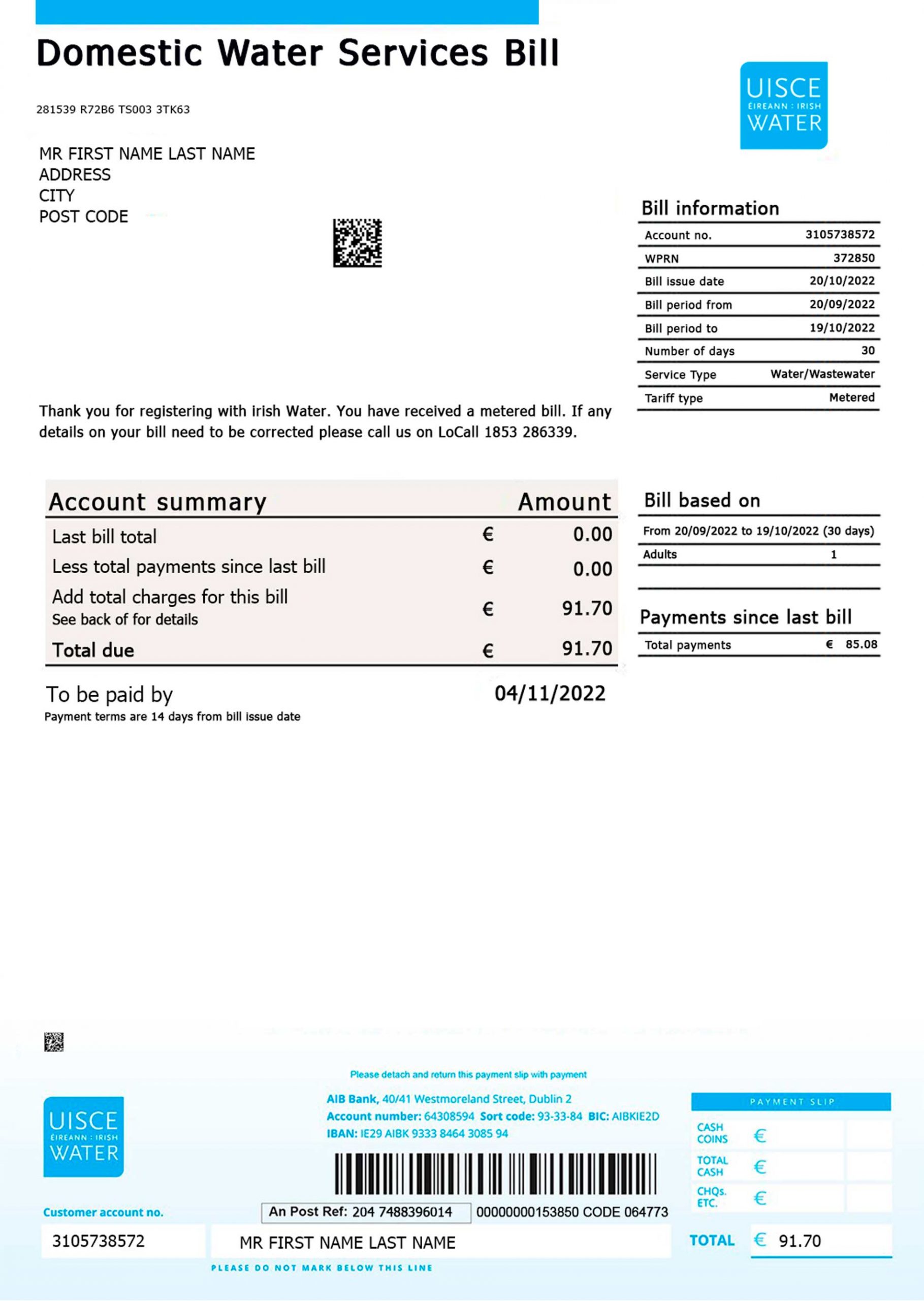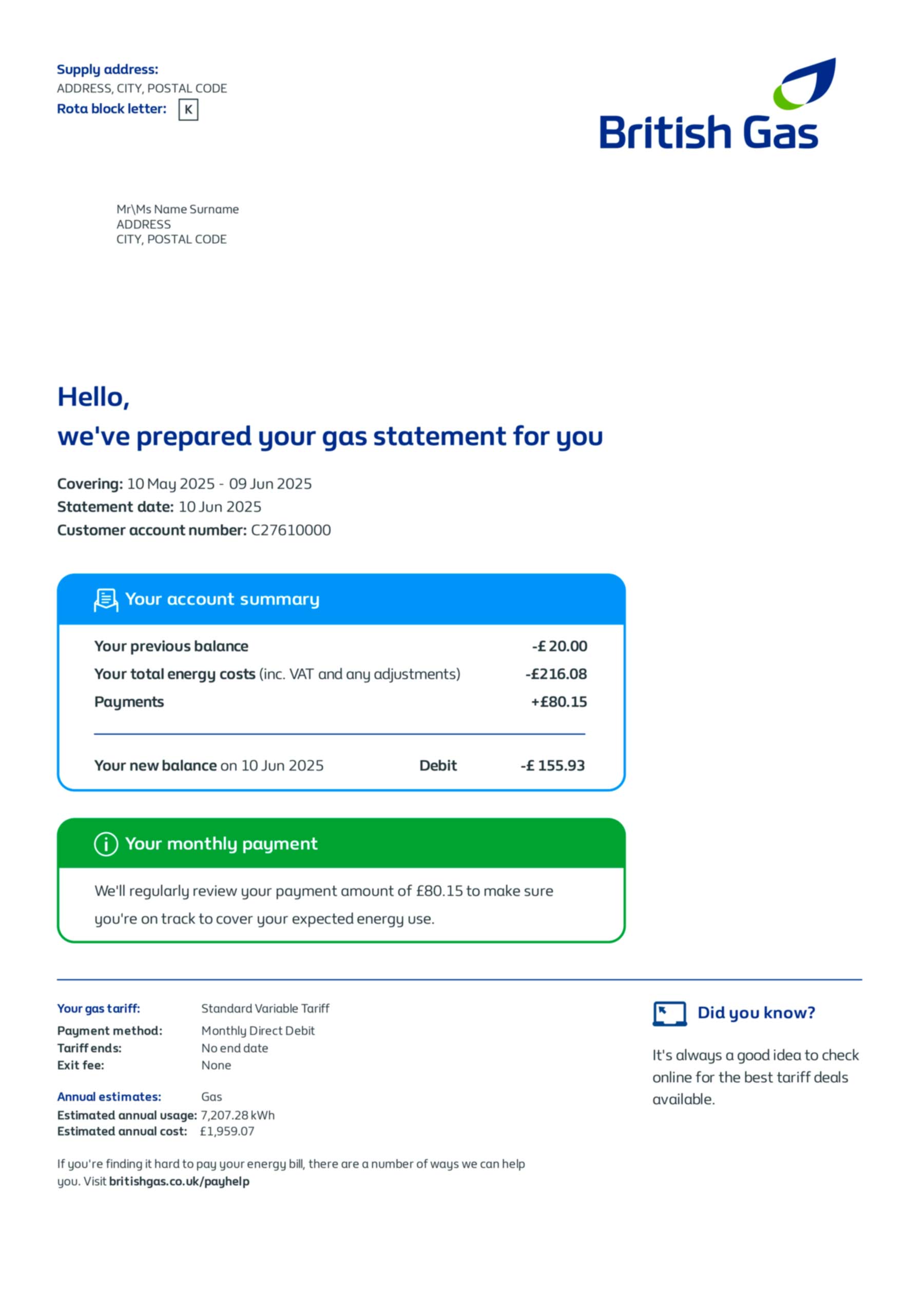
Utility bills in the United Kingdom follow well-established presentation patterns designed to clearly show service details, consumption information, and how charges are calculated. While each utility sector has its own regulatory requirements and formatting traditions, most UK statements share a similar structural flow that helps customers understand usage, costs, and payment information at a glance.
This regional hub provides an educational overview of how utility bill layouts in the United Kingdom are commonly organised across electricity, gas, water, phone, and internet services. The focus is on document structure, visual hierarchy, and standard information blocks used in both printed and digital statements.
All content on this page is intended purely for layout reference, formatting practice, training, and design understanding. It does not represent official documents and is not connected to any utility provider or regulatory body.
How utility bills in the United Kingdom are typically structured
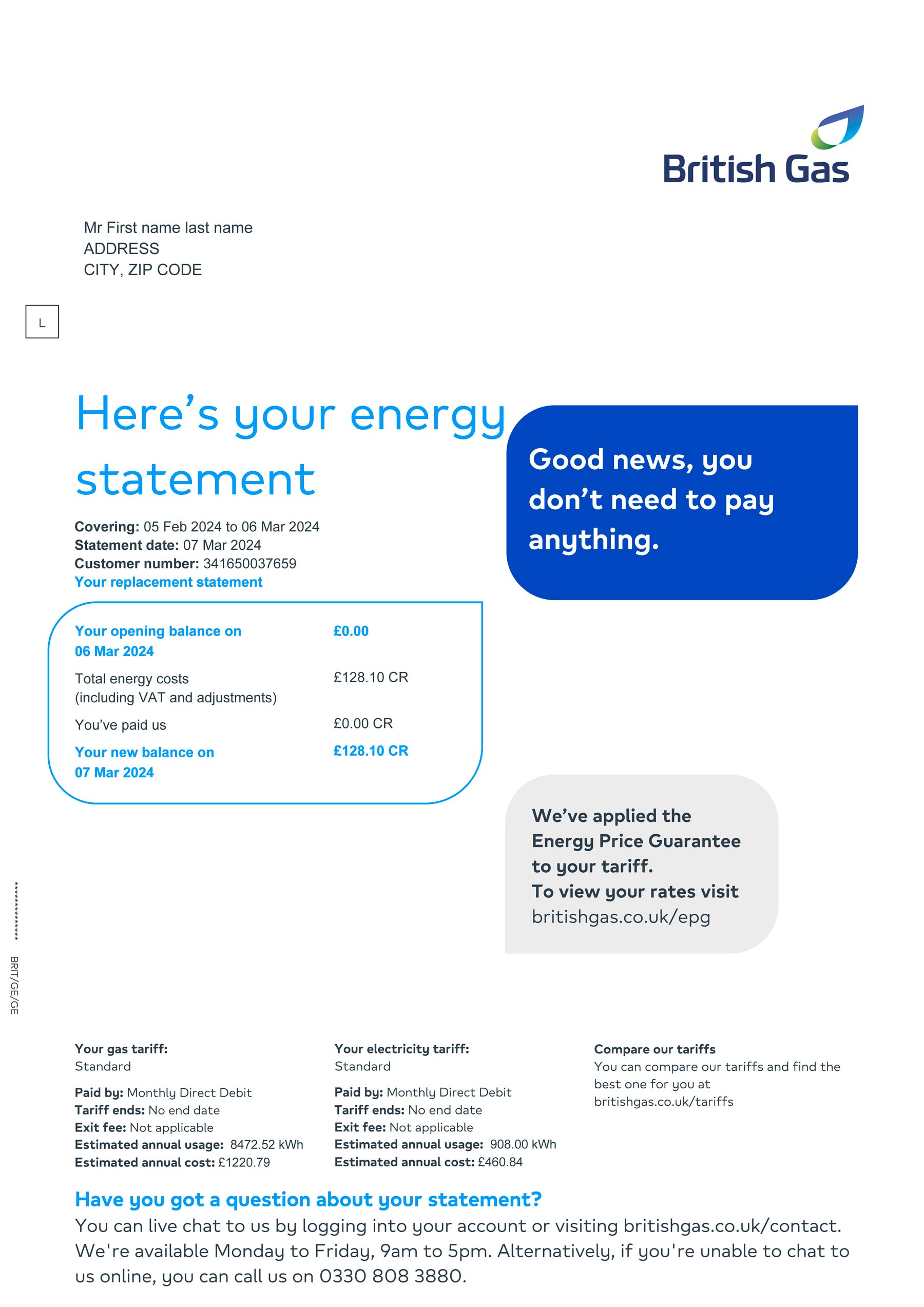
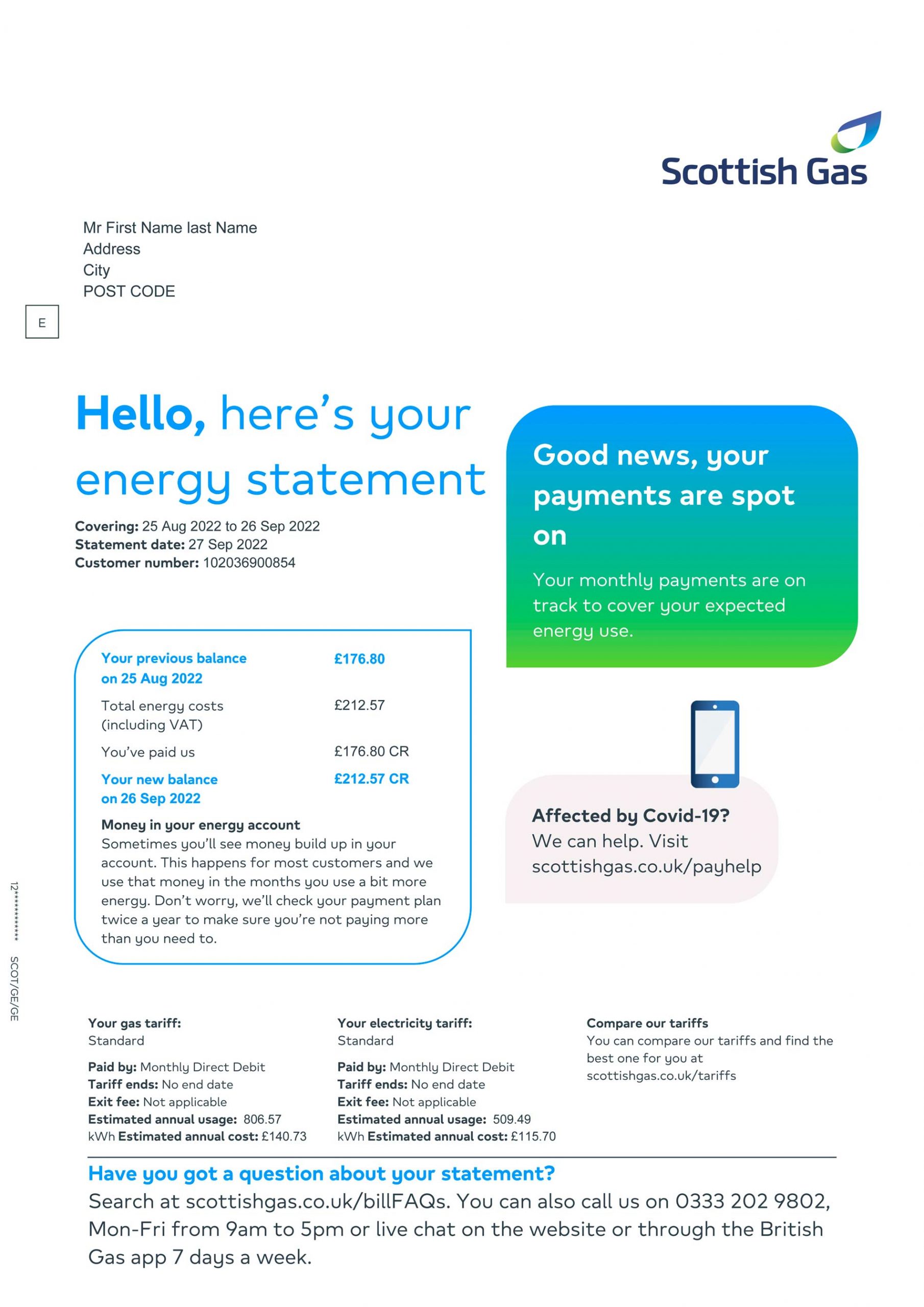
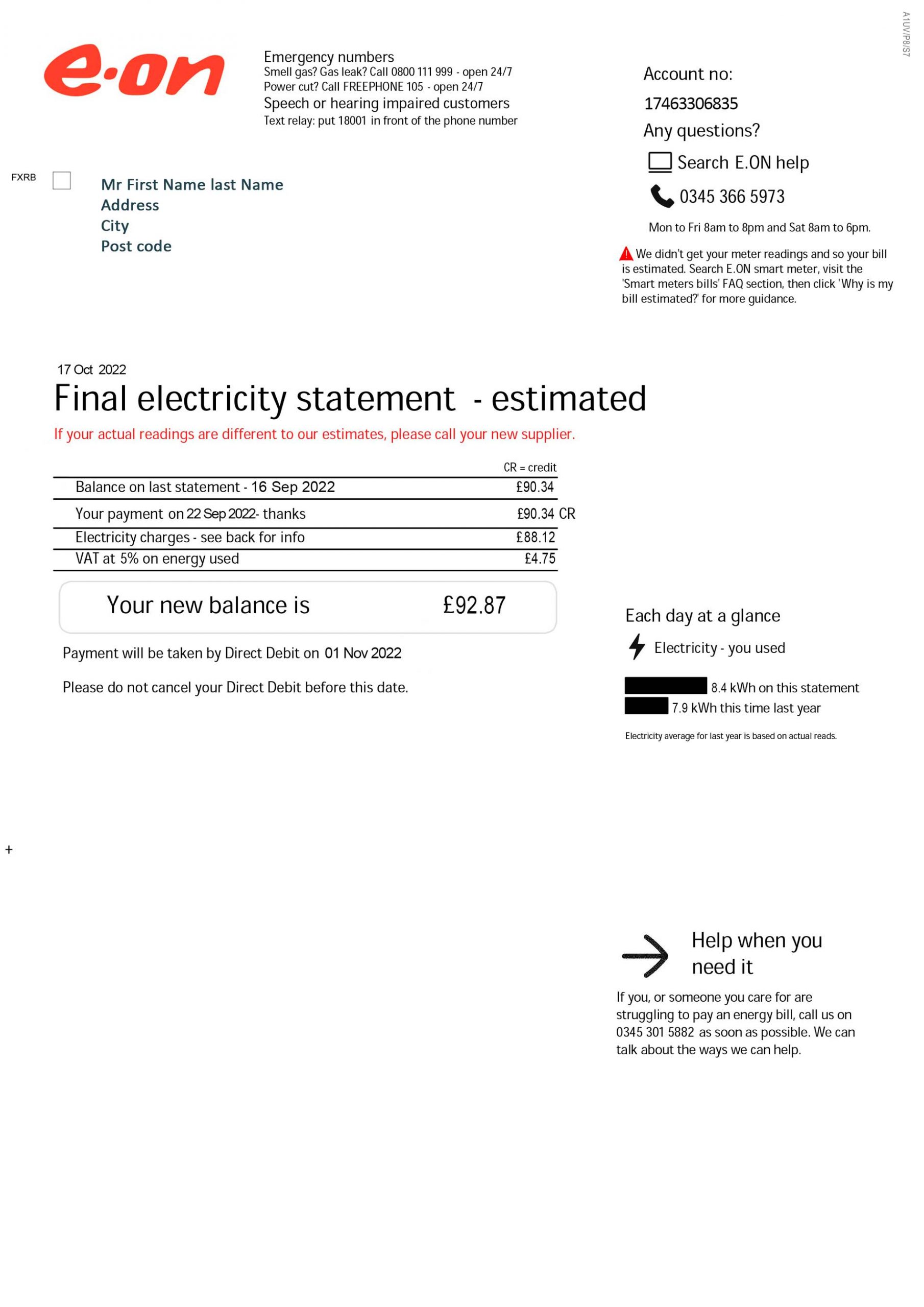
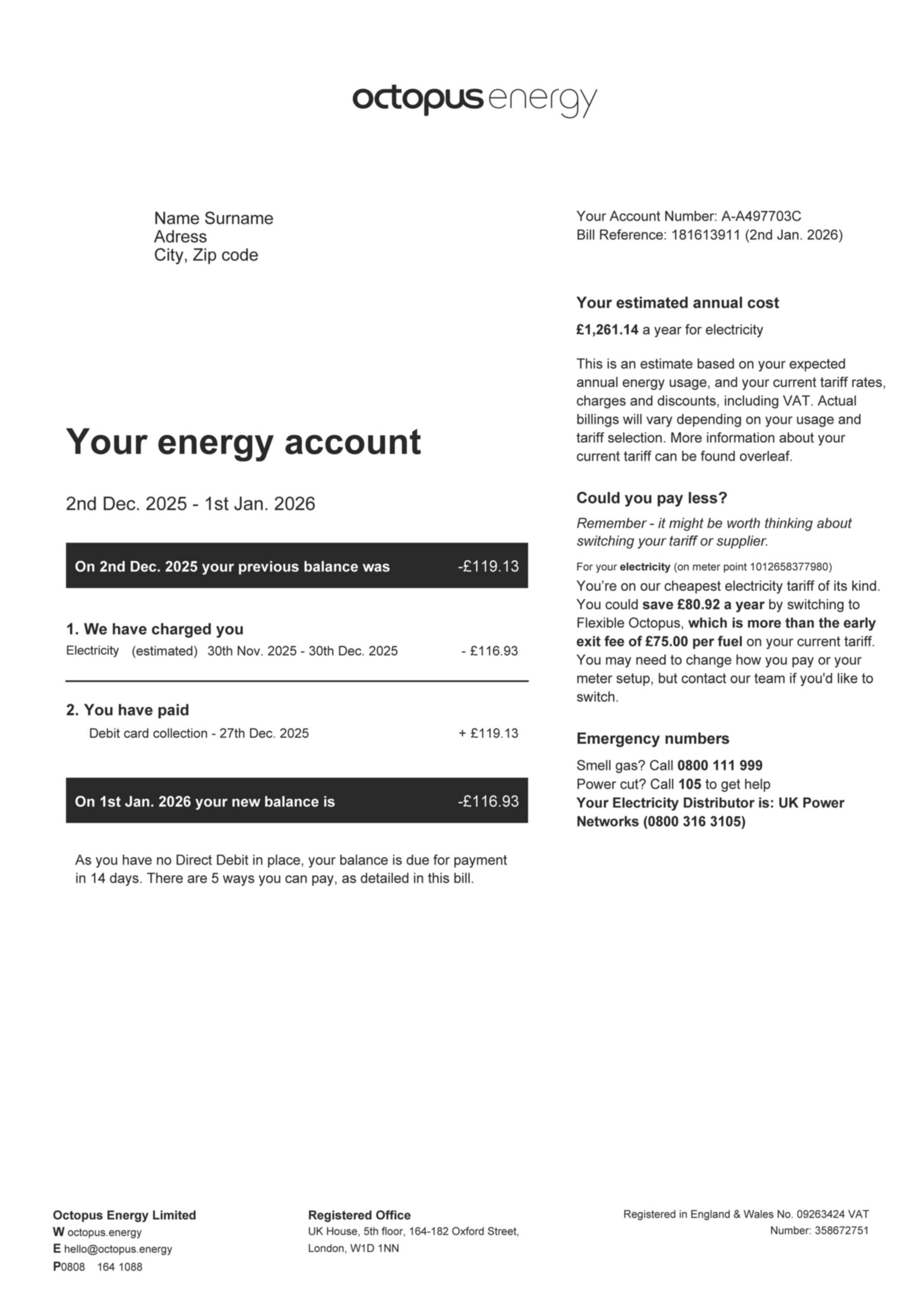
Most UK utility statements follow a top-to-bottom layout that moves from customer identification to service usage, then to financial totals and payment instructions. The aim is clarity, compliance with regulatory disclosure rules, and easy comparison between billing periods.
Commonly, the first section contains customer and account details, followed by a summary of charges. Further down the page, detailed usage tables and breakdowns explain how each amount has been calculated.
Whether delivered by post or electronically as a PDF, the overall layout remains largely consistent, with minor variations depending on the utility type.
Common layout elements across UK utility statements
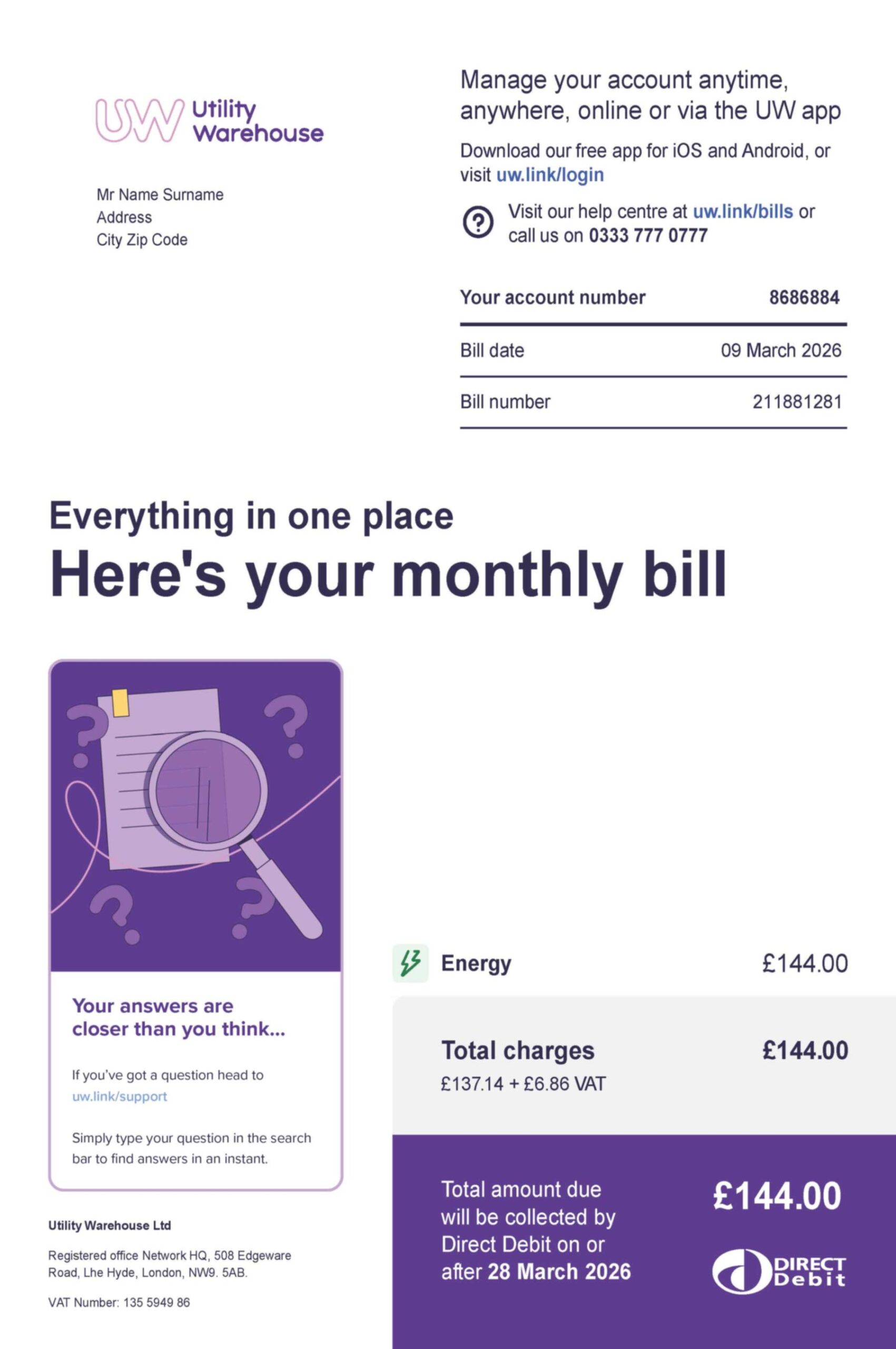
- Customer information block – name, service address, account or reference number
- Billing period section – start and end dates for the statement cycle
- Usage summary – consumption figures (kWh, cubic metres, minutes, data volume, or water units)
- Charge breakdown – unit rates, standing charges, service fees
- Tax and regulatory charges – VAT or environmental levies where applicable
- Total amount due – clearly highlighted final balance
- Payment information block – due date, payment methods, reference numbers
These elements are usually arranged in clearly separated sections, often using lines, shaded boxes, or headings to guide the reader through the statement.
Layout differences by utility type in the UK
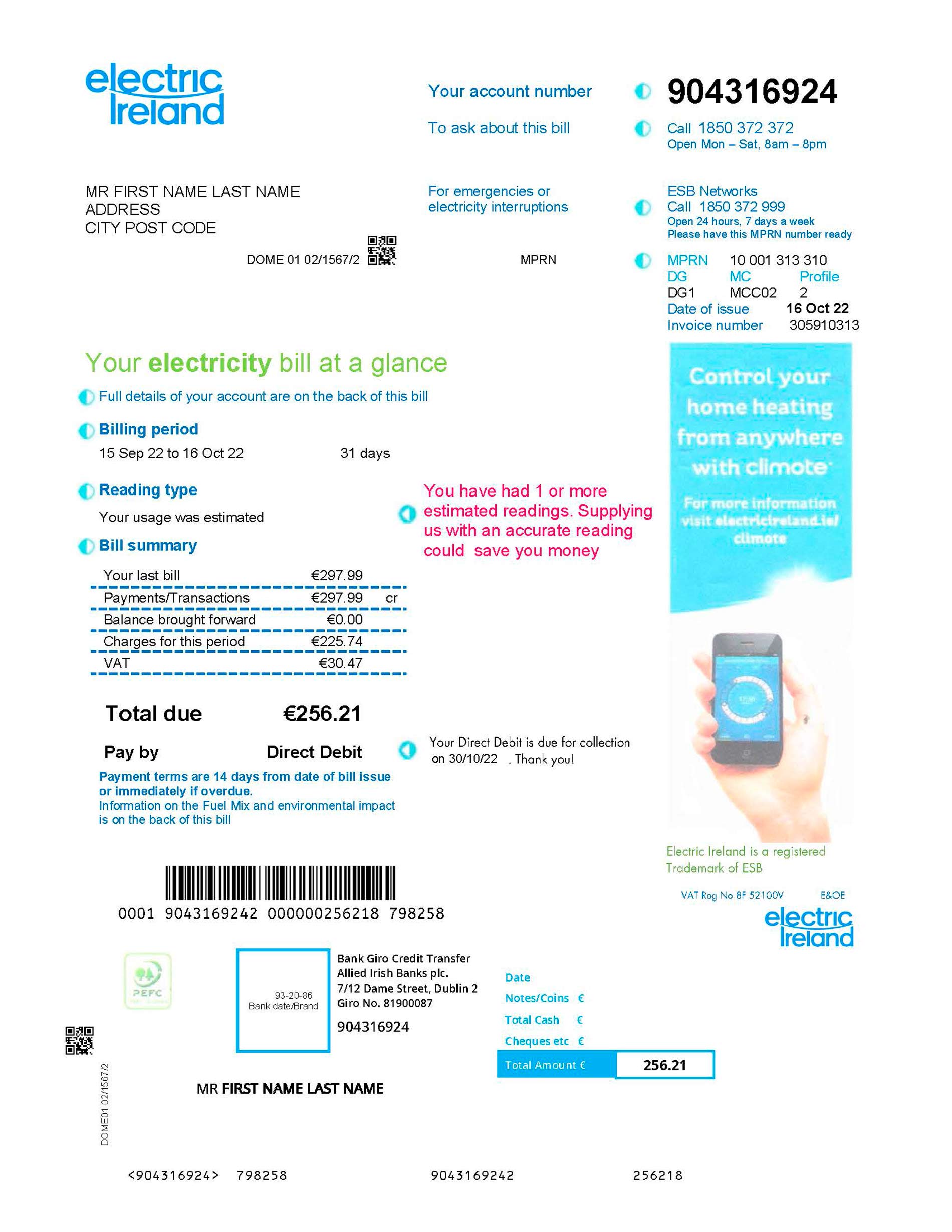
Electricity statements
Electricity bill layouts typically include:
- Meter reading tables showing previous and current values
- Consumption in kilowatt-hours
- Standing charge lines alongside unit usage charges
- Occasional tariff or rate change notes
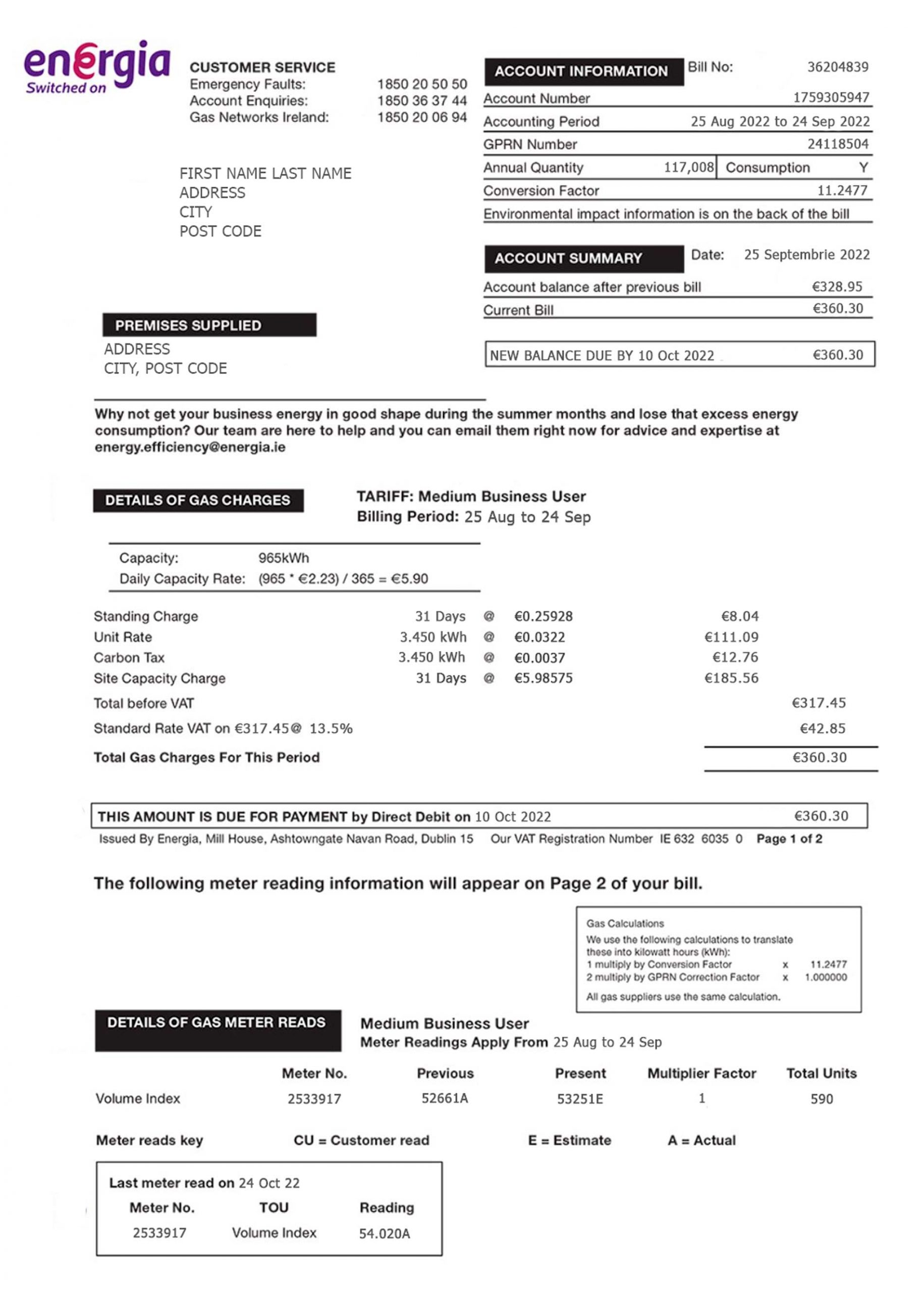
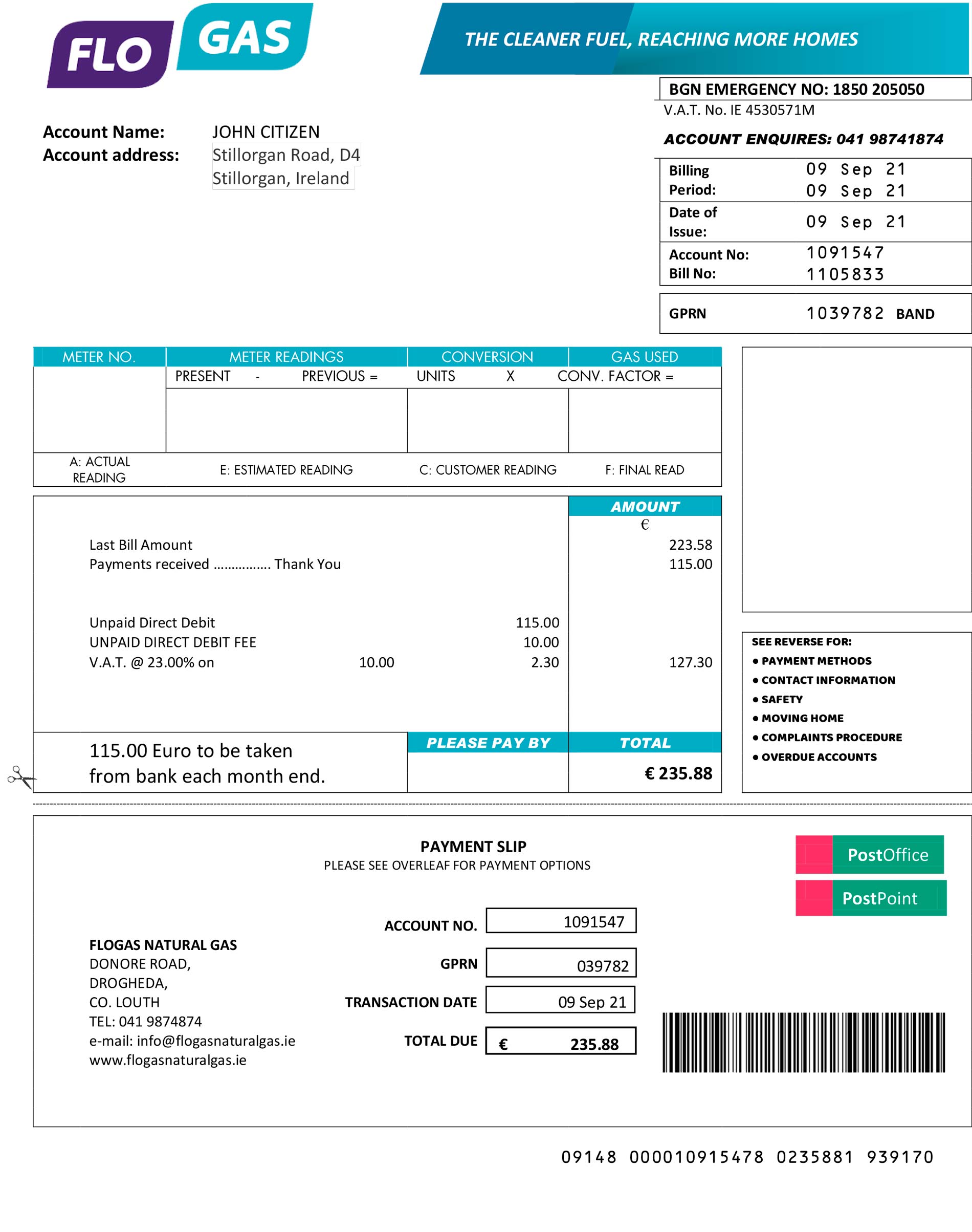
Gas statements
Gas bill formats often feature:
- Meter volume readings converted into energy units
- Calorific value or conversion factor notes
- Separate standing and usage charges
Water statements
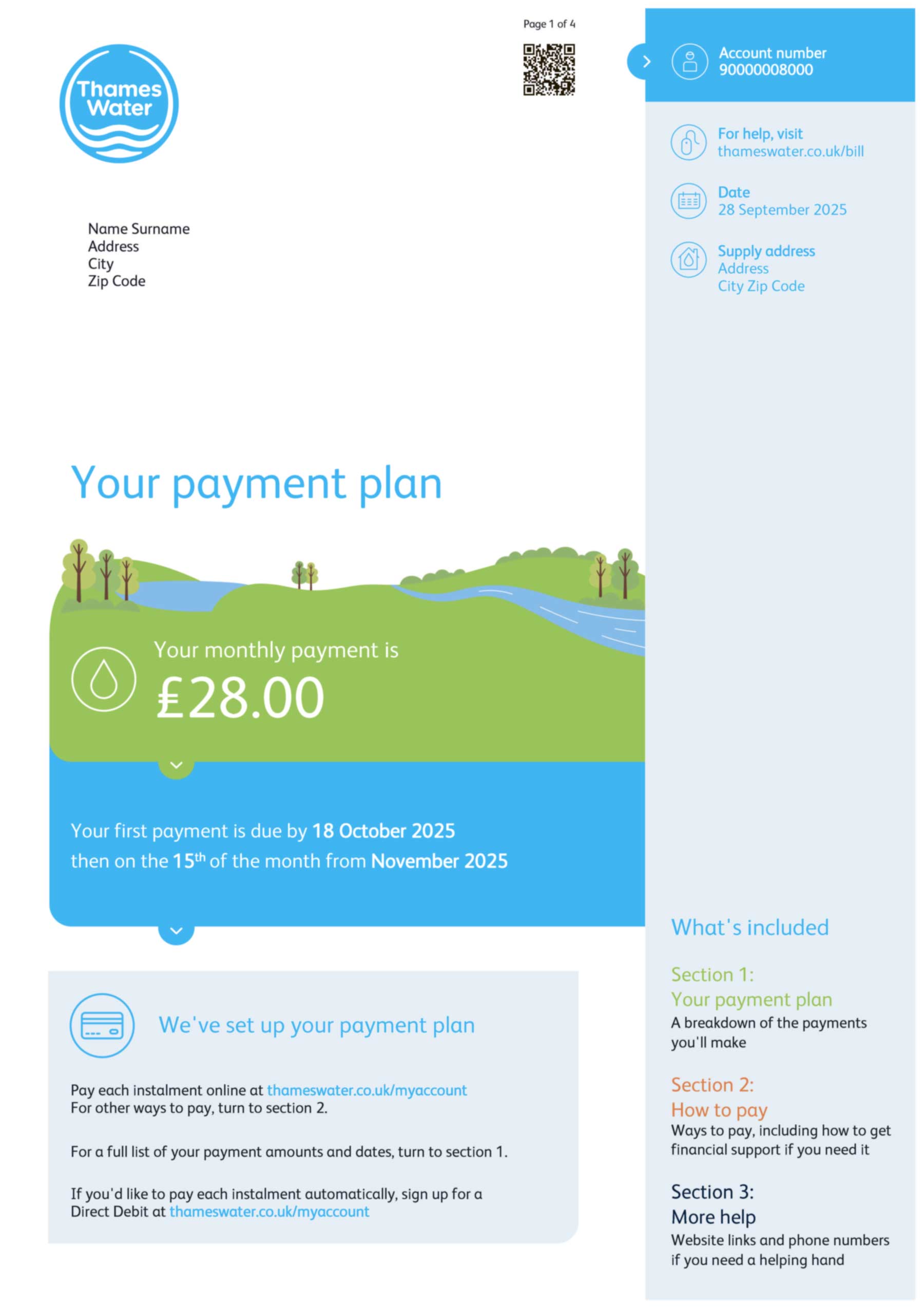
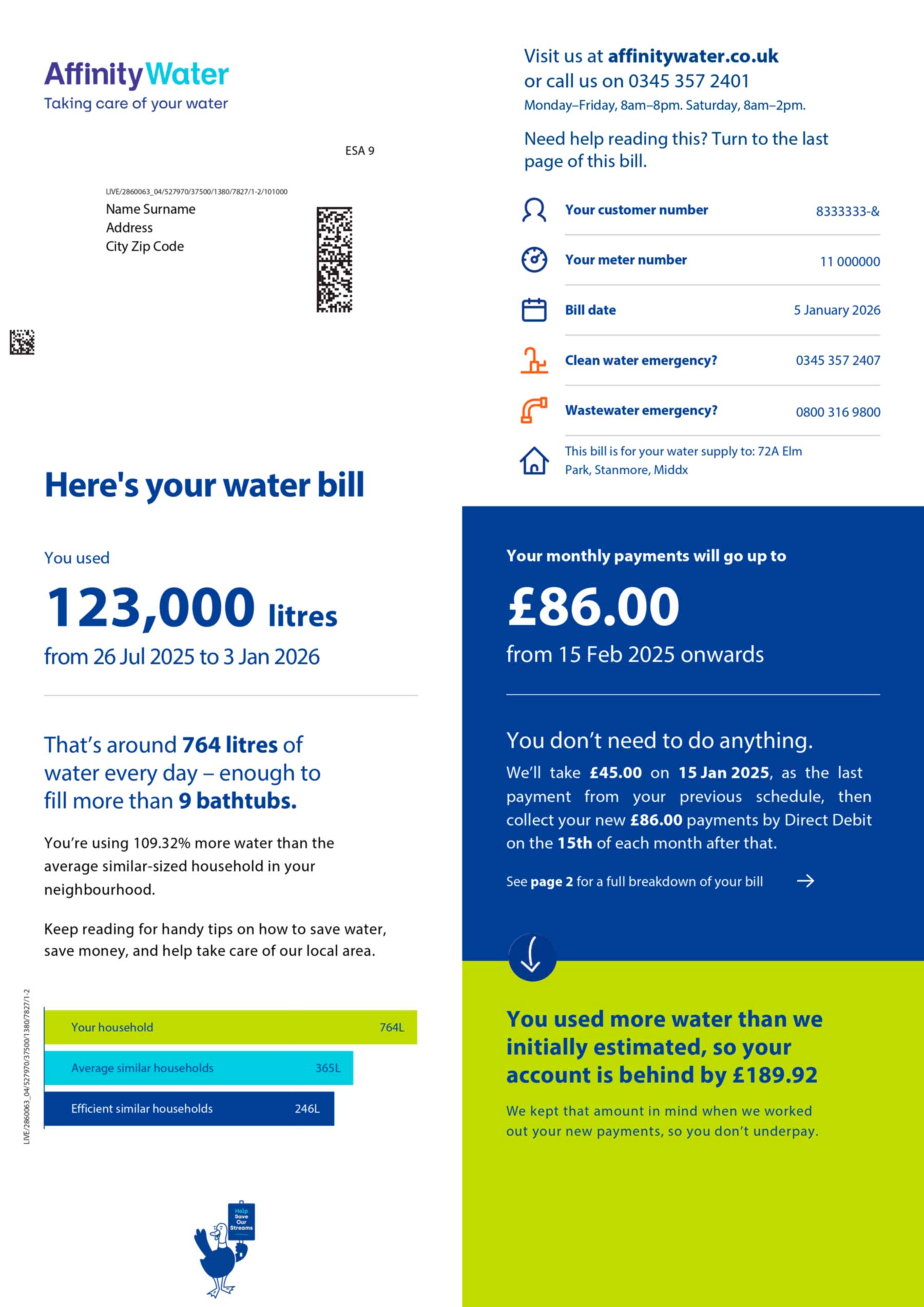
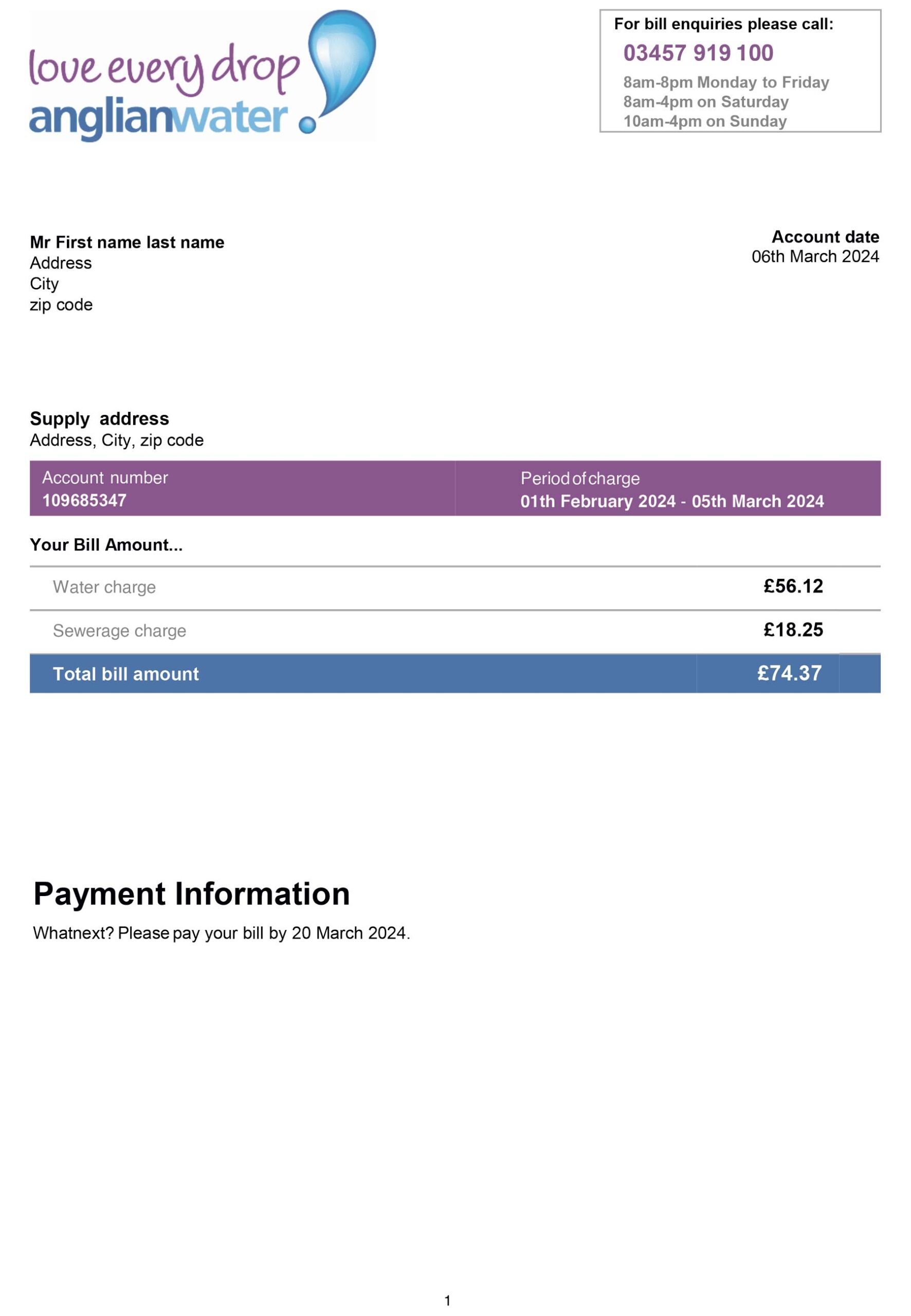
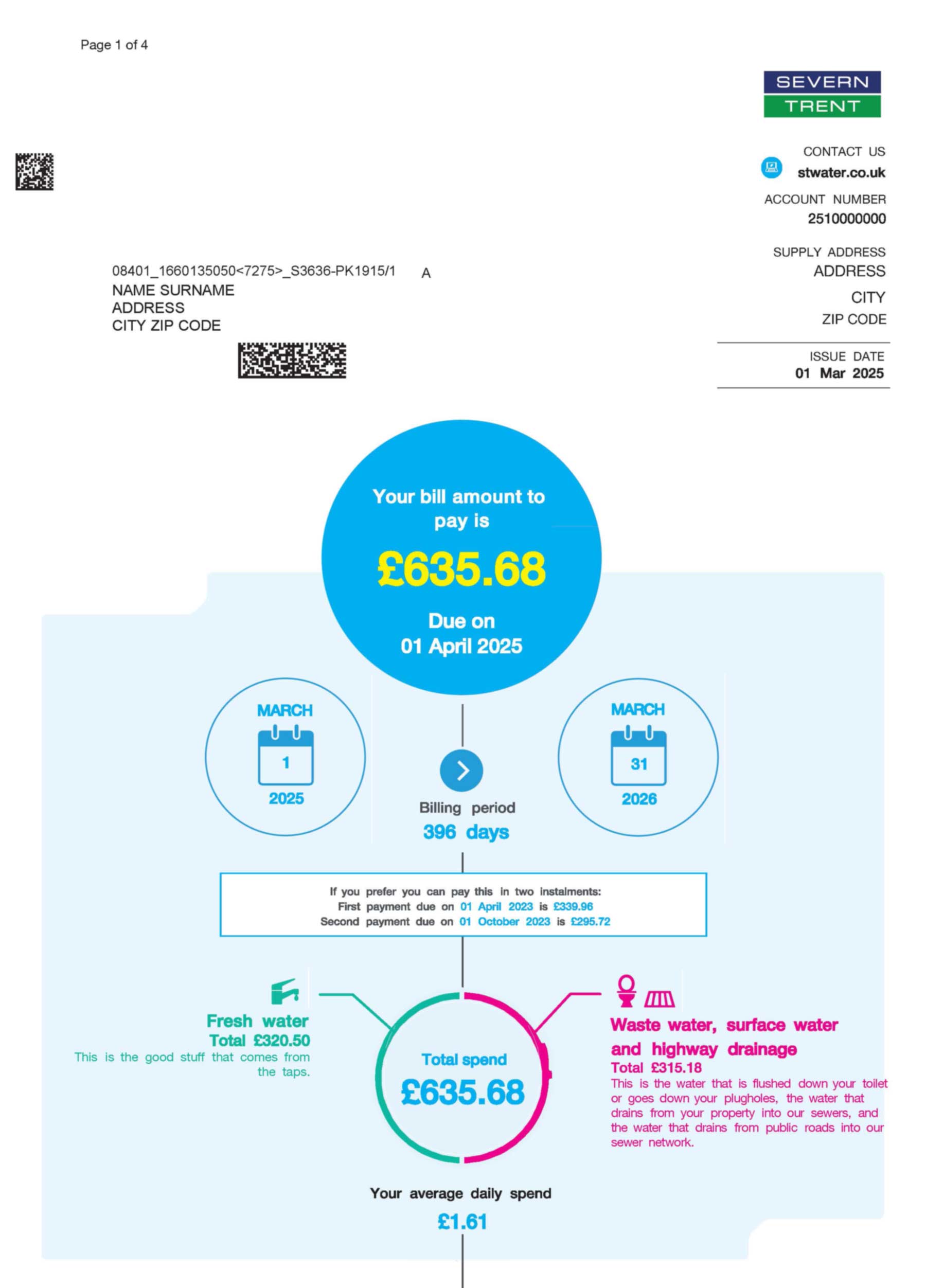
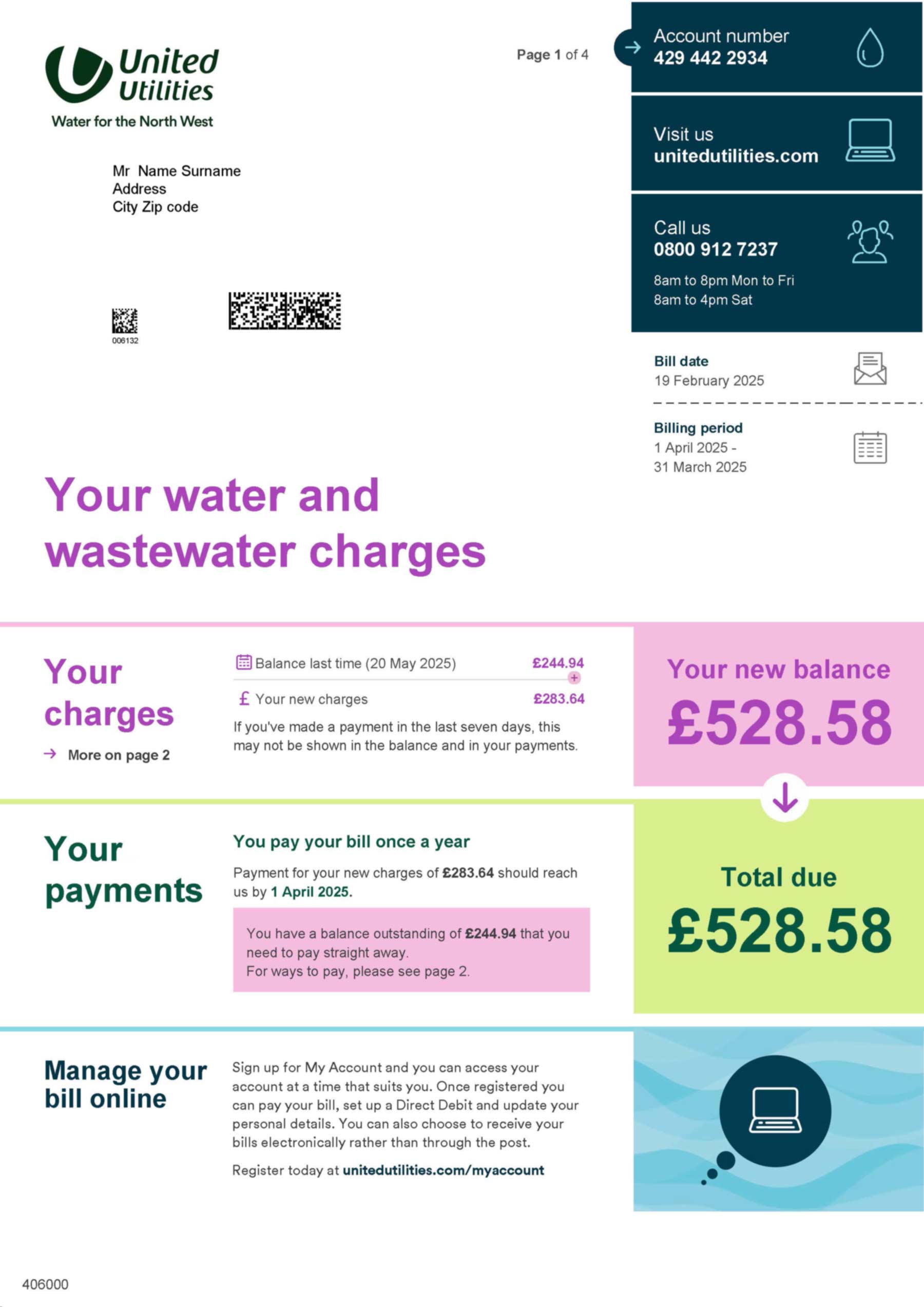
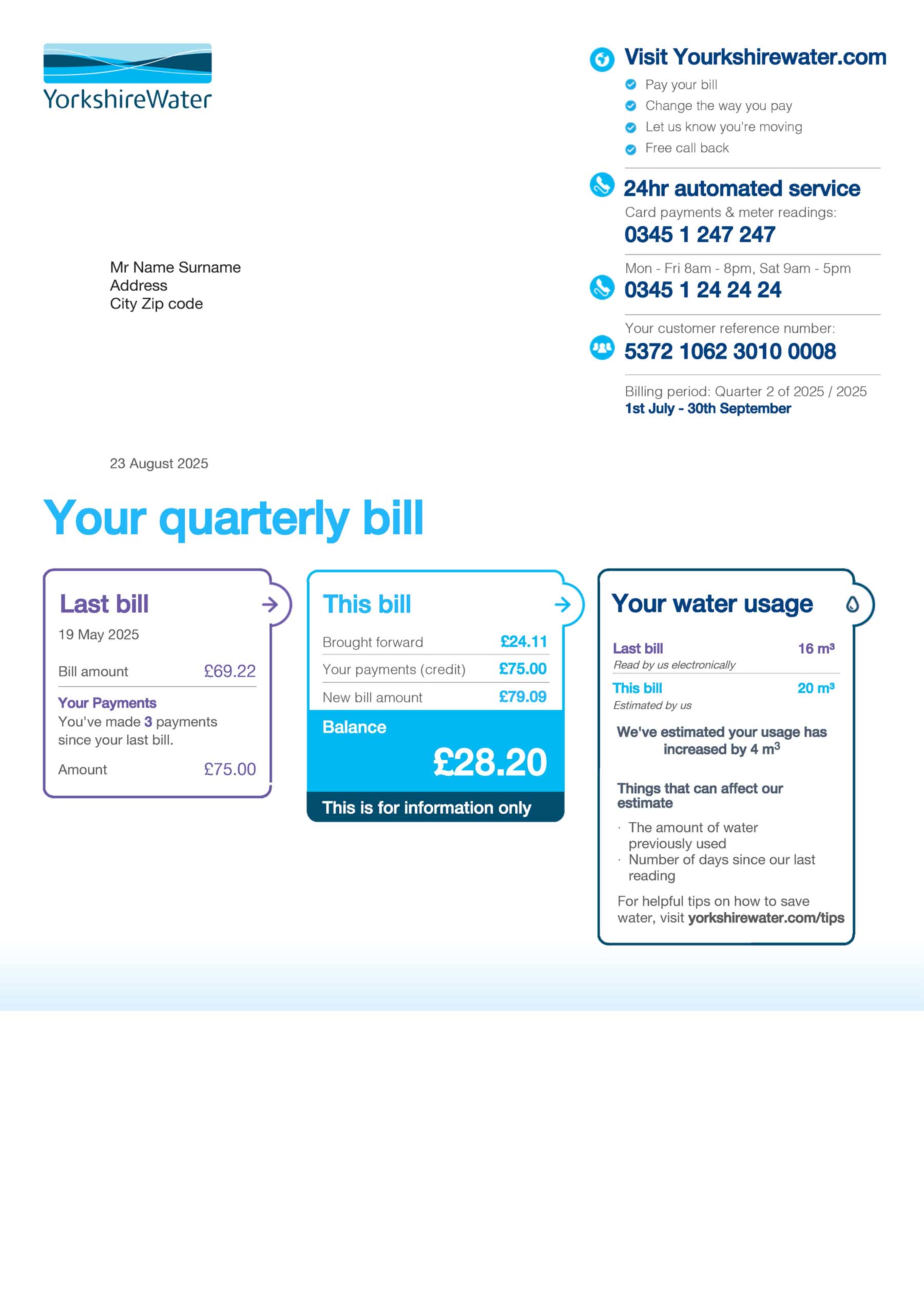
Water billing layouts usually present:
- Usage in cubic metres or litres
- Supply and wastewater service lines
- Fixed service charges alongside volume-based fees
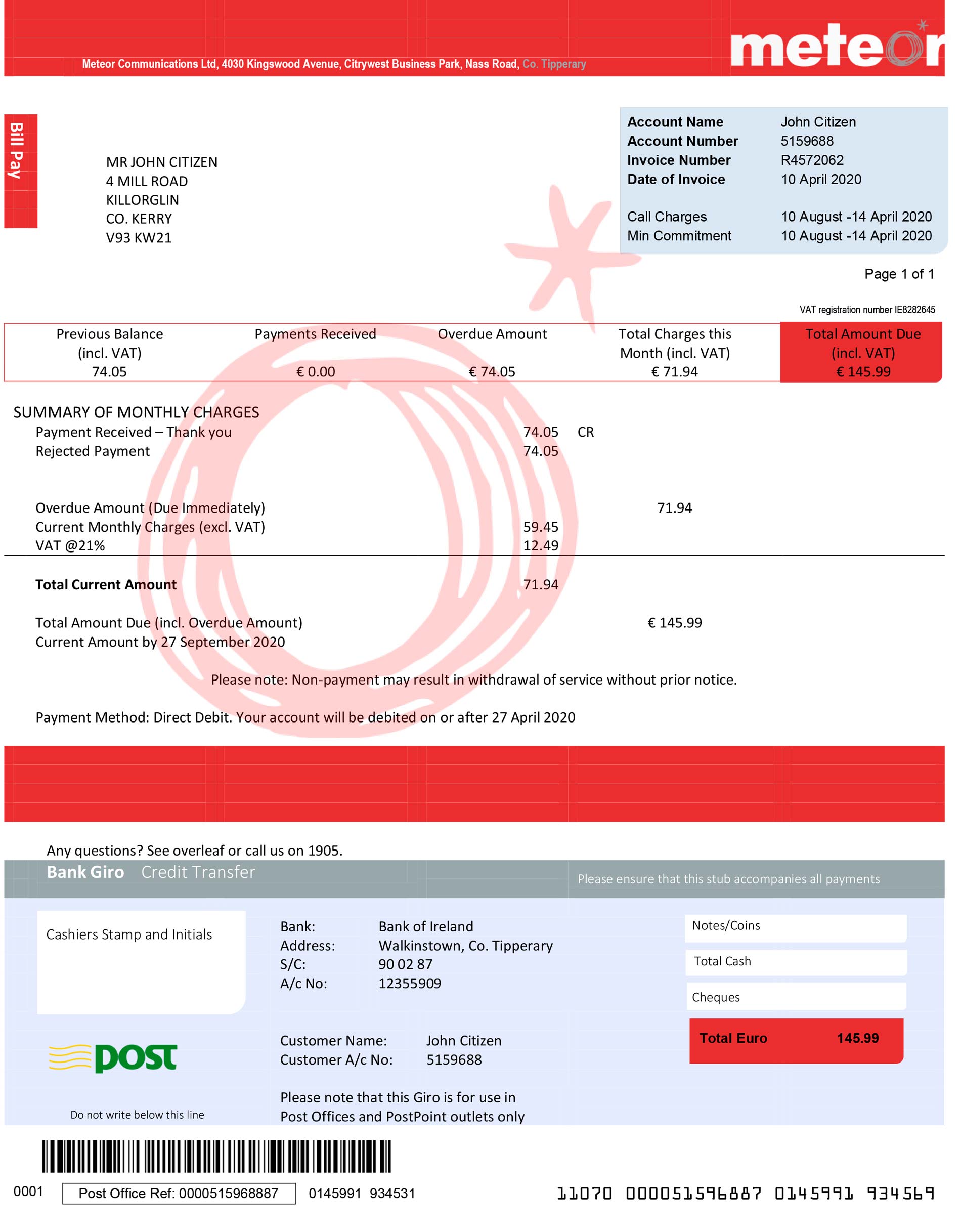
Phone statements
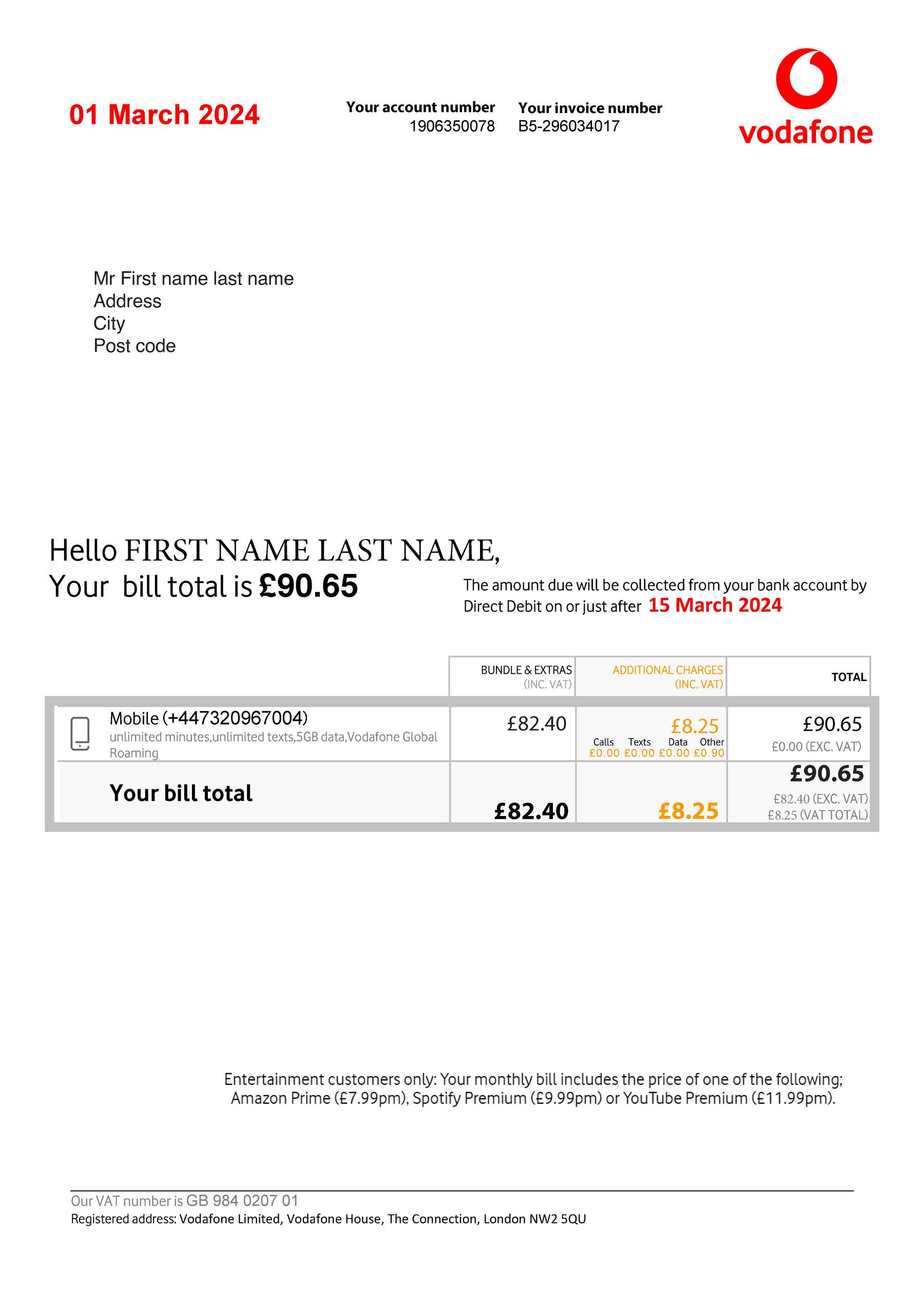
Phone bill formats commonly include:
- Monthly service plans
- Call usage summaries
- Itemised sections for additional charges
Internet statements
Internet billing layouts often show:
- Subscription package details
- Billing cycle charges
- Optional service add-ons
Design and readability conventions commonly used in UK statements
UK utility bills are designed to be easy to scan and understand. Typical design choices include:
- Clear section headers for each information block
- Tables for meter readings and usage figures
- Bold totals to highlight amounts due
- Consistent fonts and spacing for legibility
- Subtle shading to separate summary areas from detailed breakdowns
Many statements prioritise accessibility, ensuring important financial information stands out without overwhelming the reader.
PDF statements and digital billing layouts in the UK
Most UK utilities now offer electronic statements delivered as downloadable PDFs. These digital layouts closely mirror printed versions, preserving the same structure and visual hierarchy.
Some providers also present interactive online views, but the underlying format still follows the familiar block-based design of traditional statements.
PDF layouts are especially popular for archiving and printing, maintaining consistent formatting across devices.
Related format references
- Global electricity bill layout references
- Global gas bill layout references
- Global water bill layout references
- Global phone bill layout references
- Global internet bill layout references
- Electricity bill layout formats in the United Kingdom
- Gas bill layout formats in the United Kingdom
- Water bill layout formats in the United Kingdom
- Phone bill layout formats in the United Kingdom
- Internet bill layout formats in the United Kingdom
- Common fields found on utility statements
- Understanding billing period layout sections
- Meter reading layout examples
- PDF and digital statement layout comparisons
FAQ
Do all UK utility bills use the same layout?
While the overall structure is similar, each utility type has specific sections and formatting details related to how usage and charges are calculated.
Why do UK statements include standing charges?
Standing charges are fixed daily or monthly fees that cover service availability and infrastructure costs. They are usually displayed separately from usage charges.
Are digital statements formatted differently from paper bills?
Most digital PDFs mirror printed layouts closely, maintaining the same structure and information blocks.
Where are meter readings shown on electricity and gas bills?
They typically appear in a dedicated table showing previous and current readings alongside consumption calculations.
Do water bills include both supply and wastewater charges?
Yes, most UK water statements separate clean water services from wastewater or drainage services.
How are totals usually highlighted on UK utility statements?
The final amount due is commonly shown in bold or within a boxed summary section for easy visibility.
Are layout conventions regulated in the UK?
There are general regulatory guidelines for transparency and clarity, but providers have flexibility in visual design.
Optional design resources
For designers, educators, and layout practice purposes, structured utility bill format references can help demonstrate common UK statement patterns. These resources focus purely on document structure, spacing, and information flow for learning and presentation use.
All examples remain strictly educational and are not connected to real billing systems or official documents.