Secure & Confidential

Utility Bill Formats in the United States — Layout Structures and Statement Design Overview

Utility bills in the United States function as recurring account statements that summarize service usage, billing activity, and payment information over a defined period. Whether delivered as printed documents, downloadable PDFs, or digital e-bills, these statements follow recognizable structural conventions shaped by regulatory requirements, consumer transparency standards, and long-standing design practices.

While the overall purpose of US utility statements is consistent, layout organization varies by utility type. Electricity, gas, water, phone, and internet bills each present different measurement units, charge groupings, and informational sections. These variations influence how data is displayed, how totals are calculated, and how visual hierarchy is established within the document.

This regional hub provides an educational, layout-focused overview of how utility bills in the United States are commonly structured. It is intended strictly as a document format and design reference resource for learning, UI modeling, layout practice, and informational purposes. The content below does not represent official documentation and is not affiliated with utility providers or regulatory bodies.

How utility bills in the United States are typically structured

US utility bills are designed to clearly separate customer information, service activity, and financial totals while maintaining a predictable reading flow. Most statements follow a top-to-bottom structure that prioritizes account identification and payment summary before presenting usage details and charge breakdowns.

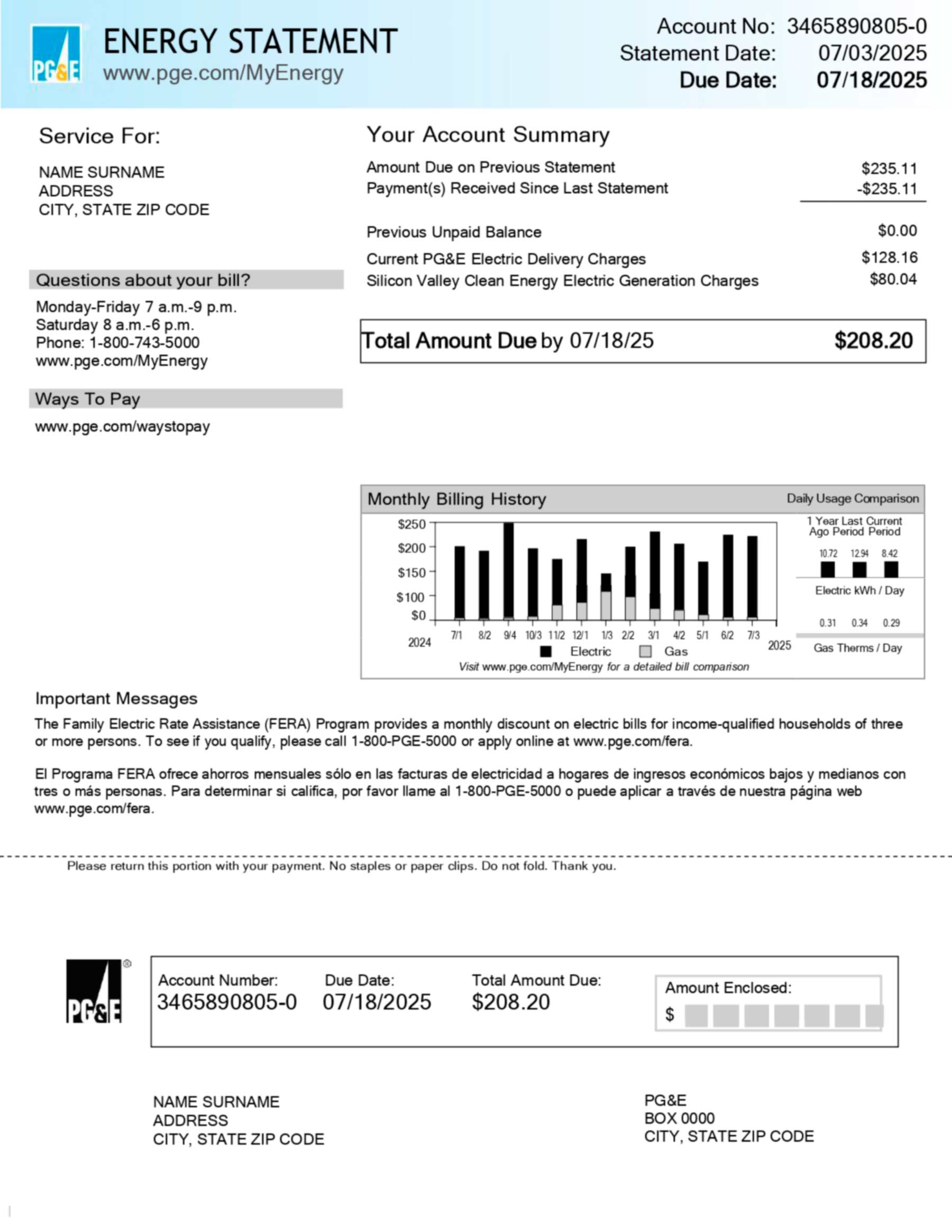
The upper portion of the document usually contains the account holder’s service address, account number, statement date, and billing period. Below this, a usage overview summarizes consumption for the current cycle, often alongside comparison data from previous periods. The lower sections present itemized charges, applicable taxes or regulatory fees, and the total amount due.

Across both print and digital formats, US layouts emphasize clarity, logical grouping, and prominent payment information. Visual elements such as shaded boxes, horizontal separators, and bold totals are frequently used to guide attention.

Common layout elements across US utility statements

Despite differences between utility types, many structural components appear consistently across American utility bills. These shared elements help standardize the user experience and support easy interpretation.

  • Customer and service information block – Account holder name, service address, mailing address, and account number.
  • Billing period summary – Start and end dates for the service cycle, statement issue date, and due date.
  • Usage overview section – Current consumption totals displayed in relevant units (kWh, therms, gallons, minutes, data).
  • Itemized charges area – Line-by-line listing of base service fees, usage charges, adjustments, and surcharges.
  • Taxes and regulatory fees – Clearly separated government or jurisdictional charges.
  • Total amount due – Highlighted summary of the balance owed for the billing cycle.
  • Payment information block – Remittance instructions, payment methods, and processing details.

Many statements also include informational notices, usage charts, or brief explanations of rate changes in side panels or lower sections of the page.

Layout differences by utility type in the US

Each utility category introduces unique data points and organizational patterns that influence how layouts are constructed.

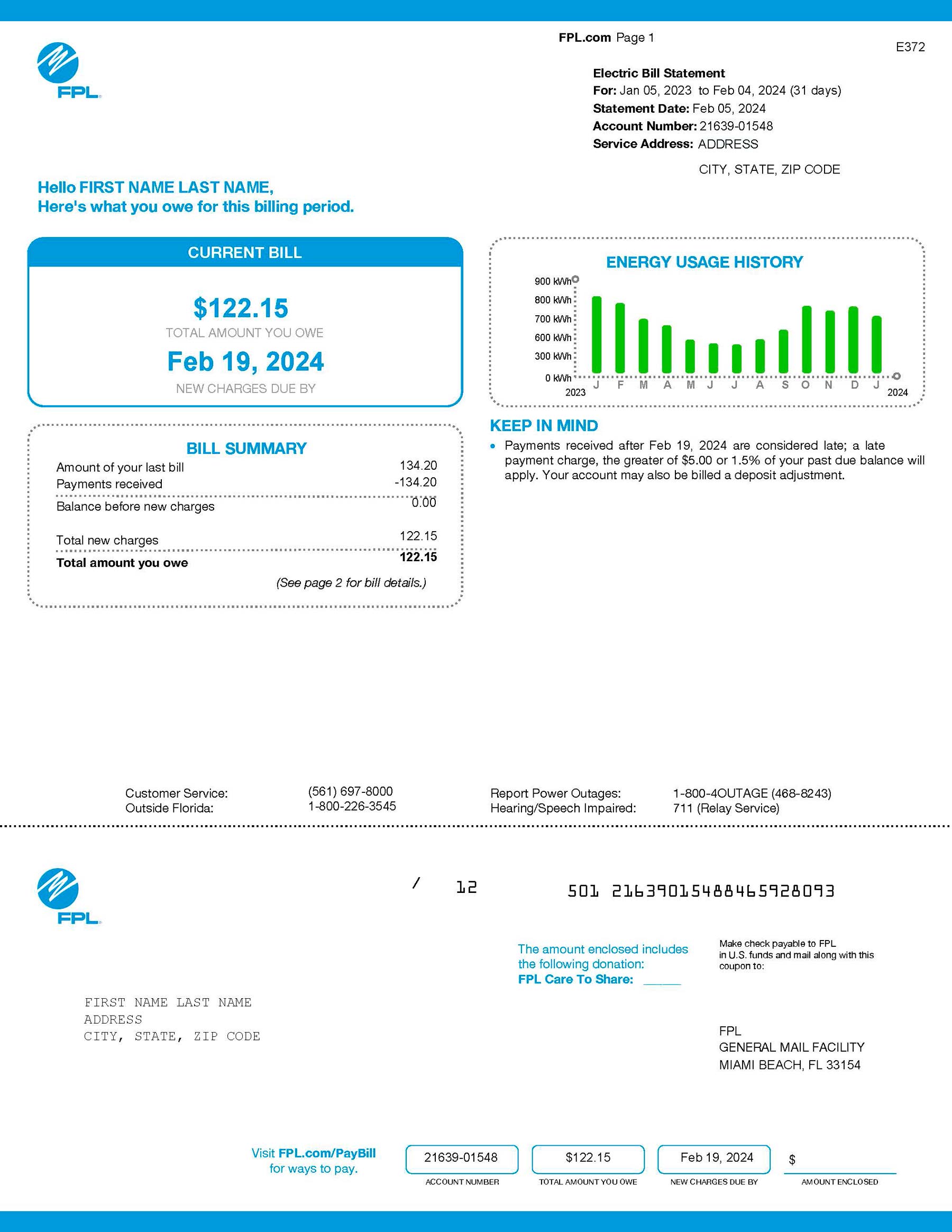
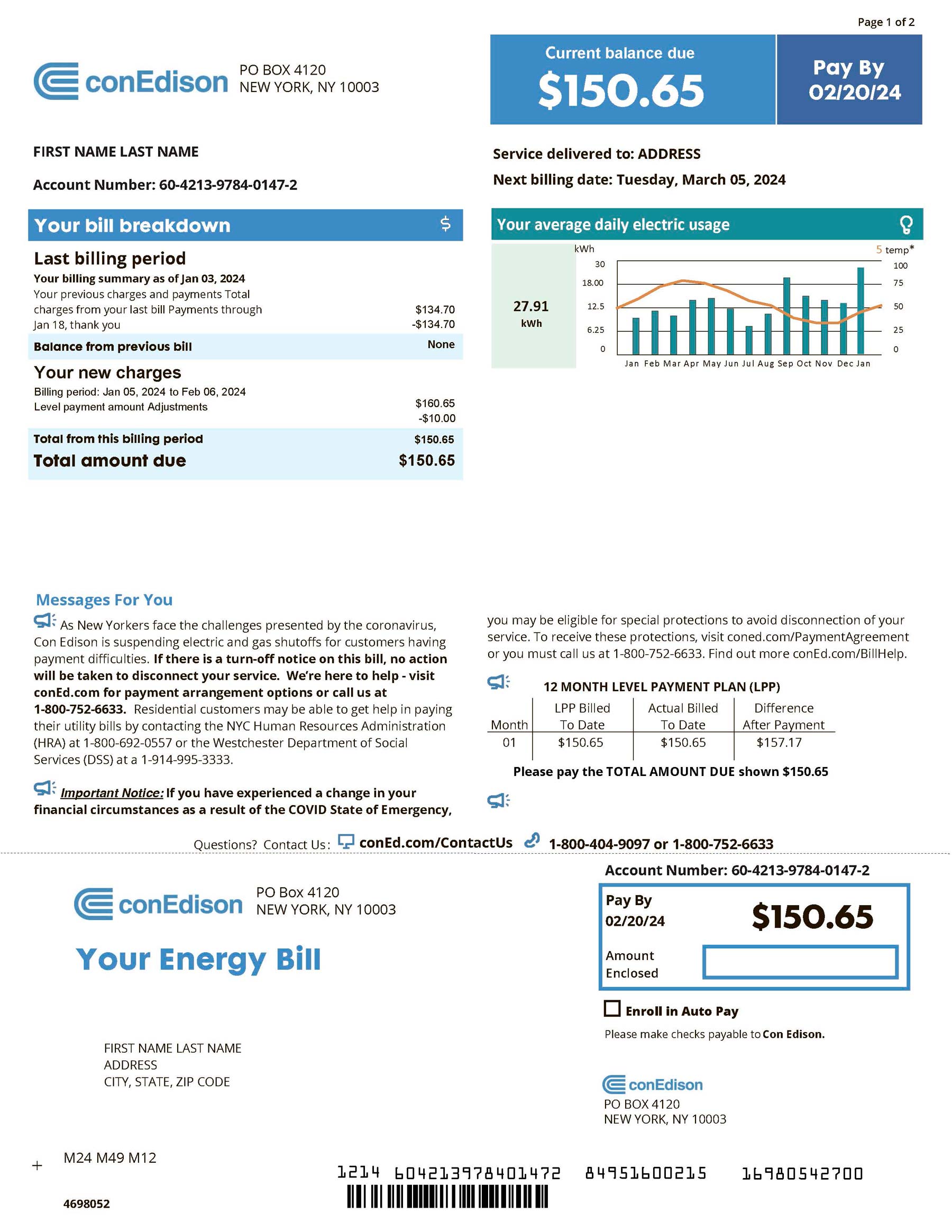
Electricity bill layouts

  • Usage presented in kilowatt-hours (kWh)
  • Often includes comparison graphs for monthly or yearly consumption
  • May separate generation, transmission, and distribution charges
  • Peak and off-peak usage blocks in time-based billing structures

Gas bill layouts

  • Consumption shown in therms or cubic feet
  • Meter reading tables indicating previous and current values
  • Seasonal rate adjustments frequently displayed
  • Delivery and supply charges separated

Water bill layouts

  • Usage measured in gallons or cubic feet
  • Service tier blocks for volume-based pricing
  • Sewer and stormwater fees often included
  • Usage history charts common in side panels

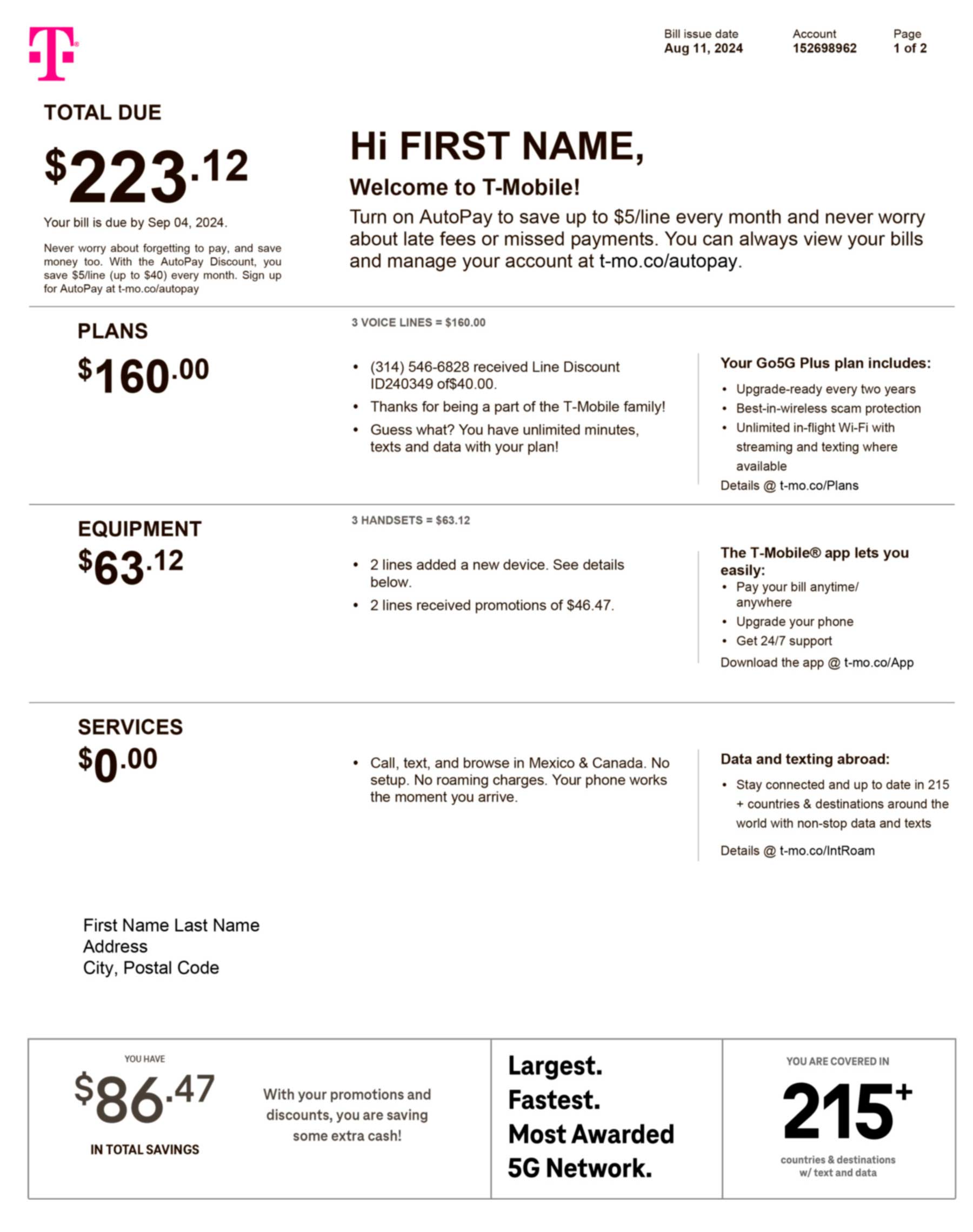
Phone bill layouts

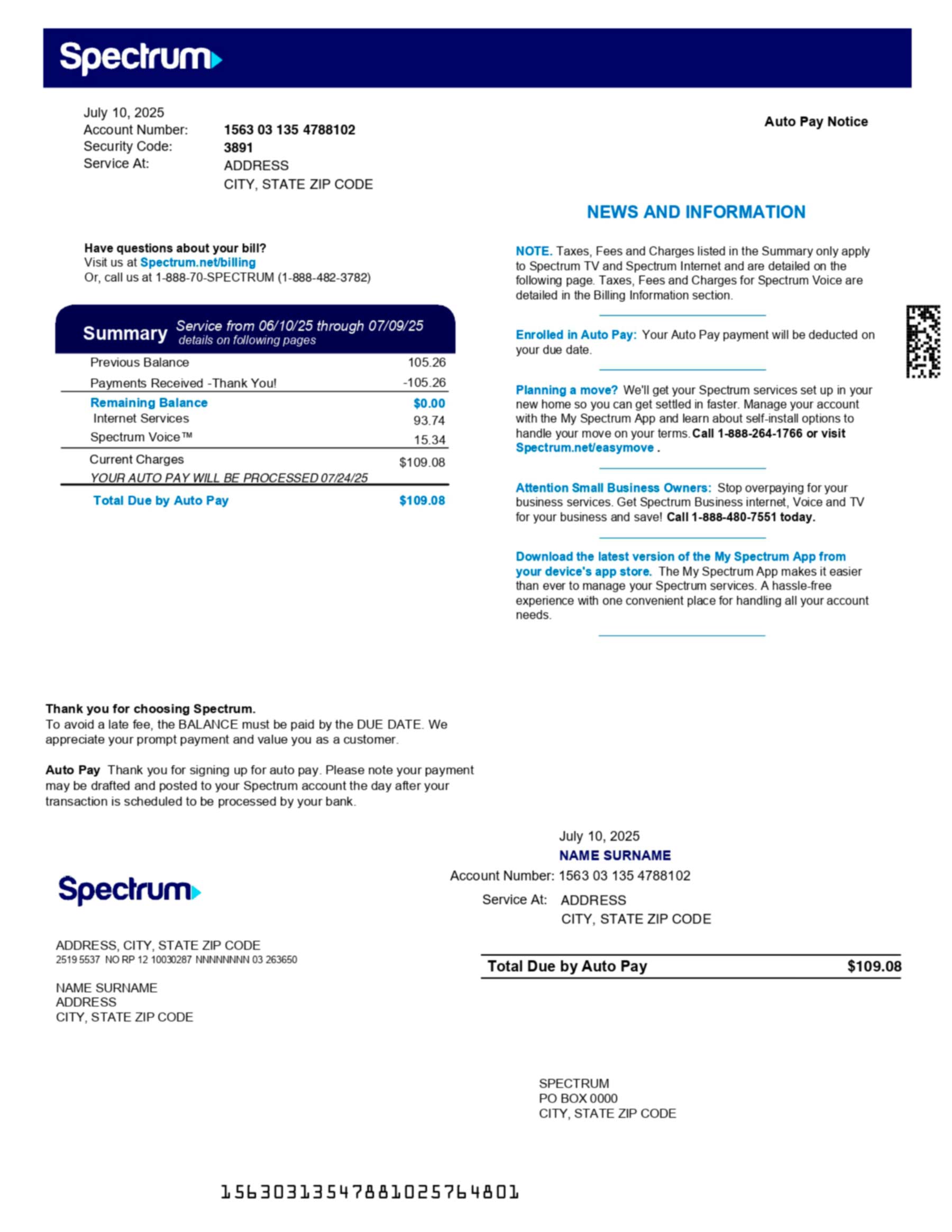
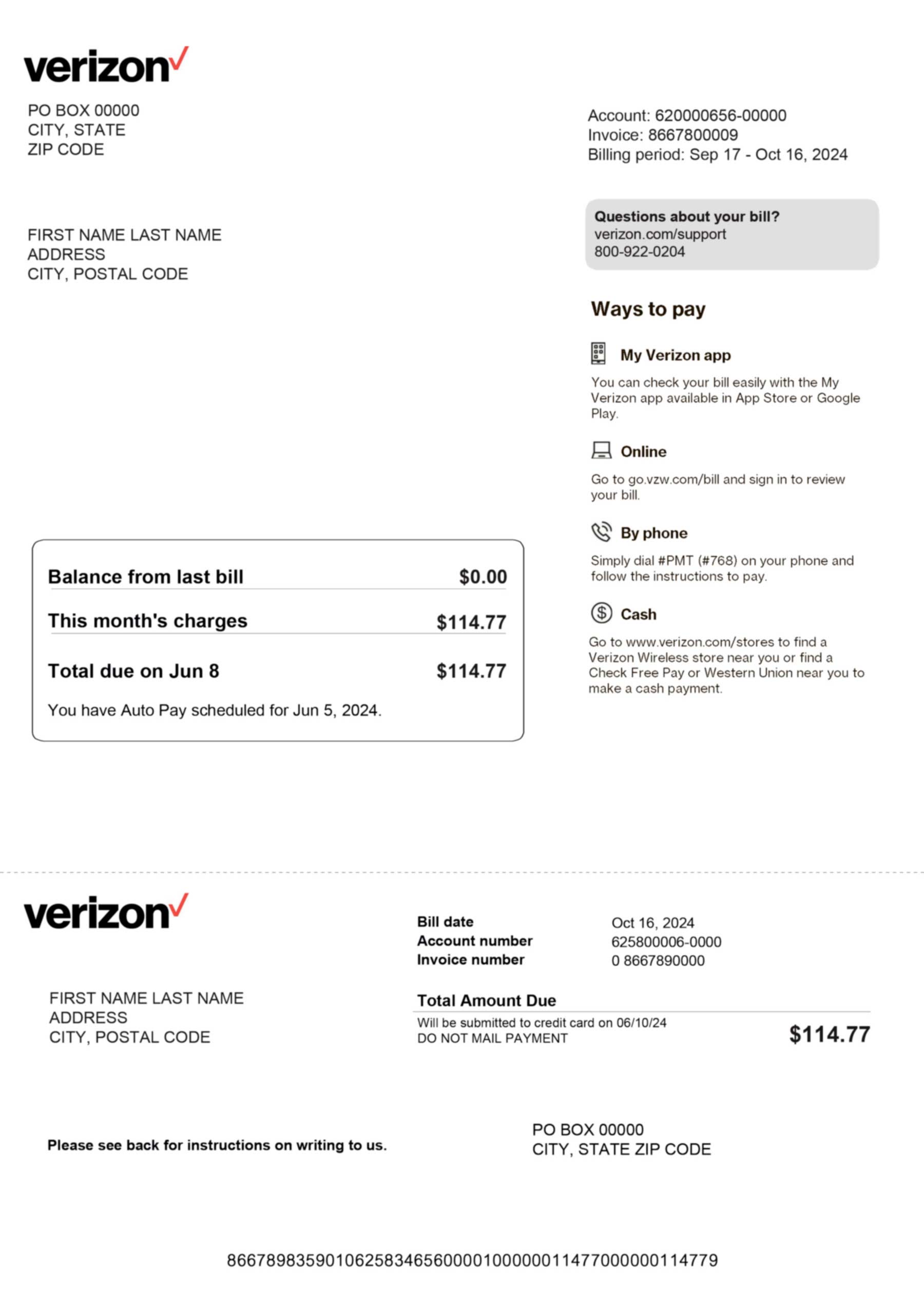
  • Plan charges displayed as flat monthly fees
  • Itemized call or service add-ons in detailed sections
  • Taxes and communication surcharges grouped separately
  • Multiple lines or devices summarized in table format

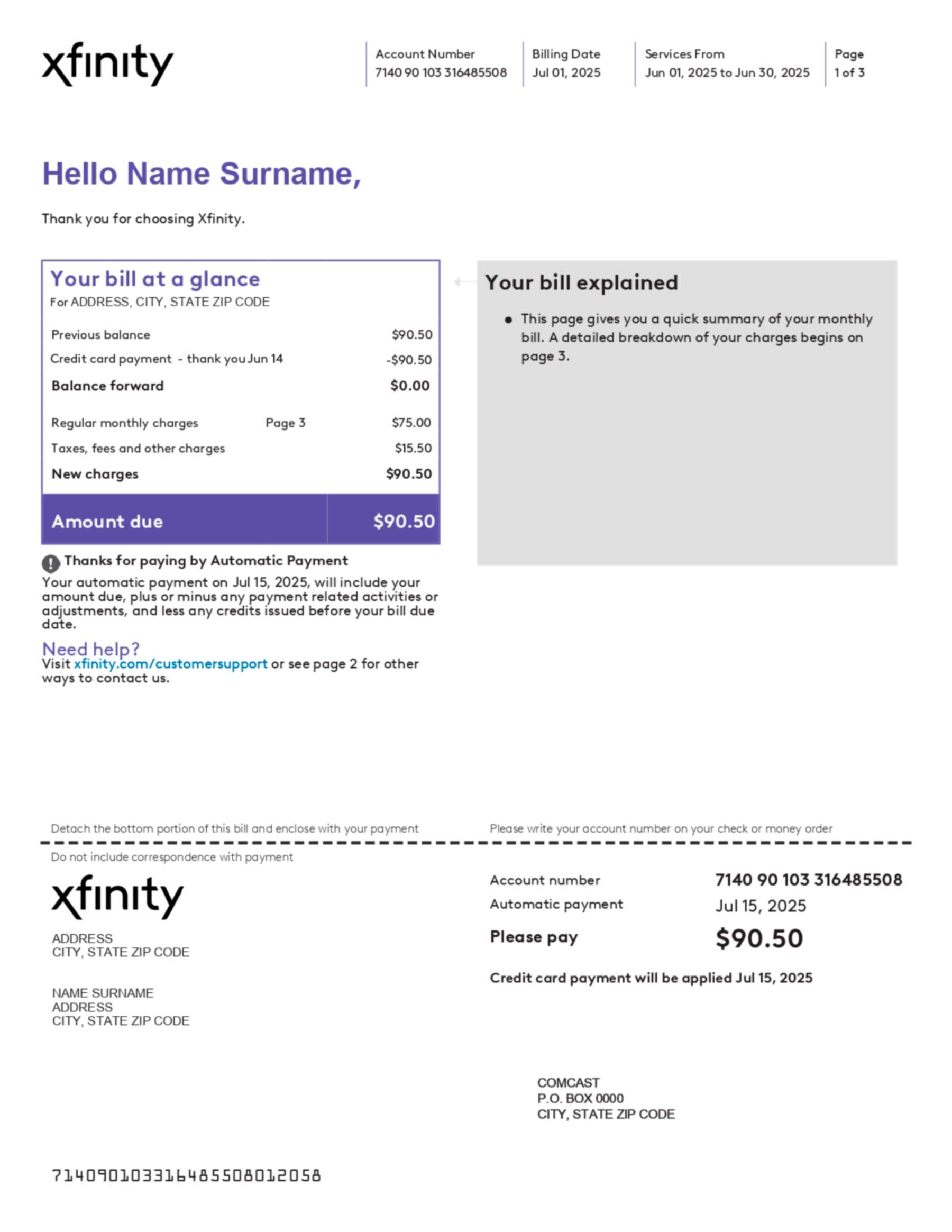
Internet bill layouts

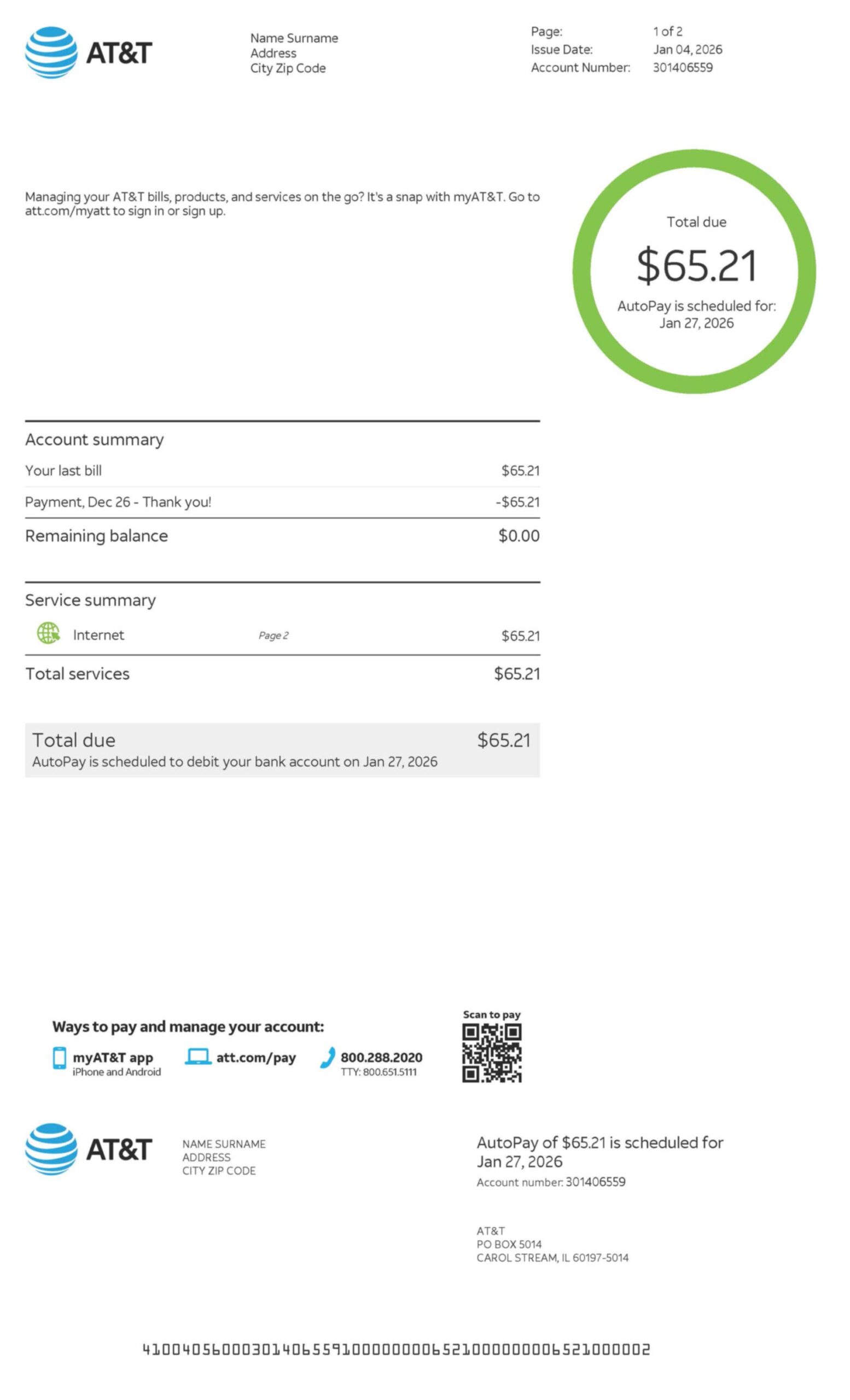
  • Monthly service plans presented prominently
  • Equipment rental or service fees listed individually
  • Usage overage sections where applicable
  • Bundled service summaries when combined with phone or TV services

These structural differences influence how wide tables are, how many columns appear, and how much emphasis is placed on usage versus fixed charges.

PDF statements and digital billing layouts in the US

Most US utilities now offer both printable PDF statements and web-based e-bill layouts. While the content remains consistent, presentation often differs between formats.

PDF statements typically mirror traditional paper bills, maintaining fixed page widths, bordered sections, and standardized fonts. They are designed for easy printing and archiving.

Digital layouts, by contrast, use responsive design principles. Usage charts may appear as interactive visuals, charge breakdowns can be expandable, and payment options are often integrated directly into the interface. Despite these differences, core structural blocks remain recognizable across both formats.

Design and readability conventions commonly used in US statements

US utility bills prioritize clarity and accessibility through specific design practices that have become standard across industries.

  • Clear visual separation between information groups
  • Bold totals and payment due amounts
  • Consistent alignment of numerical data
  • Use of shading or borders to highlight key sections
  • Simple, legible fonts for both print and screen viewing
  • Logical reading flow from summary to details

Many layouts also include small icons, divider lines, and spacing techniques to prevent information overload while keeping documents visually organized.

Related format references

  • /utility-bill-formats/electricity/
  • /utility-bill-formats/gas/
  • /utility-bill-formats/water/
  • /utility-bill-formats/phone/
  • /utility-bill-formats/internet/
  • /utility-bill-formats/united-states/electricity-bill-layout/
  • /utility-bill-formats/united-states/gas-bill-layout/
  • /utility-bill-formats/united-states/water-bill-layout/
  • /utility-bill-formats/united-states/phone-bill-layout/
  • /utility-bill-formats/united-states/internet-bill-layout/
  • /educational/common-bill-fields/
  • /educational/pdf-vs-ebill-layouts/

FAQ

Are all utility bills in the United States formatted the same way?

No. While most US utility statements share common structural elements, layouts vary by utility type, regional practices, and service models.

Why do electricity bills often include usage charts?

Electricity consumption fluctuates seasonally, so charts help visually compare current usage with previous periods for easier understanding.

Do digital bills follow the same layout structure as PDFs?

The core sections remain similar, but digital layouts often reorganize content into expandable panels or interactive blocks for improved usability.

What information usually appears at the top of US utility bills?

The top section typically includes customer details, service address, billing period dates, and a summary of the amount due.

Why are charges separated into multiple line items?

US billing standards emphasize transparency, so service fees, usage charges, and regulatory costs are often itemized individually.

Are meter readings always shown on utility statements?

They commonly appear on electricity, gas, and water bills, but are less relevant for phone and internet services.

Do all US bills include taxes and fees?

Most statements show applicable government or regulatory charges in a separate section below service costs.

Can layout structures differ by state?

Yes. Regulatory requirements and utility practices can influence how information is grouped or labeled in different regions.

Optional design resources

For those studying statement layouts for UI design, formatting practice, or educational projects, curated sample layout packs and structured reference templates can provide additional visual context. These resources focus solely on document organization and presentation patterns to support learning and design exploration.

All materials on this platform are provided strictly for informational and layout-reference purposes and do not represent official utility documentation.

Scroll to Top
Brand-utilitybill logo for custom utility bills company
Privacy Overview

This website uses cookies so that we can provide you with the best user experience possible. Cookie information is stored in your browser and performs functions such as recognising you when you return to our website and helping our team to understand which sections of the website you find most interesting and useful.