Electricity statements in the United States are built to do two things at once: show how much energy was used during the billing cycle and explain how that usage turns into charges. The branding and typography change from one utility to another, but the document logic is surprisingly consistent—most bills lead with a summary, then move into usage and the charge breakdown.
This page is an educational layout reference. It looks at the most common section order, typical grouping of information, and the formatting conventions used to present meter and usage data in a way that customers can scan quickly.
Educational note: This resource is provided for informational and layout reference purposes only. It does not provide official documents, recreate real statements, or support administrative or verification-related use. The descriptions below reflect general presentation patterns commonly observed in US electricity billing layouts.
What usually appears on a US electricity bill
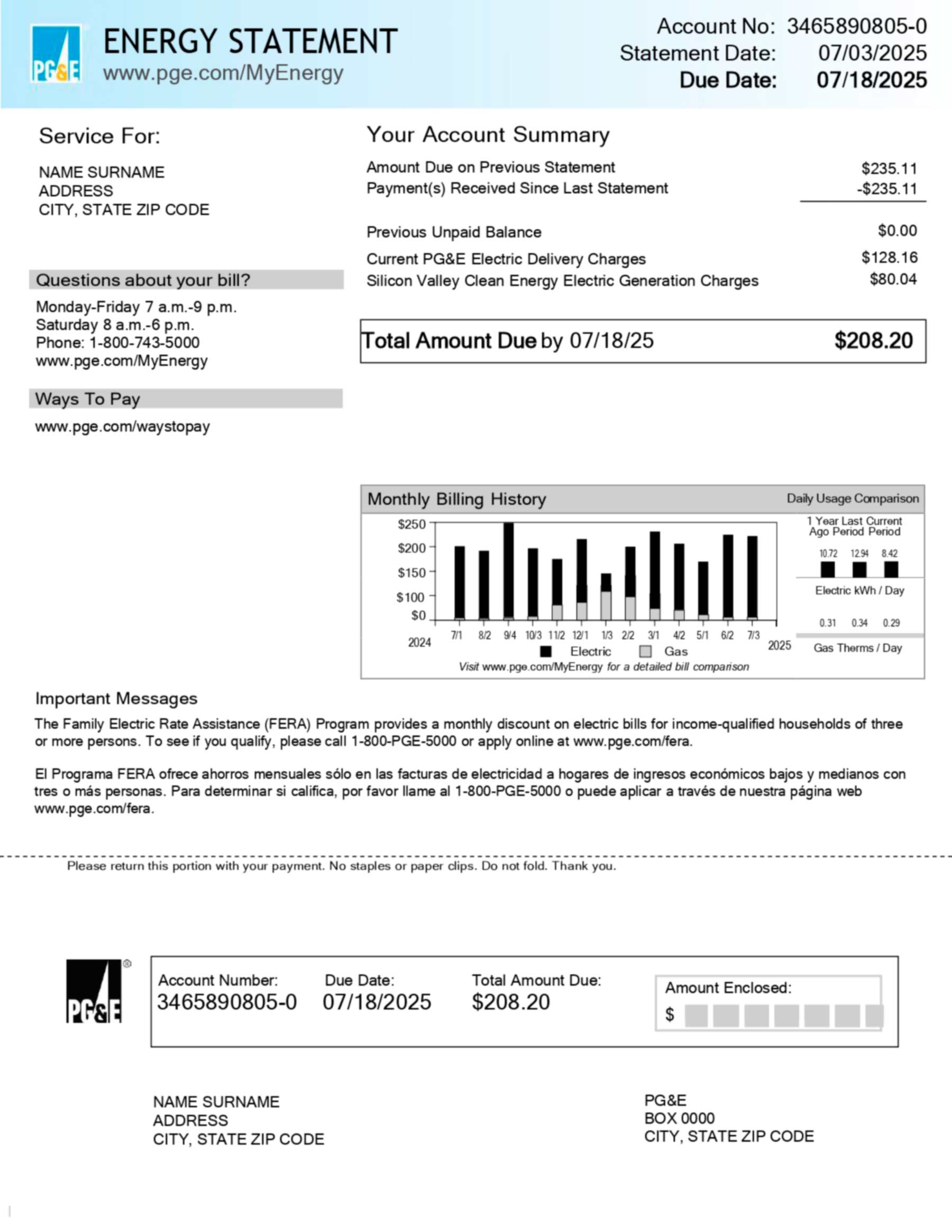
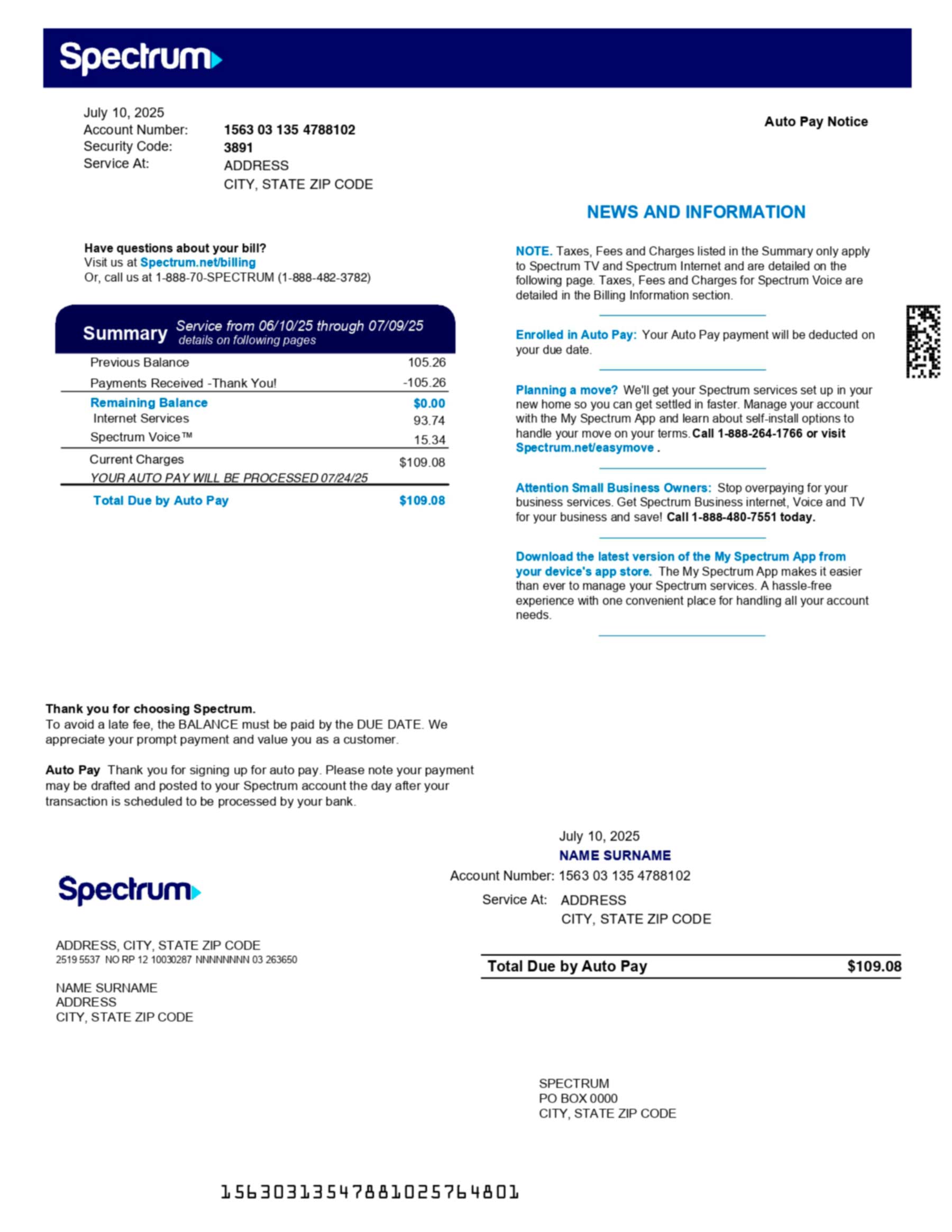
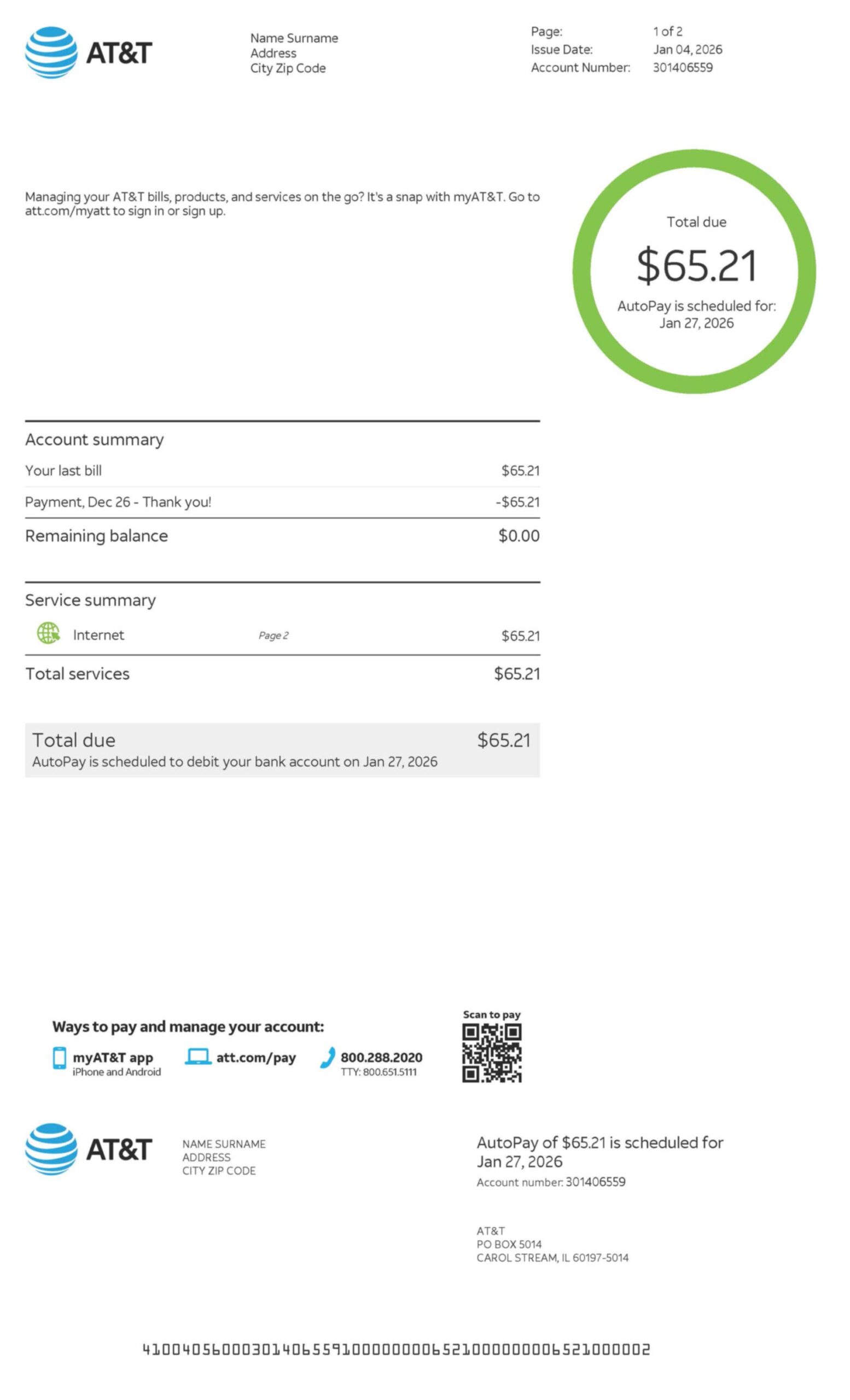
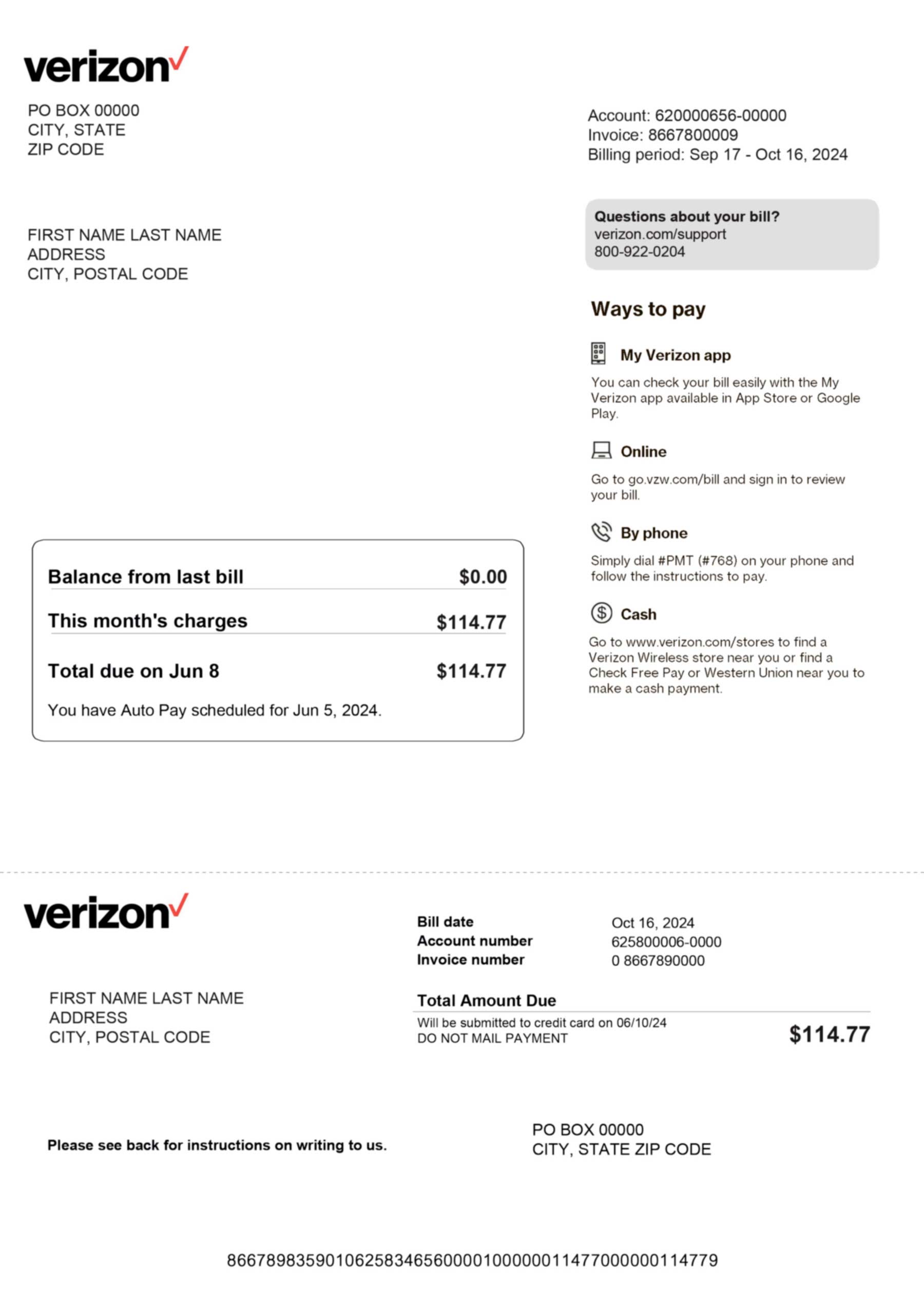
A typical US electricity statement starts with identification and “what to pay” information, then gradually becomes more technical as it moves into meter readings, kilowatt-hour totals, and line-item charges. Many layouts also include small “at a glance” modules—usage history, service class, or short notices—near the middle or side of the page.
Common elements you’ll often see include:
- Customer name and service address
- Account number (or a similar reference ID) and statement date
- Billing period start/end dates and the number of days billed
- Total electricity usage in kWh for the period
- Meter read details (actual/estimated, previous/current readings) when included
- Separated charge categories (often supply vs delivery, plus riders/surcharges)
- Taxes, public-purpose fees, or other regulatory items
- Total amount due and payment due date
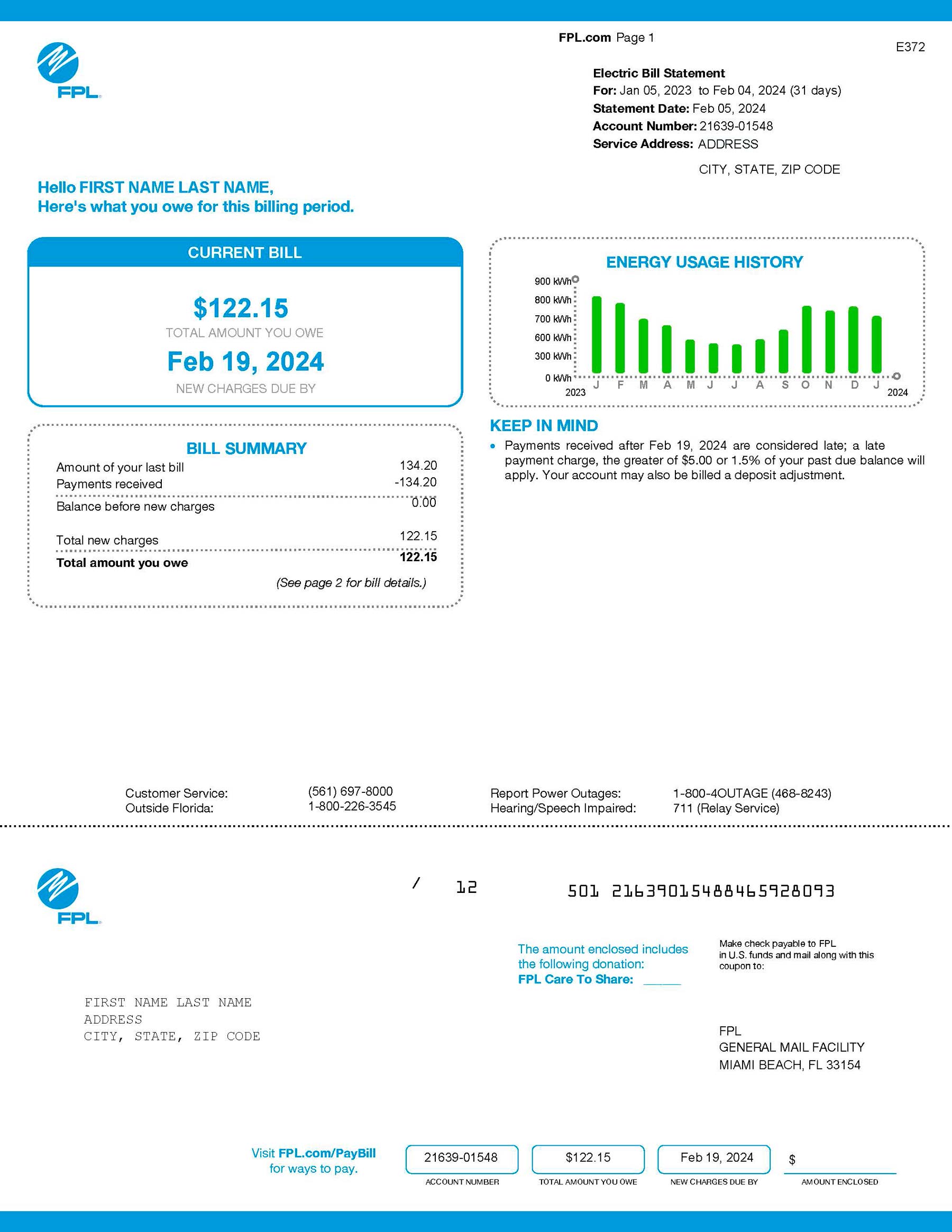
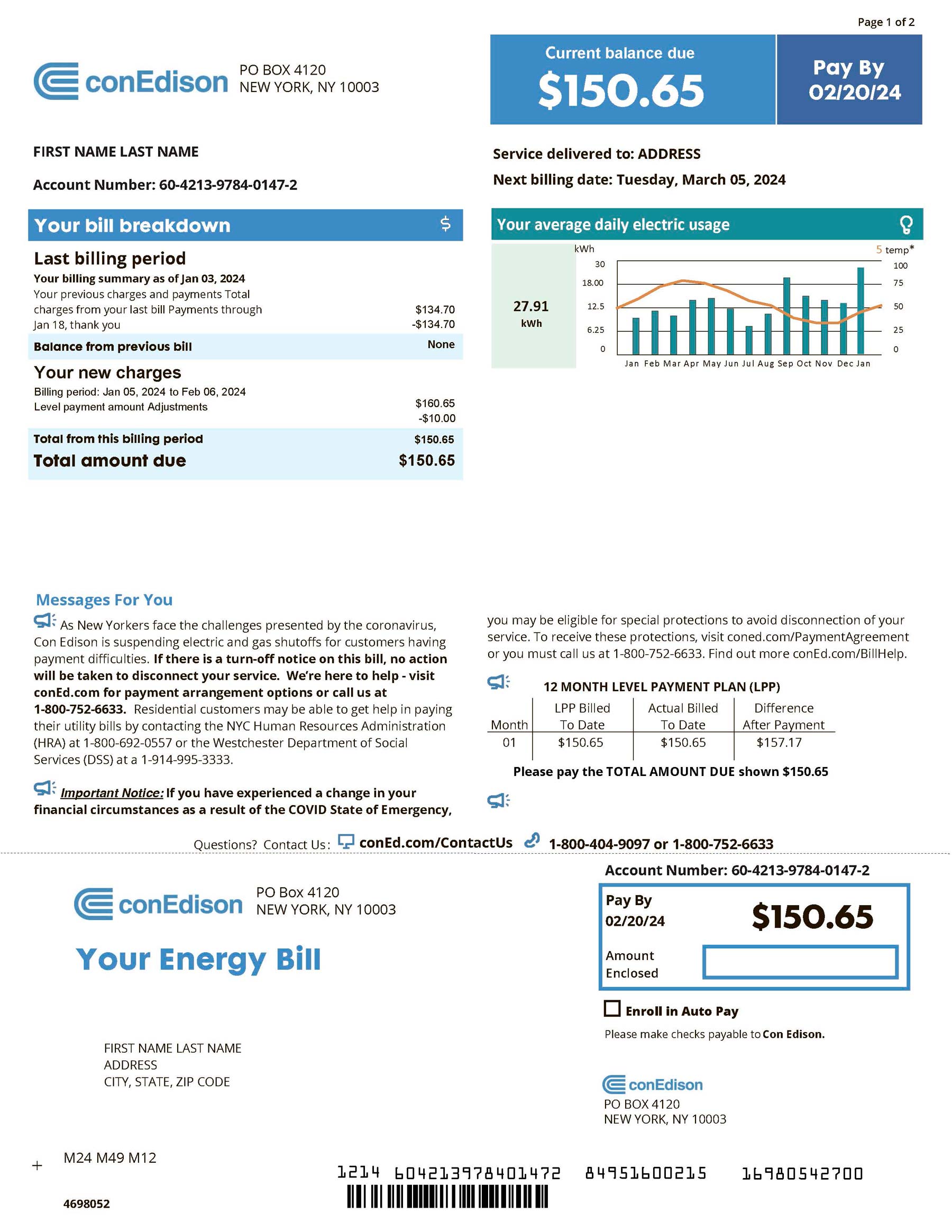
- Usage history chart (monthly bars/lines) or comparison table
The document usually guides the reader from a high-level “summary” at the top to a more detailed explanation of usage and costs below.
Typical section flow (how the page is read)
Most US electricity bill layouts follow a vertical structure with clear “zones.” The names of these zones differ by provider, but the sequence tends to be familiar.
- Header: utility name/branding, customer info, account number, statement date
- Account summary: previous balance, payments, current charges, total due
- Usage & meter area: billing days, kWh used, meter read rows (when shown)
- Charges breakdown: energy supply charges, delivery/distribution fees, adjustments
- Notices & messages: regulatory notes, service messages, efficiency tips
- Payment reference: payment instructions or a remittance-style block
From a layout perspective, utilities usually rely on borders, shaded panels, or strong spacing to keep these areas separate. Some statements use a two-column approach: a narrow column for messages and a wider column for tables and totals.
Key fields and how they’re commonly displayed
Even when the design style changes, certain fields tend to keep the same “roles” on the page. They are placed where the reader expects to find them, and they’re formatted to stand out when needed.
- Account number: commonly near the top, close to customer details
- Billing period: usually shown near the summary or usage module
- Meter identifier: often inside the usage table (sometimes abbreviated)
- Previous / current readings: aligned columns when meter reads are displayed
- Total kWh used: frequently bolded or placed in a small “usage summary” row
- Rate and calculation lines: shown next to kWh figures in the charge table
- Supply vs delivery subtotals: grouped and labeled as separate sections
- Total amount due: emphasized with larger type, bold weight, or a boxed panel
Tables are the backbone of most electricity bills. They help utilities present technical fields (kWh, rates, riders) without turning the page into a wall of text.
Common formatting conventions (US-wide patterns)
Across many US electricity billing formats, a few layout conventions show up repeatedly:
- Usage and meter data presented in a compact table with aligned numbers
- Clear separation between supply (energy) and delivery (distribution)
- Extra line items for riders, adjustments, or program fees grouped below main charges
- A monthly usage history chart (often 6–13 months) positioned mid-page or near the bottom
- Standard US currency formatting with two decimals and clear subtotals
Some statements include seasonal callouts (high/low usage months) or short program messages, often tucked into a side panel or the footer area.
PDF bills vs digital portal views
US electricity statements are commonly delivered as PDFs (print-friendly layouts) and as portal-based digital views. The information is usually the same, but the way it’s navigated can change.
- PDF layouts that resemble traditional paper statements with fixed tables
- Digital views that collapse sections (usage, charges, fees) for easier scrolling
- Interactive usage charts in portals, sometimes with month-by-month drilldowns
- Top-of-screen summaries followed by expandable detail blocks
Even when navigation differs, the underlying grouping—summary first, details later—tends to stay consistent.
Practical layout notes for designers and reviewers
When studying electricity bill layouts for document design practice, a few recurring design choices are especially noticeable:
- Summary totals are placed early and visually separated from detail tables
- Technical fields use short labels and consistent numeric alignment
- Charge tables rely on subtotals to prevent long lists from feeling overwhelming
- Spacing and divider rules are used to “reset” the reader between sections
- Payment due amounts and dates are given strong visual emphasis
These conventions help the layout stay readable even when the statement includes many line items.
Related layout reference resources
For additional educational references on utility statement structure and common formatting sections, explore:
- Electricity utility bill format overview hub
- United States utility bill layout reference hub
- Common fields found across utility statements
- How meter reading sections are structured
- Typical layout of charges and fee breakdowns
- Differences between PDF and digital billing layouts
FAQ
Do electricity bills across the US use the same layout?
Branding varies, but most statements follow a similar structure: account summary first, then usage/meter information, then a charge breakdown with subtotals.
Where is electricity usage typically shown?
Usage is commonly displayed in a mid-page usage module or table, often showing kWh totals and sometimes meter read rows.
How are charges usually grouped?
Many bills separate charges into supply (energy) and delivery (distribution) sections, then list riders, adjustments, and fees below.
Are usage history charts common?
Yes. A monthly usage chart is very common and is often placed mid-page or near the bottom for quick comparison across billing cycles.
Do digital bills look different from PDFs?
Digital portals often reorganize the same information into expandable sections, while PDFs keep a fixed print-style layout.
Why are there so many separate fee line items?
Electricity billing commonly separates core service costs from program fees and regulatory items so customers can see how the total is built.
Where is the total amount due emphasized?
It’s typically highlighted in the account summary area using bold type, boxed formatting, or larger text.
What unit is used for consumption?
Electricity usage is typically reported in kilowatt-hours (kWh) on US statements.
Optional design reference materials
For layout study, interface mockups, and document formatting practice, curated electricity bill layout reference packs may be offered as visual learning resources. These focus on section order, spacing, and common table structures seen in US electricity statements.
They are intended strictly for educational and design practice purposes, not for real-world billing or administrative use.